- tips & tricks
- |By Aleksey Haritonenko, Last Updated:
How to sell ebooks online (step-by-step)
I've sold ebooks from my own store and tested the big marketplaces along the way, so this guide skips the theory. Below is the exact process I'd follow if I had to learn how to sell ebooks online from zero in 2026, with real creator numbers at every step.
TL;DR
Yes, you can make money selling ebooks online. The process takes 5 steps: 1) Get your ebook ready in PDF or EPUB, 2) Price it, 3) Choose where to sell, 4) Set up your store and upload your files, 5) Market it and collect your first sales. With the right platform, setup takes under 30 minutes.
Can you make money selling ebooks?
Yes, you can make money selling ebooks. A digital file costs you nothing to reproduce, so nearly every dollar after the first sale is margin. Statista projects the global ebook market will reach $15.65 billion in 2026, and self-publishing keeps taking a bigger share of it.
Individual earnings are real too. The Alliance of Independent Authors put median self-published author revenue at $12,749, well above the $8,600 median the same survey found for traditionally published authors.
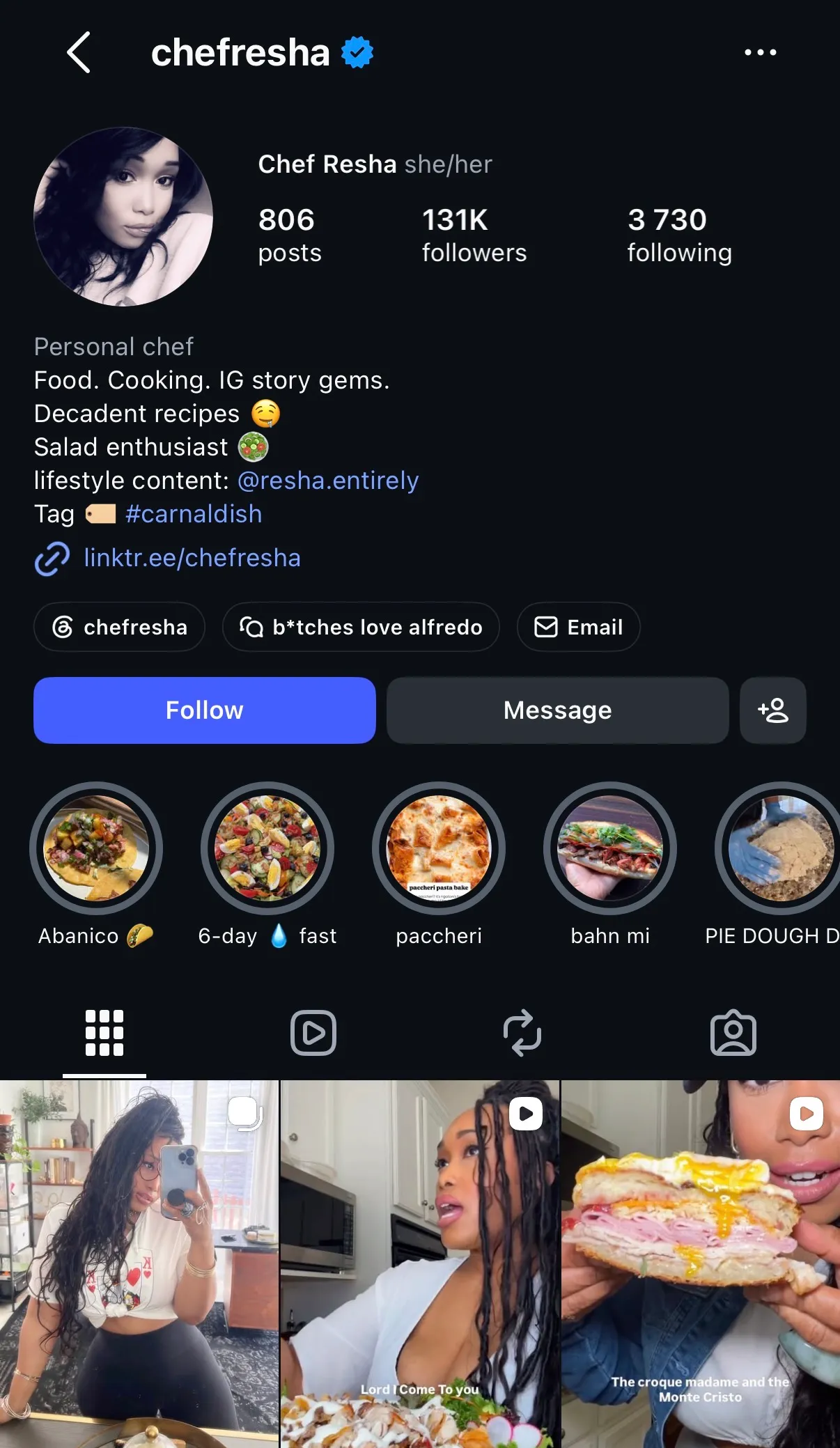
Sellfy creator Chef Resha is good proof of this too. She turned her low-carb food blog, CarnalDish, into the CarnalDish cookbook store, where her ebook Because Low-carb is Sexy bundles 72 OMAD-friendly recipes with a YouTube video demo for every single one. It's priced at $25 — currently $12.50 on sale — well above the $0.99 to $9.99 range most ebooks settle into.
So, is selling ebooks profitable? Yes, and the reason is unit economics: no printing, no shipping, no inventory sitting in a garage.
Sellfy is the store builder behind 75K+ creators. One flat monthly fee, and no commissions on your sales.
What type of ebooks sell best?
Practical nonfiction sells best from creator stores: self-help, cookbooks, fitness plans, money guides, and exam prep. In fiction, romance and fantasy lead. Fiction held 44.02% of ebook revenue in 2025, per Mordor Intelligence. So what type of ebooks sell best for you depends on which list you can credibly write from.
Nonfiction niches with proven demand:
- Self-help and personal development
- Cookbooks and meal plans (keto, anti-inflammatory, 15-minute dinners)
- Fitness and nutrition programs
- Money, budgeting, and investing basics
- Study guides and exam prep
- Beauty and haircare how-tos
Fiction genres that keep selling:
- Romance and romantasy
- Fantasy and sci-fi
- Mystery and thriller
- Young adult
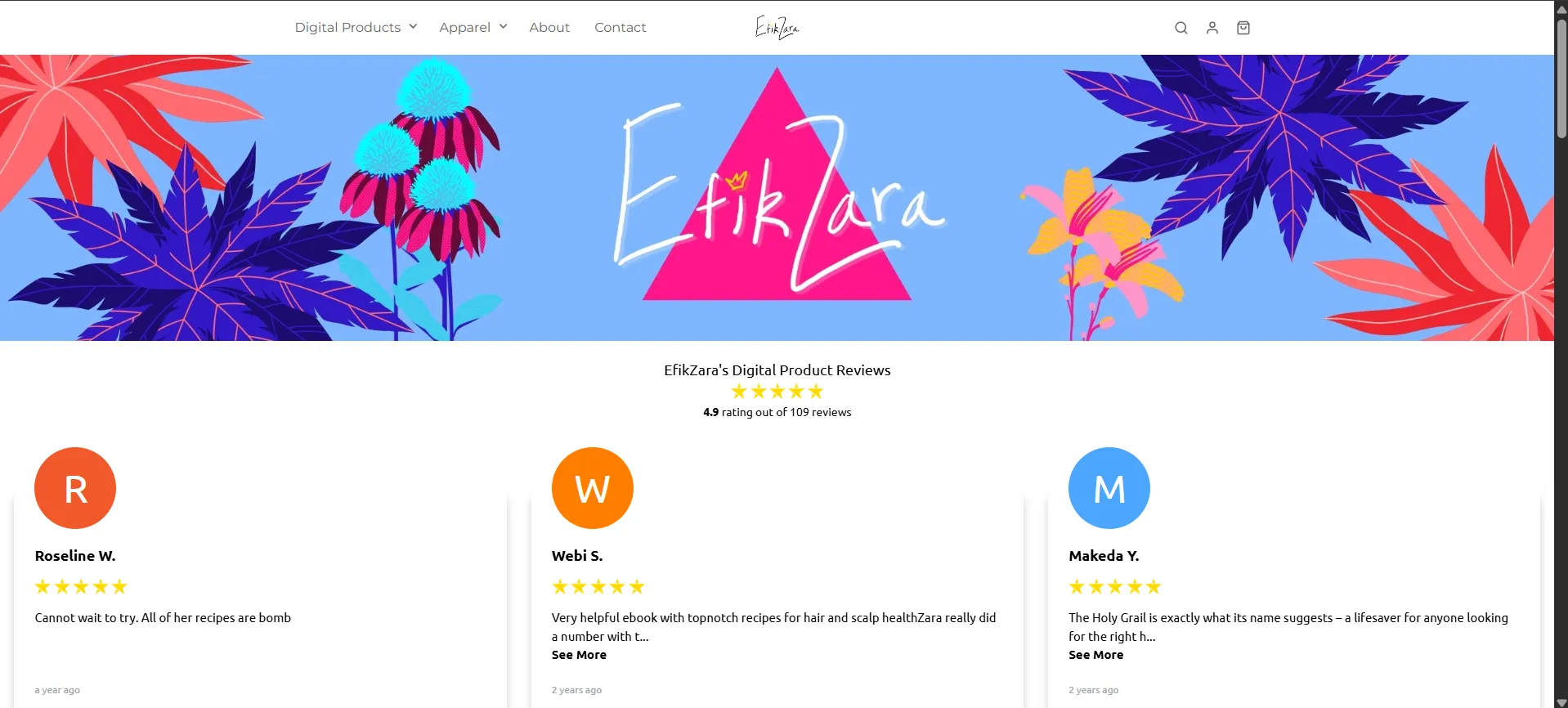
Two live stores show the pattern. EfikZara sells a deep haircare ebook line, from a $17.50 "Holy Grail" guide up to a $40 "Recipe Bible" (discounted to $32 at the time of writing). CDFM Study Group sells military finance exam notes as pay-what-you-want PDFs from $1.99 to $10. Niche beats broad, every time.
How to sell ebooks online in 5 steps
Here's how to sell ebooks online: prepare your file in PDF or EPUB, price it against your niche, pick your sales channel, upload to a platform that automates delivery, then market before, during, and after launch. Each step below takes hours, not weeks.
- Get your ebook ready to sell
- Price your ebook
- Choose where to sell
- Set up your store and upload
- Market your ebook and get your first sales
1. Get your ebook ready to sell
A sellable ebook needs four things: a clean edit, a cover that reads at thumbnail size, the right file format, and an about-the-author page linking to your other products. That's the whole checklist for how to create an ebook people will pay for. The drafting side is covered in our guide to writing an ebook.
Format matters more than most creators expect. EPUB is the standard for Amazon, Apple Books, Google Play, and Kobo. Amazon stopped accepting MOBI for new reflowable ebooks in 2021 and dropped fixed-layout MOBI in March 2025, so skip it entirely.
For your own store, PDF is the practical pick. It preserves your layout, opens on every device, and supports PDF stamping for piracy protection. I sell PDF and EPUB side by side in one product listing so every reader is covered. Our ebook format comparison breaks down the trade-offs.
2. Price your ebook
Most ebooks sell between $0.99 and $9.99, and that norm exists for a reason: Amazon's 70% royalty only applies inside the $2.99 to $9.99 band. Specialist nonfiction breaks the ceiling. Once you learn how to price an ebook against the problem it solves, $20 to $60 is realistic.
| Price band | Best for | Live example |
| $0.99–$2.99 | Launch pricing, fiction backlist, list building | KDP's 35% royalty covers $0.99–$200 |
| $2.99–$9.99 | Most fiction and general nonfiction | Fertayket Fida's "Detox for Every Meal" at $6.99 |
| $10–$19.99 | Niche cookbooks, in-depth guides | CarnalDish's low-carb ebook at $12.50 (down from $25); "Recipes for Everyday" at $17 |
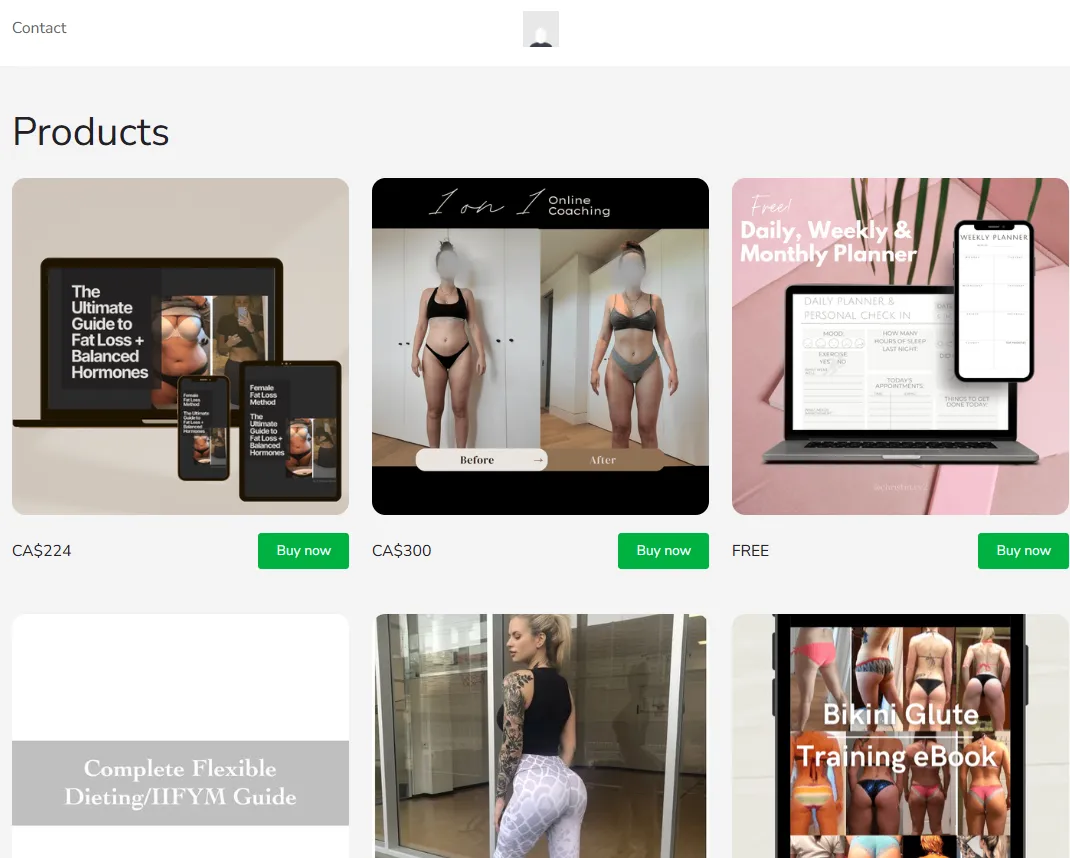
| $20–$60+ | Specialist, transformation-focused nonfiction | FitCoachFactory guides at $40–$60 |
The tactic I use most is above-market pricing with planned discounts. Raise the product's actual value (bonus templates, a bundled checklist), set the price above your niche average, then run occasional sales. Buyers compare you upward instead of sideways. Matching the average just invites head-to-head comparison with better-known competitors. More on this in our guide to pricing digital downloads.
One marketplace warning. On Amazon, price outside $2.99–$9.99 and your royalty drops to 35%, and at 70% Amazon deducts a delivery fee of $0.15 per MB in the US. That stings for image-heavy cookbooks. Your own store has no price bands and no delivery fees.
3. Choose where to sell
You have three routes for where to sell ebooks: marketplaces, your own store, or aggregators that push one upload to many retailers. Most successful creators run their own store as the main channel and treat marketplaces as discovery.
Marketplaces (Amazon KDP, Apple Books, Google Play, Kobo). Built-in traffic, but you follow their pricing rules and give up 30% to 65% per sale. Amazon pays 70% only inside its price band, Apple Books pays a flat 70%, and Kobo pays 70% on original works priced $2.99 or above. You never see your buyers' emails.
Your own store (Sellfy, Gumroad, Payhip). You keep everything except payment processing, set any price, and own the customer relationship. The trade-off: you bring the traffic. For creators with any social following, this is the highest-margin route by a wide margin.
Aggregators (Draft2Digital, PublishDrive). One upload, wide distribution. Draft2Digital takes about 10% of retail price, while PublishDrive charges a flat subscription instead of a commission. A sensible add-on for fiction authors chasing every retailer shelf.
I compared every option in detail in our guide to the best places to sell ebooks.
4. Set up your store and upload
Uploading is the fast part. To sell ebooks online with Sellfy, you create a store, upload your files, and connect a payment processor. My last full setup took under 15 minutes, checkout test included.
- Sign up and open your store. Start the 14-day free trial (no credit card needed), name your store, and pick a theme.
- Upload your ebook. Click Add new product, upload your PDF and EPUB (files up to 10 GB, and up to 50 files per product), set your price, and write the description.
- Connect PayPal or Stripe. Add your account under payment settings. Payouts are instant, meaning the money lands in your PayPal or Stripe account the moment a sale clears. No payout schedule, no waiting.
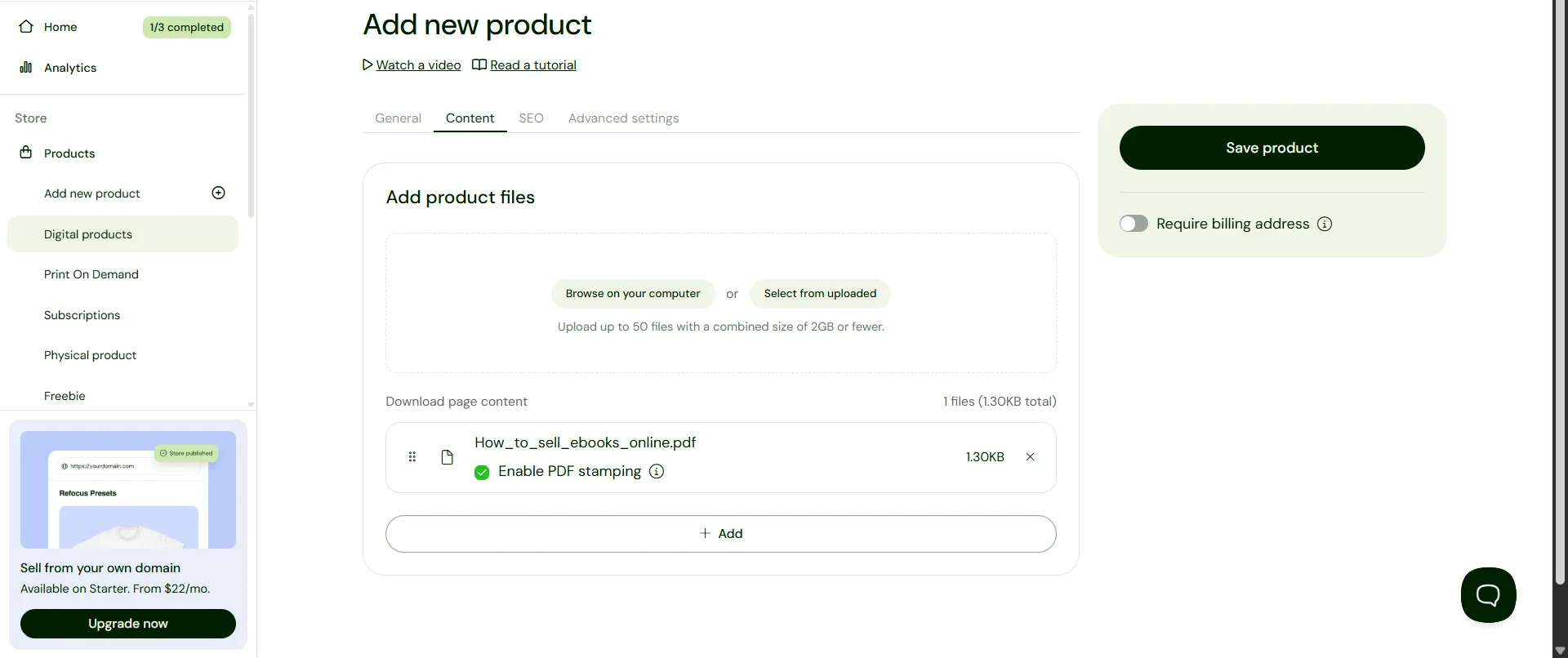
Sellfy charges 0% transaction fees on every plan; you pay your subscription (from $29/month, or $22/month billed annually) plus standard PayPal or Stripe processing. Turn on PDF stamping so every sold copy carries the buyer's details, and set a download limit to slow link sharing. Delivery is automatic: each buyer gets a unique download link the moment payment clears.
5. Market your ebook and get your first sales
Marketing splits into before, during, and after launch. If I compressed how to market an ebook into one sentence: build a small email list before launch day, make short-form video your discovery engine, and let a free sample sell the paid catalog.
Before launch. Start collecting emails 2 to 4 weeks out with a one-page landing page and a free chapter. Email is still the highest-converting channel you can own: publishing-sector campaigns averaged a 34.24% open rate in 2025 per MailerLite's benchmark of 3.6 million campaigns, and industry studies put email ROI around $36 to $40 per $1 spent.
During launch. Show up where your readers already scroll. Short-form video moves books: booketic's analysis tied roughly 59 million US print book sales in 2024 to BookTok-related content. Post before/after results, recipe tests, 30-second transformations, whatever proves the outcome your ebook delivers, with your store link in bio.
After launch. Keep a free-sample funnel running: a short free guide or a handful of free recipes that lead straight into your paid catalog lowers the risk of that first click. Add an upsell at checkout, email your list monthly, and bundle older titles. How to promote an ebook after week one is mostly repetition: same proof, new clips.
Selling ebooks from your own website
You can sell ebooks from a website you already run by embedding a buy button or a full store section. Sellfy generates the embed code, checkout opens in a pop-up, and file delivery stays automatic. It works on WordPress, Wix, Squarespace, and plain HTML. The full walkthrough on how to sell ebooks on your own website is in our step-by-step guide.
Common mistakes and protecting your ebook
Three mistakes kill most ebook launches: going Amazon-only, launching with zero audience, and overpricing an unproven product. A fourth risk arrives with success: ebook piracy, which a 2019 Authors Guild estimate put at $300 million a year in lost US publisher income.
Amazon-only means Amazon's rules set your margins and you never learn who your readers are. Launching with no audience means your first month is silent; even 200 email subscribers beats zero. Overpricing before you have reviews stalls momentum. Start mid-band, then raise prices with proof.
Protection is cheap, so use all of it: PDF stamping that prints the buyer's details on every page, download limits (I cap mine at 5), watermarked free previews instead of full samples, and short licensing terms on the product page stating personal use only. None of it makes a file unshareable. It makes sharing traceable, which is what deters the casual leaker. Full tactics in our ebook piracy protection guide.
Sellfy is the store builder behind 75K+ creators. One flat monthly fee, and no commissions on your sales.
FAQ: selling ebooks online
Can you make money selling ebooks?
Yes, you can make money selling ebooks. Digital files cost nothing to reproduce, so each sale after the first is nearly pure margin. Sellfy creator Chef Resha, for example, bundles 72 recipes with a video demo for each one and prices her CarnalDish ebook at $25 — well above the typical $0.99 to $9.99 ebook range. Your ceiling depends on niche demand, pricing, and how consistently you market.
How much do ebooks sell for?
Most ebooks sell for $0.99 to $9.99, the range Amazon's 70% royalty band rewards. Specialist nonfiction goes far higher: fitness guides on FitCoachFactory sell for $40 to $60, and niche haircare ebooks reach $40. Price by the problem you solve, not the page count.
Where can I sell ebooks?
You can sell ebooks on marketplaces (Amazon KDP, Apple Books, Google Play, Kobo), through aggregators (Draft2Digital, PublishDrive), or from your own store. I recommend Sellfy for an all-in-one store because you keep full margin and buyer emails. Compare every channel in our best places to sell ebooks guide.
Can I sell ebooks for free?
Yes. If you're testing how to sell ebooks for free, Amazon's KDP Select gives you 5 free promotion days per 90-day enrollment, Payhip has a free plan with a 5% transaction fee, and Sellfy offers a 14-day free trial with no credit card. Free ebooks work best as list-builders for your paid catalog.
What type of ebooks sell best?
Self-help, cookbooks, fitness plans, study guides, and niche how-to nonfiction sell best from creator stores. In fiction, romance and fantasy lead. Fiction held roughly 44% of global ebook revenue in 2025, but direct-audience nonfiction usually converts better at higher prices.
Do you need an ISBN to sell ebooks?
No. You don't need an ISBN to sell ebooks from your own store, and Amazon assigns a free ASIN to every Kindle ebook. Some retailers and aggregators, like IngramSpark, still require one. Buy an ISBN only if your distribution plan actually demands it.
Do I pay tax on ebook sales?
Yes, ebook revenue is taxable income in your country. EU and UK VAT on digital products is charged where the buyer lives. Platforms handle it differently: Etsy and Payhip collect and remit digital VAT for you, so check your own platform's tax settings before launch.
Can you sell ebooks on Etsy?
Yes, you can sell ebooks on Etsy as digital downloads, and buyers get the file automatically after checkout. Expect a $0.20 listing fee, a 6.5% transaction fee, and payment processing on top. Etsy remits VAT on digital items, but you'll compete inside a crowded marketplace. Work out what a sale actually leaves you with our Etsy fee calculator.
Is it legal to resell PLR ebooks?
Yes, reselling PLR ebooks is legal as long as you follow the license terms, which vary per product. Your own store is the safest venue, since marketplaces restrict unedited PLR content. Rewrite and rebrand the material to stand out, then follow our PLR selling guide.

Tips & Tricks
Tips for creators
Join thousands of creators receiving sales tips, marketing resources, and inspiring stories. No spam, pure value.