- tips & tricks
- |By Aleksey Haritonenko, Last Updated:
Nonprofit Ecommerce: How to Sell Merch and Digital Products to Raise Funds
- A 501(c)(3) can sell merch and digital downloads. Mission-related sales generally aren't unrelated business income, and Form 990-T is due once unrelated gross income reaches $1,000 a year.
- Print-on-demand needs no inventory, and the margin is the donation. A $25 tee leaves $12.17 for your cause after costs, and a $10 download leaves $9.41.
- A named cause lifts what people pay. In a 113,047-rider field experiment, pay what you want with half going to charity averaged $5.33, nearly six times the $0.92 without a cause.
- Sellfy charges zero transaction fees, from $22 a month billed annually. It isn't the right fit for tax-deductible receipts or peer-to-peer campaigns, so pair it with a donation tool for those.
Nonprofit ecommerce is a way to bring your mission into people's everyday lives. Someone might buy a T-shirt to show what they care about, download a resource your organization created, or join as a recurring supporter. Each purchase gives people a practical way to take part in your work.
You don't need to buy a lot of stock to get started. With print-on-demand, products are made when someone orders them, and digital downloads can be sold as soon as they're ready. That means you can start small, raise funds, and build closer connections with the people who support your cause.
In this guide, we'll explain US tax rules in plain language, share ideas for what to sell, show how to price products so your cause benefits, and help you choose a platform. We make Sellfy, a store builder for creators, so it appears in some examples. We'll also point out when another tool may be a better fit.
Can a nonprofit sell products?
Yes. Nonprofits, including 501(c)(3) organizations, can sell products such as merch and digital downloads. The key question is how those sales relate to the organization's mission. Income from mission-related sales is generally treated differently from income earned through a regular business unrelated to that mission. That unrelated income may be subject to unrelated business income tax (UBIT).
The rules below are US federal rules. Other countries handle charity trading differently. This is general information, not legal or tax advice, so run your plan past an accountant who works with nonprofits.
Related vs. unrelated sales
According to IRS Publication 598, income counts as unrelated business income when three things are true: it comes from a trade or business, you carry it on regularly, and it isn't substantially related to your exempt purpose.
The IRS uses a museum shop to show the line. Art reproductions relate to the museum's educational purpose. Souvenirs of the city it sits in don't. Merch that carries your mission's message has a stronger case than a generic product with your logo on it, but where it lands depends on your purpose and the product.
Three exceptions that cover a lot of merch
The IRS lists specific exclusions from unrelated business income. Three matter for most small nonprofits:
- Volunteer labor. A business where substantially all the work is done by unpaid volunteers. The IRS gives volunteer-run bake sales as an example.
- Donated merchandise. Selling items that you received as gifts or contributions. This is why many nonprofit thrift shops don't owe UBIT.
- Convenience of members. Sales made mainly for your members, students, patients, officers or employees, like a school cafeteria.
When you file Form 990-T
Form 990-T is required once gross income from all unrelated businesses reaches $1,000 in a year, per the Form 990-T instructions. Below that, there's no 990-T to file. Mission-related sales don't count toward the threshold.
If you're a creator, not a registered nonprofit
Plenty of fundraising runs through creators, not charities: a podcaster selling a benefit tee, an illustrator giving half of a print pack's sales to a shelter. In that case the sales are usually your income, and the money you pass on is a donation from you. Buyers generally can't deduct a purchase as a gift.
Be open about it: name the organization, state the exact share, and keep the donation receipt. If the money goes to a registered 501(c)(3), check whether the charity has rules for using its name in your campaign.
Sales tax is a separate question
Being exempt from income tax doesn't settle sales tax. Whether you collect sales tax on merch depends on your state, so check with your state's tax agency before you launch. On Sellfy, you set sales tax rates per state in Store Settings → Taxes, and the tax is added at checkout. Sellfy doesn't file taxes for you, but you can export every order with its tax amount for your accountant.
Why people pay more when a cause is attached
People may be willing to pay more when they know their purchase helps an organization do work they care about. In a 2010 field experiment published in Science, researchers sold souvenir ride photos to 113,047 amusement park riders under four pricing rules:
| Pricing rule | Riders who bought | Average paid |
| Fixed $12.95 | 0.50% | $12.95 |
| Fixed $12.95, half to charity | 0.59% | $12.95 |
| Pay what you want | 8.39% | $0.92 |
| Pay what you want, half to charity | 4.49% | $5.33 |
When customers chose their own price, they paid less than a dollar on average. When part of the payment went to charity, the average was nearly six times higher. Of the four options, this one brought in the most money.
Fitness creator Christian Guzman ran the same idea on Sellfy. In 2017 he offered his Summer Shredding workout plan with only an option to donate, with all donations split between breast and prostate cancer organizations. 62,814 people downloaded it. Only 6.83% paid, but they averaged $6.26 and raised $26,858.
Scale your expectations to your audience. Guzman had more than 700,000 YouTube subscribers at the time. The pattern still holds at any size: a named cause and a clear ask lift what people pay.
Sellfy is the store builder behind 75K+ creators. One flat monthly fee, and no commissions on your sales.
Nonprofit merch ideas that sell
The best nonprofit merchandise is something supporters already use, with a design that gives them a natural way to talk about your organization's work. Print-on-demand fundraising works because each item is printed only after someone orders it, so you can test ten designs without buying a single box of shirts.
Merch supporters wear and use
These are base costs from the Sellfy print-on-demand catalog as of November 2026. The base cost is what Sellfy charges to print the item. Larger sizes and extra print areas can cost more. Buyers pay shipping on top, so it doesn't come out of your margin.
| Product | Base cost from | US shipping, first item (paid by buyer) |
| Unisex tee (Bella + Canvas 3001) | $11.69 | $3.99 |
| Heavyweight tee (Comfort Colors 1717) | $15.29 | $3.99 |
| Hoodie (Gildan 18500) | $22.19 | $7.99 |
| Dad hat (Yupoong 6245CM) | $14.65 | Varies |
| Eco tote bag | $15.56 | $3.99 |
| White glossy mug | $5.95 | $6.99 |
| Kiss-cut stickers | $2.29 | $4.50 |
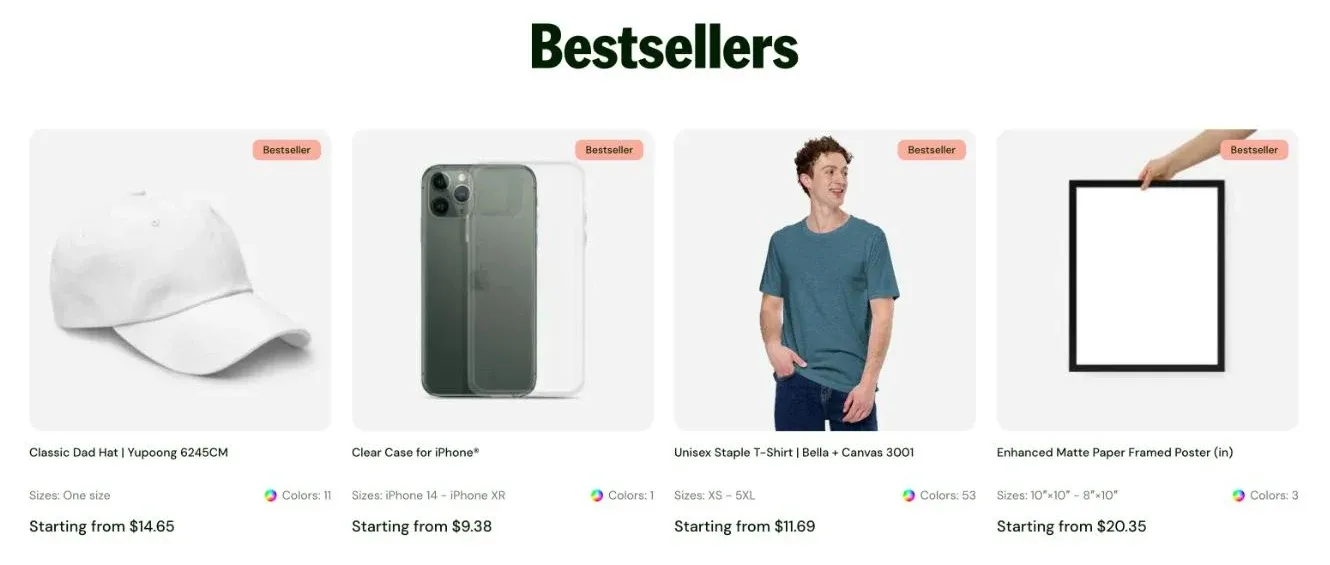
Shipping figures come from Sellfy's print-on-demand shipping rates. Tees and hoodies are the core of most fundraising merchandise. Stickers make a cheap entry point, though shipping almost doubles what the buyer pays. A limited run works well for a campaign: you can cap stock on any print-on-demand item, so "200 shirts for the spring drive" is a real limit.
Digital products that support your mission
Digital products take time to create, but once they're ready, people can download them as soon as they buy them. Start with what your organization already knows how to do:
- An animal rescue sells a printable pet care checklist or a calendar of adopted dogs.
- An environmental group sells a local field guide as an ebook.
- An education project sells lesson plans or worksheets to teachers.
- A musician raising money for a cause sells a benefit album or sample pack.
If you already make content for your cause, you already have the raw material. See our guide to selling printables for formats that work.
Monthly supporter memberships
A membership turns one-off supporters into monthly ones. On Sellfy, a subscription product bills weekly, monthly or yearly and delivers a new file each cycle, such as a members-only update, a wallpaper pack or an early look at the next merch drop.
Selling merch to supporters is a different job from buying promotional swag in bulk to give away. Giveaway swag is a marketing cost. Merch you sell is revenue.
How to price merch so the cause gets paid
In nonprofit ecommerce, the margin is the donation. Set the price, subtract the base cost and payment processing, and what's left is what reaches your cause. Here is the math with Stripe's standard US card rate of 2.9% + 30¢, charged on the total the buyer pays. Sellfy adds no transaction fee on top.
| Item | Your price | Base cost | Processing | You keep per sale |
| Unisex tee | $25 | $11.69 | $1.14 | $12.17 |
| Hoodie | $45 | $22.19 | $1.84 | $20.97 |
| Mug | $18 | $5.95 | $1.02 | $11.03 |
| Eco tote | $22 | $15.56 | $1.05 | $5.39 |
| Digital download | $10 | $0 | $0.59 | $9.41 |
Processing includes the shipping the buyer pays, since Stripe charges on the full payment. Sales tax, where you collect it, is added at checkout. Your Sellfy plan is the other fixed cost: Starter is $22 a month billed annually and covers up to $10K in yearly sales.
Two rules make the numbers work for a cause:
- Price for the mission, not the market. Supporters buy cause merch to back the cause, so you don't have to match retail prices. A $25 shirt that sends $12 to the cause is an easy yes. A $16 shirt that sends $3 isn't worth the effort.
- Say the exact share. "$12 from every shirt goes to our shelter's vet fund" beats "proceeds support our work." Post the total after each campaign.
Here's the math for a t-shirt fundraiser. Sell 100 tees at $25 and 50 hoodies at $45, and $2,265.50 reaches the cause before your plan cost. That's 100 × $12.17 plus 50 × $20.97. A year of Sellfy Starter is $264.
More on margins in our guide to pricing t-shirts.
Pay what you want with a minimum
For digital products, pay what you want pricing lets supporters give more than the asking price. Set a minimum to protect the floor. On Sellfy the lowest paid minimum is $0.50, and a $0 price turns the product into a free download where people can still choose to pay.
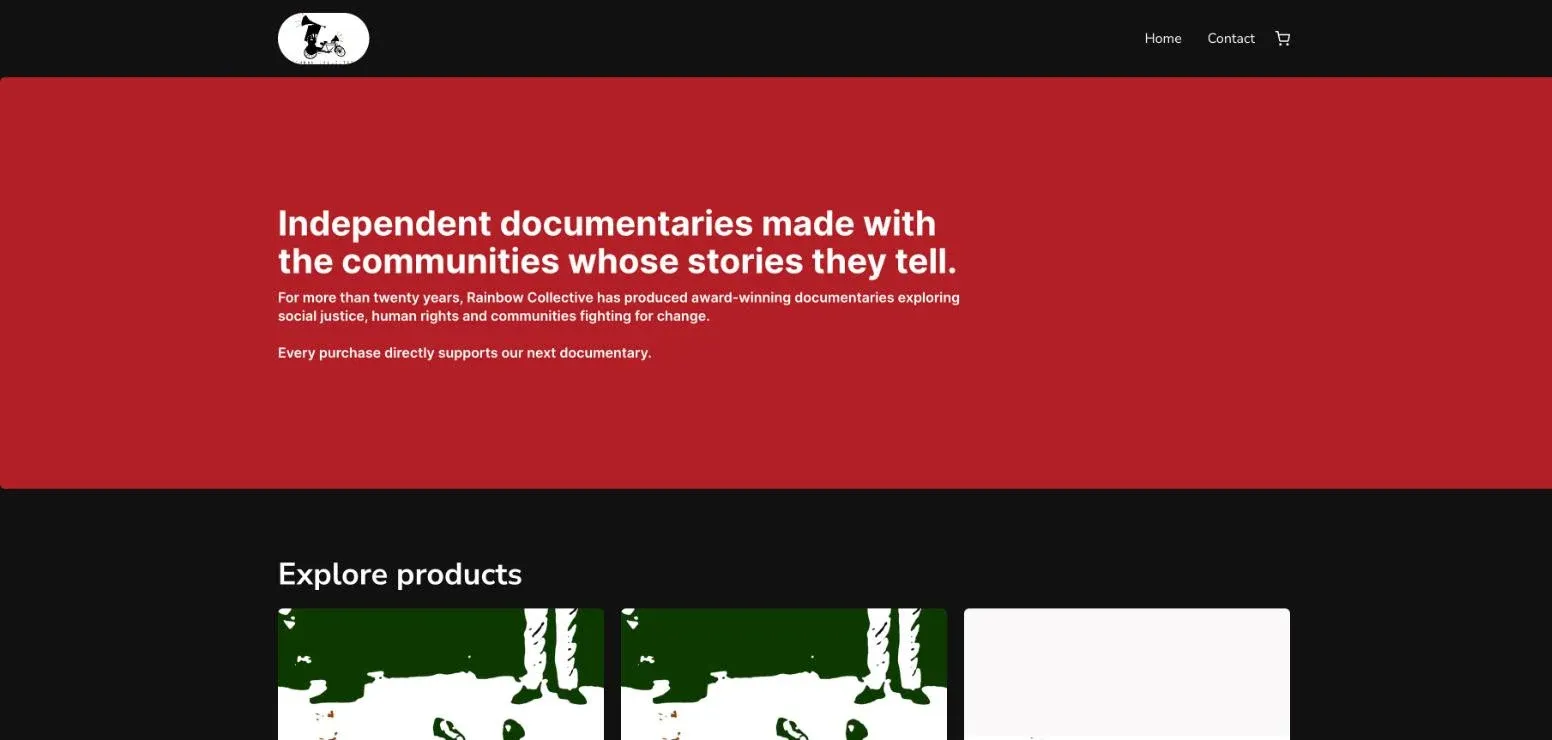
Rainbow Collective, a UK documentary team that films with activists and grassroots movements, turned on pay what you want halfway through a film release. Many supporters paid more than the listed price, and the film brought in about $35,000 on Sellfy in under ten days. Their Sellfy store now prices films from £8+ and tells buyers that every purchase funds the next documentary. They promote releases on Instagram, their biggest channel, where they've built a substantial following, and through partner organizations that share their trailers.
How to set up an online store for your nonprofit
Opening an online merchandise store for nonprofits used to mean ordering boxes of shirts first. With print-on-demand, it takes an afternoon. These steps follow the Sellfy setup, and most print-on-demand platforms work in a similar order.
1. Pick two or three products
Start small. One tee, one sticker and one digital product are enough to learn what your supporters buy.
2. Upload designs and check the mockups
Upload a PNG at 300 DPI. Sellfy generates the product mockups for your store. Order a sample before launch so you know how the print looks in person.
3. Set prices and the cause share
The base cost shows next to your price while you create the product, so you see your margin before you publish. Write the cause share into the product description.
4. Connect Stripe or PayPal
Payments go straight to your Stripe or PayPal account at the moment of sale. Sellfy doesn't hold your money. For print-on-demand orders, Sellfy then charges the base cost and shipping to the payment method on your account.
5. Add your domain, tax settings and a no-returns note
Connect your own domain and set your sales tax. Print-on-demand items are printed to order, so they can't be returned or exchanged. Say so on the product page. If an item arrives damaged and you report it within 30 days, Sellfy replaces or refunds it.
6. Launch to supporters you already have
A new store doesn't bring buyers on its own. Your supporters do. Announce it to your email list, put the link in your social bios, add a QR code to event flyers, and embed a buy button on your existing website.
Every buyer's email lands in your store's customer list, so the next campaign starts with people who already bought once. Sellfy's built-in email marketing includes 2,000 free email credits a month on Starter, enough to tell a small list about each new drop.
Best ecommerce platform for nonprofits: how to choose
The best ecommerce platform for nonprofits is the one that sells what you plan to sell and takes the least from each sale. Answer four questions before you compare platforms:
- What will you sell? Merch only, digital products too, or donations and event tickets?
- What does it cost all-in? Monthly fee plus any cut of each sale plus card processing.
- When do you get the money? At each sale, or at the end of a campaign?
- Do you need donor tools? Tax receipts, peer-to-peer fundraising and donor lists are a different job from selling products.
Most ecommerce for nonprofits falls into two camps: tools built to sell products and tools built to collect donations. Here's how five common options compare, based on each company's own pages as of November 2026:
| Sellfy | Bonfire | Printful Quick Stores | Zeffy | Shopify | |
| Sells | Print-on-demand, digital products, subscriptions, physical items | Print-on-demand apparel and accessories | Print-on-demand (US sellers and shoppers only) | Merch you stock, donations, tickets, memberships | Anything; digital downloads need an app |
| Monthly cost | From $22/mo billed annually | Free | Free | Free | From $29/mo billed annually |
| Cut per sale | 0%, plus card processing | You keep the profit; 8% on extra donations (3.5% for verified nonprofits) | You keep price minus Printful's costs | No platform or card fees; funded by optional donor tips | 2.9% + 30¢ card processing on Basic |
| Donor tools | Pay what you want | Checkout donations, peer-to-peer, donor lists | None listed | Donation forms, events, raffles | Via apps |
Sources: Sellfy pricing, Bonfire, Printful Quick Stores, Zeffy, Shopify pricing.
Sellfy fits creators and small nonprofits who want merch and digital products in one store, on their own domain, with the buyer's email in their own list. It isn't the right fit if you need tax-deductible donation receipts or peer-to-peer campaigns. Use a donation tool such as Zeffy for those, and a store for products. Many organizations run both.
If you're looking at Shopify for nonprofits, it's the same Shopify every store uses: the pricing page lists no nonprofit plan, and digital downloads still need a separate app.
Sellfy's 14-day free trial needs no card, and the store checkout switches on once you pick a plan. A 30-day money-back guarantee covers the first month. See the print-on-demand features or the merch store page for what's included.
Sellfy is the store builder behind 75K+ creators. One flat monthly fee, and no commissions on your sales.
FAQ
Can a 501(c)(3) sell merch?
Yes. A 501(c)(3) can sell merch, and income from mission-related merch generally isn't subject to UBIT. Income from unrelated merch you sell regularly may be taxed unless an exception applies, such as volunteer labor or donated goods. File Form 990-T once unrelated gross income reaches $1,000 or more a year.
Can a nonprofit sell donated items?
Yes. Selling merchandise that was donated to you is one of the IRS exclusions from unrelated business income, as long as substantially all of the items were received as gifts or contributions. This is why many nonprofit thrift shops don't owe UBIT. Sales tax rules still depend on your state.
Can nonprofits make a profit?
Yes. A nonprofit can bring in more money than it spends. It can use that surplus to support its programs, build reserves, or invest in future work, but it can't distribute the money to owners or insiders.
Do nonprofits pay sales tax on merch they sell?
It depends on the state. Federal tax exemption covers income tax, not sales tax, so check your state's tax agency before you launch. On Sellfy, you set sales tax rates per state, the tax is added at checkout, and you can export orders with tax amounts for your accountant.
Is there a free online store for nonprofits?
Yes. Bonfire, Printful Quick Stores and Zeffy all offer free online stores for nonprofits, each with limits: Bonfire and Printful sell print-on-demand merch, and Zeffy sells items you stock yourself. Sellfy has a 14-day free trial with no card, then plans start at $22 a month billed annually with 0% transaction fees.
Do I need inventory to sell nonprofit merch?
No. With print-on-demand, an item is printed and shipped only after a supporter orders it. The buyer pays for the item and shipping at checkout. After the sale, you pay the printer's base cost from the money you receive.

Tips & Tricks


Tips for creators
Join thousands of creators receiving sales tips, marketing resources, and inspiring stories. No spam, pure value.