- success stories
- |By Zane Skuja, Last Updated:
$35,000 in 10 Days: How Rainbow Collective Funds Uncompromising Documentaries Without Corporate Money
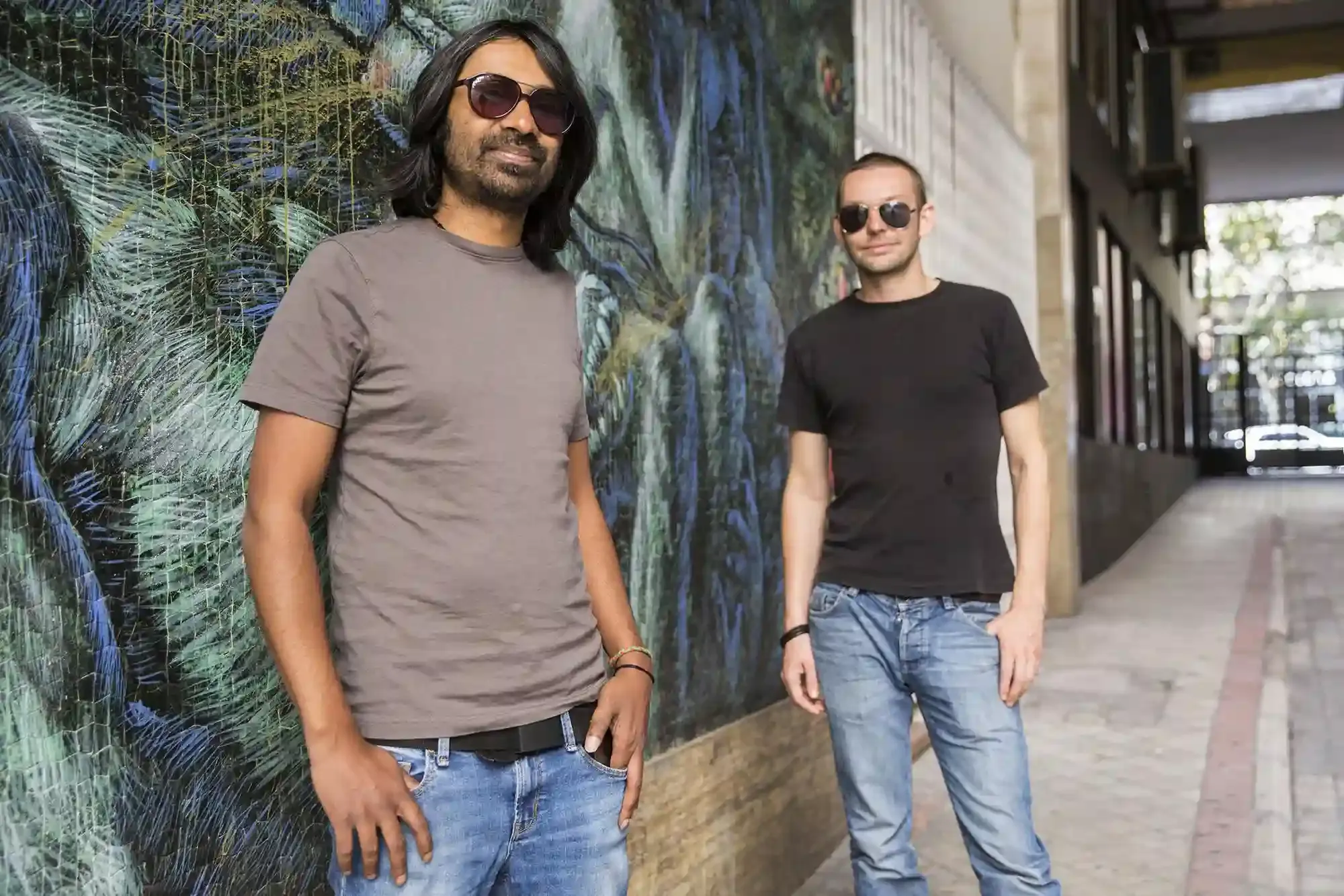
For more than two decades, filmmakers Hannan Majid and Richard York have been telling stories that rarely make it onto mainstream screens. As the founders of Rainbow Collective, a London-based documentary production company, their work focuses on social justice, human rights, and communities fighting back against systemic injustices.
But making politically uncompromising documentaries and refusing funding from corporations or institutions that don't align with their values means building a very different kind of film production business.
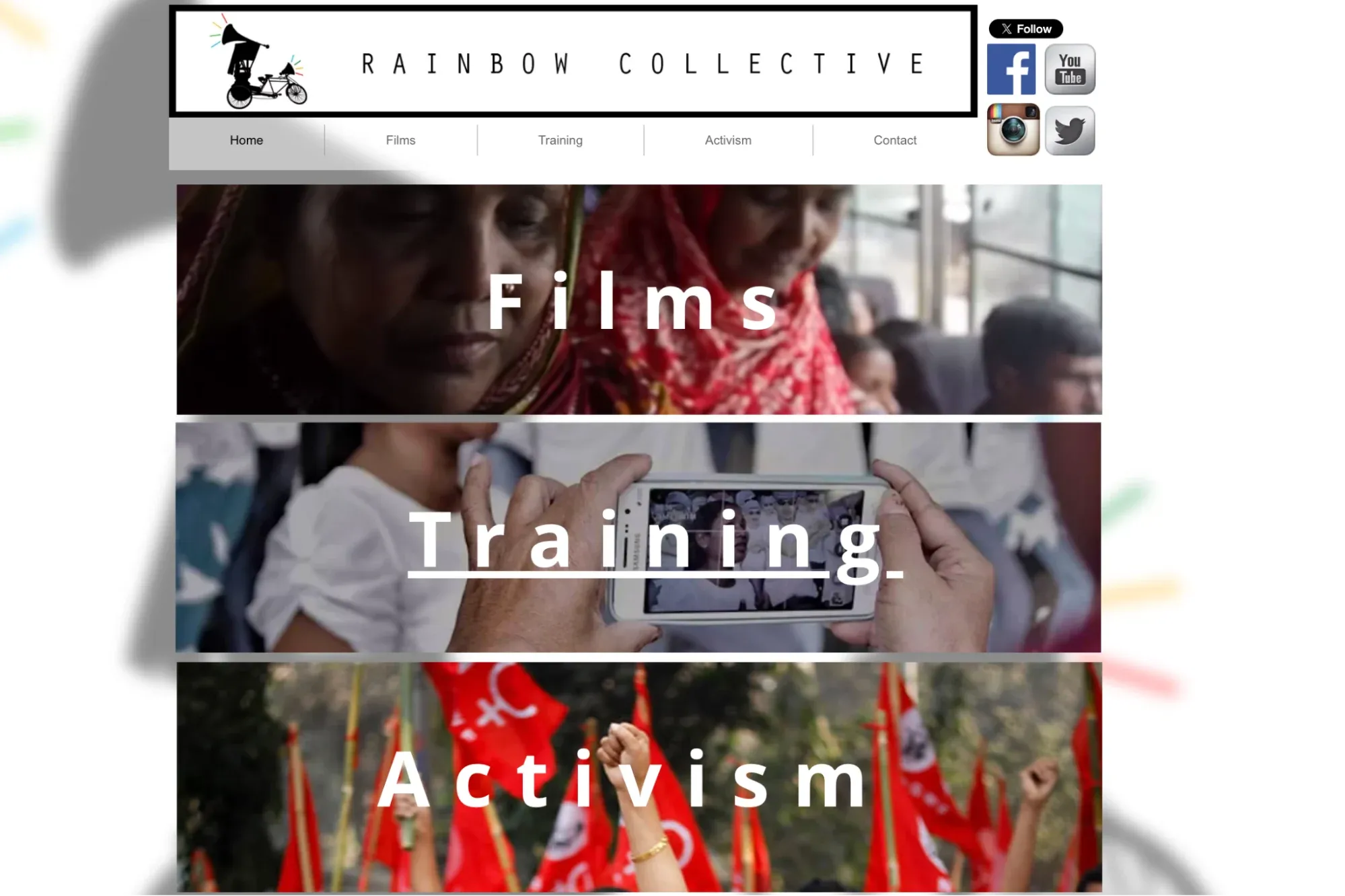
Instead of relying on broadcasters or large streaming platforms, Rainbow Collective has developed a community-driven model of filmmaking. They collaborate directly with activists, workers, and grassroots movements, often involving those communities in the filmmaking process. They use Sellfy to distribute and fund their films independently through pre-sales, Pay What You Want pricing, and direct audience support.
When the UK government banned the subject of one of their films, they released it on Sellfy and made around $35,000 in ten days—about what a streaming platform might pay to acquire it outright. In this interview, Hannan and Richard share how they built a sustainable career over 20+ years, why ethical independence matters more than ever, and how community-powered distribution is helping them finance their documentaries.
What kind of films do you make?
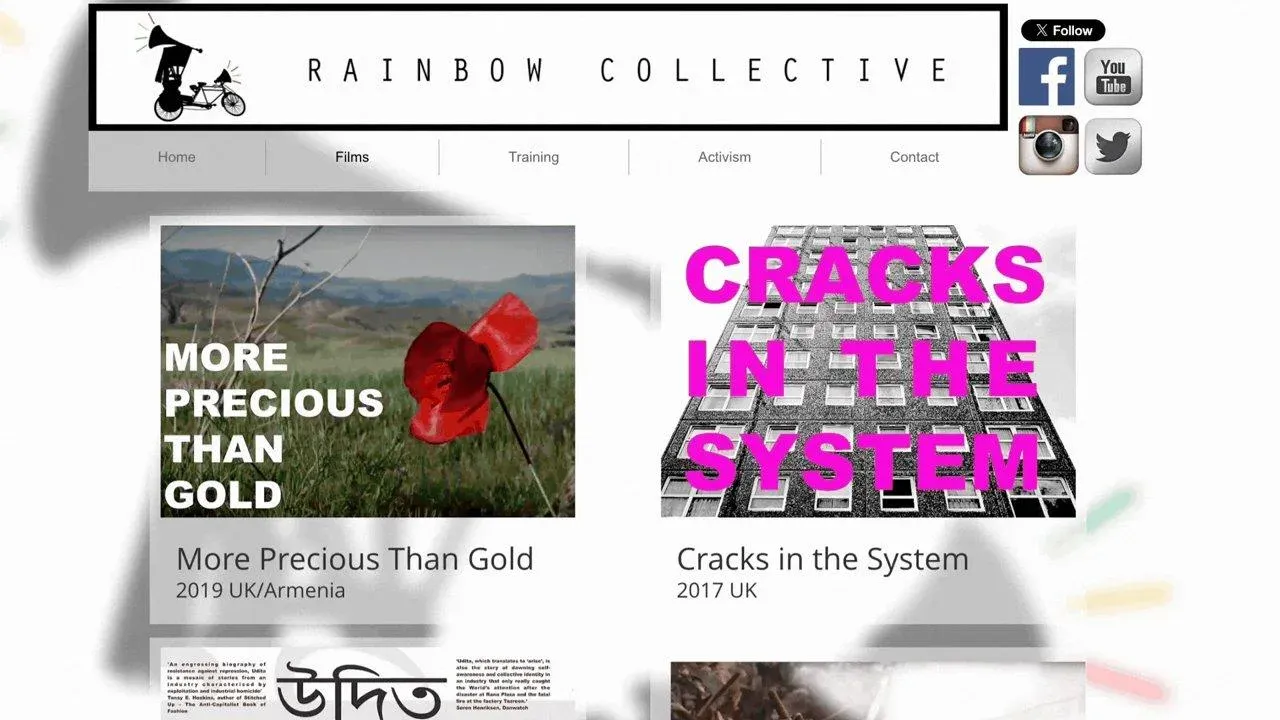
Rainbow Collective is a documentary film production company focused on social justice and human rights. We, the founders Richard and Hannan, have known each other for over 20 years. We went to film school together, and we've been running the company and making documentaries together ever since.
Sellfy is the store builder behind 75K+ creators. One flat monthly fee, and no commissions on your sales.
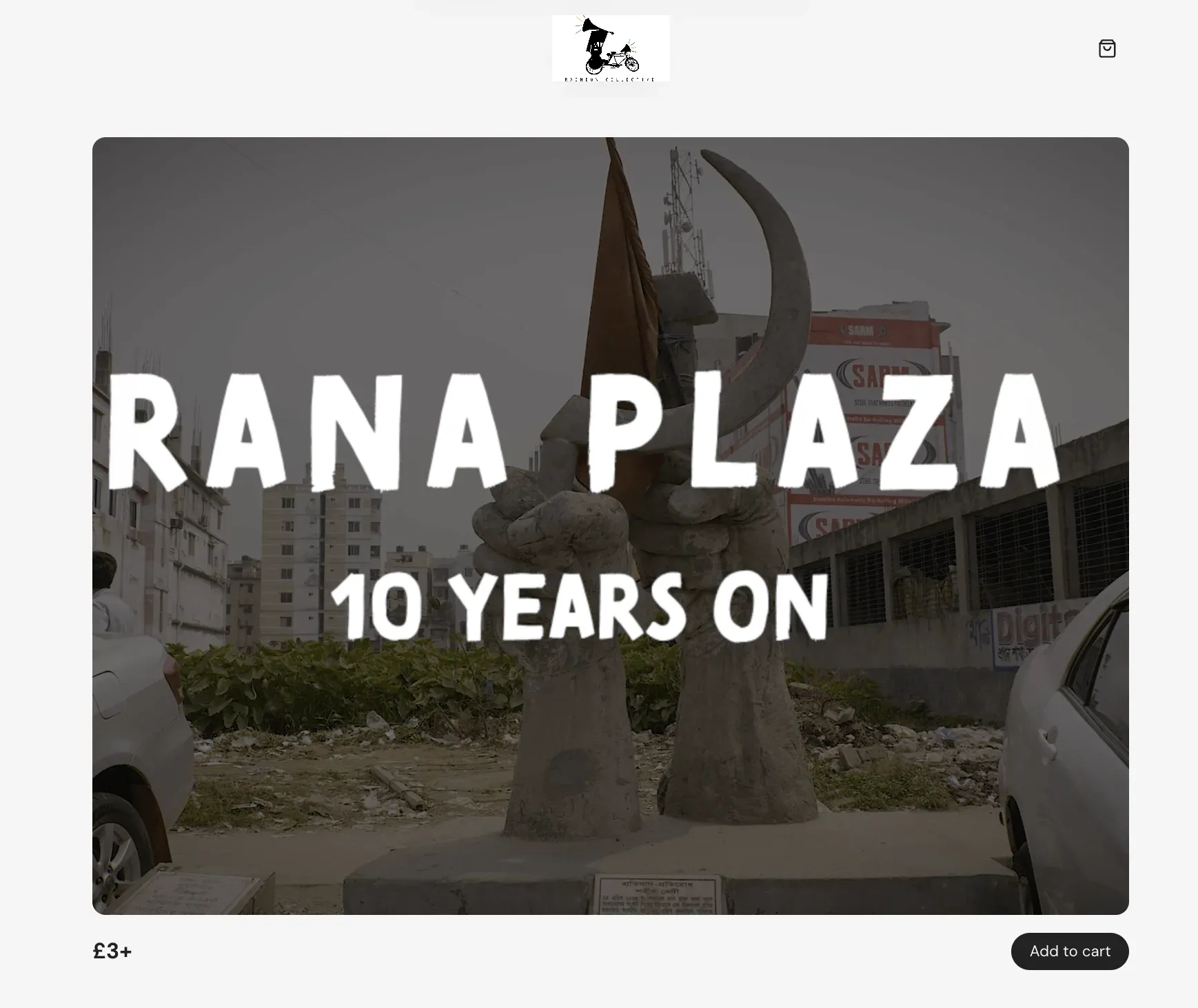
From the beginning, our work has focused on issues like workers' rights, children's rights, and political accountability. Our earliest documentaries were filmed in South Africa, in townships in Durban and Cape Town. After that, we spent years working in Bangladesh documenting conditions inside fast fashion garment factories, long before tragedies like the Rana Plaza collapse and the Tazreen factory fire, where hundreds of workers lost their lives producing clothes for major Western brands.
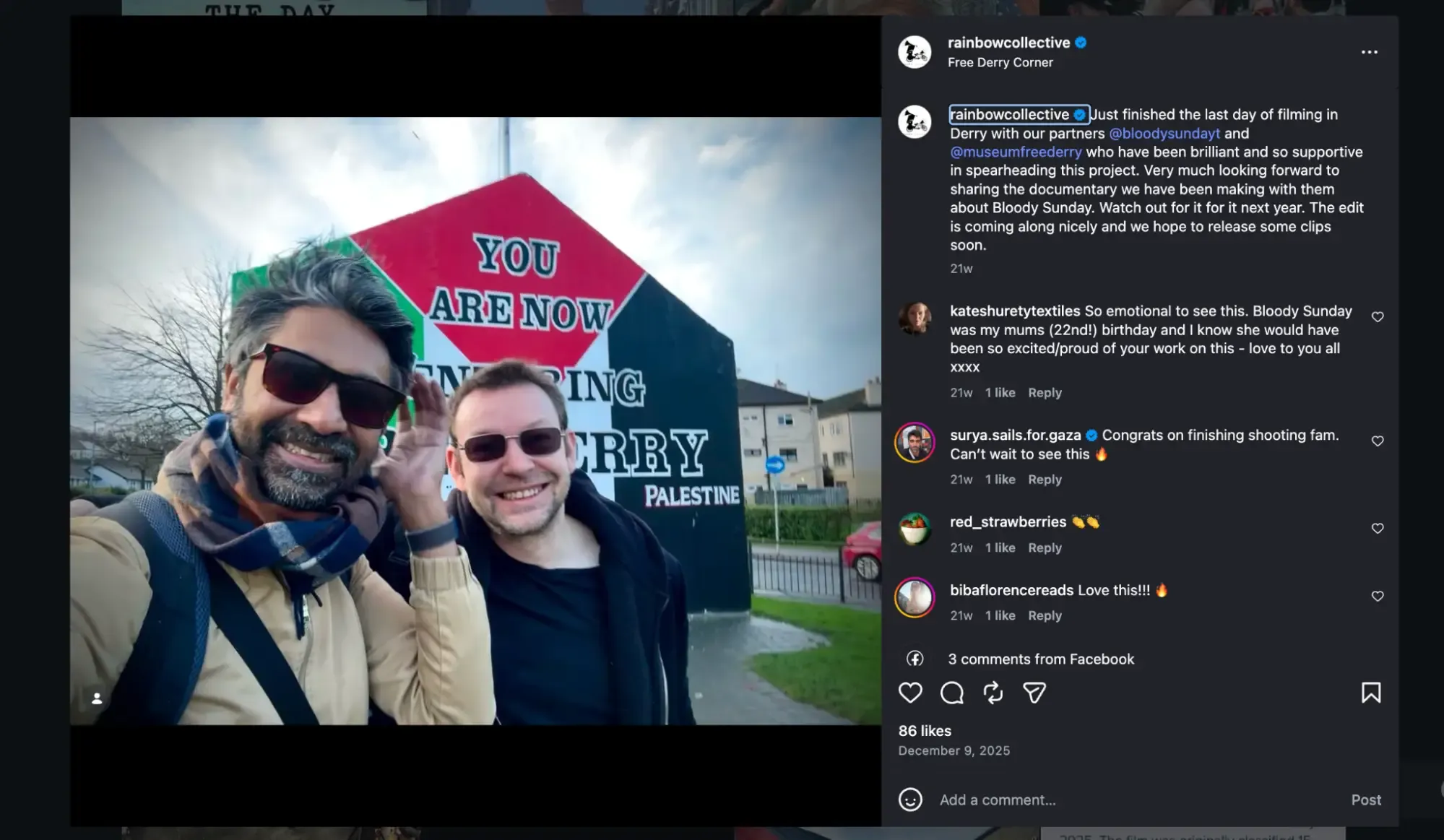
Since then, much of our work has focused on the UK. We've made documentaries examining police power, government authority, war, and the weapons industry, including a recent film about the activist group Palestine Action and their efforts to expose Britain's role in the global arms trade.
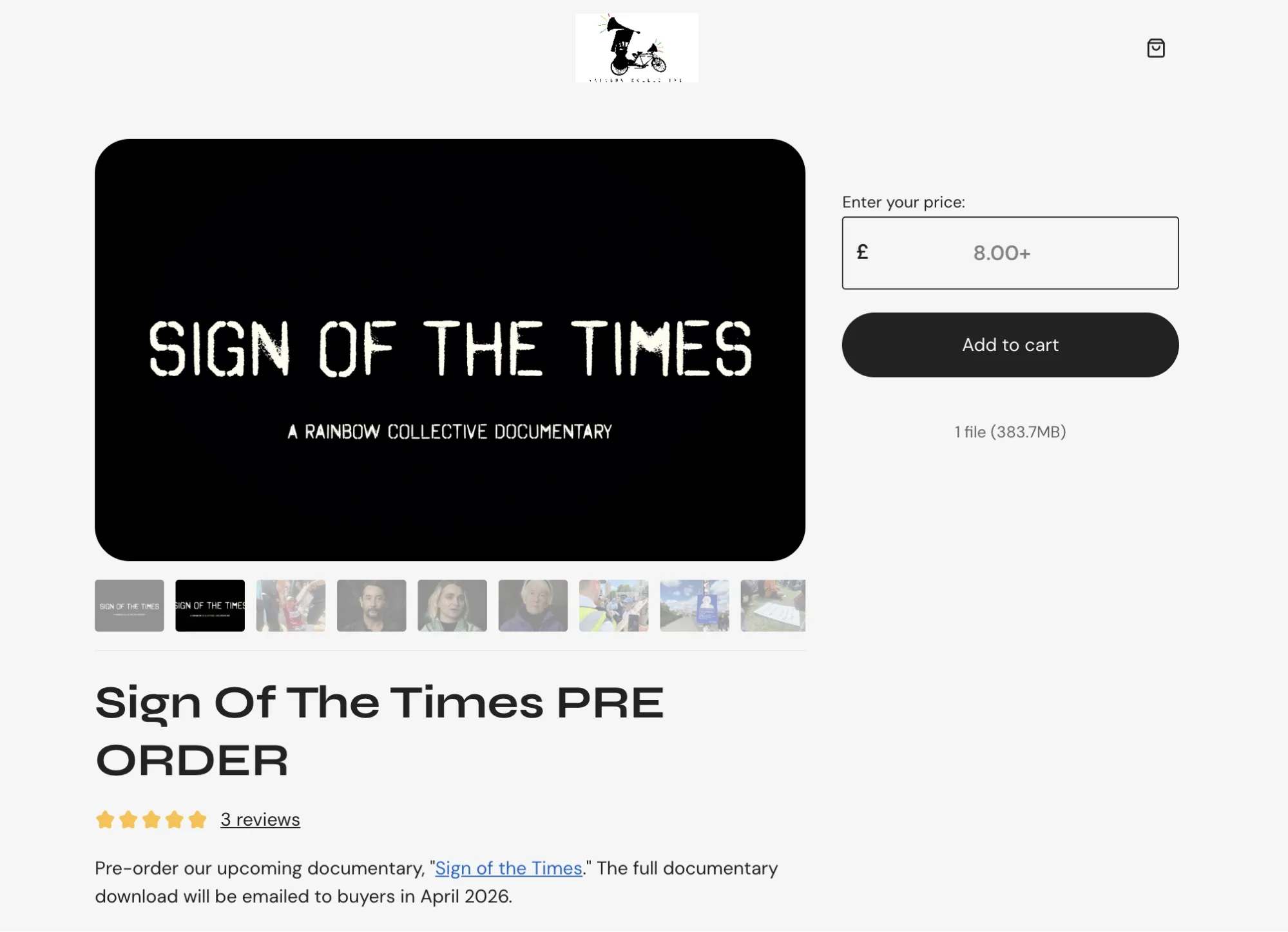
Our newest projects include Sign of the Times, which looks at the erosion of protest rights in the UK, and a documentary about the Bloody Sunday massacre in Northern Ireland, created in collaboration with the victims' families.
How do you think about impact?
What makes our approach different is that we've always tried to think beyond just making a documentary. We've made films that could screen in cinemas or broadcast on major networks like Al Jazeera, so we understand that side of the industry. But at the same time, we've always stayed independent.
For example, while filming around the Rana Plaza disaster in Bangladesh, we gathered footage and evidence from the factory ruins. Some of that material was repurposed and provided to international lawyers pursuing compensation claims against global clothing brands.
Those clips weren't part of the documentary the public saw, but they helped secure over a million in compensation for victims' families.
So in many cases, the biggest impact of a film might happen behind the scenes, not on screen.
How do communities shape your films?
Whenever we work somewhere, we try to leave something behind. For instance, when we were filming in Bangladesh, we didn't just make the documentary and leave. We also ran animation workshops for the children of garment workers. We taught them how to create stop-motion films about their own lives and experiences.
Sellfy is the store builder behind 75K+ creators. One flat monthly fee, and no commissions on your sales.
Similarly, when we worked with formerly homeless young people, we gave them inexpensive cameras and taught them how to document their own environments, where they felt safe, where they didn't, and what they needed from housing services. That footage ended up being used by architects designing shelters for homeless youth.
How have you sustained it financially?
Well, first of all, we never treated this like a hobby. When we started Rainbow Collective over 20 years ago while making our first feature documentary in South Africa, we always intended to build a serious production company with a long-term legacy.
At the same time, we knew we had to be realistic. Social justice documentaries often don't have obvious funding sources, so we've always built a mix of income streams. That includes:
- Commissioned films for NGOs and advocacy groups
- Campaign films for social movements
- Youth training programs
- Educational animation projects
- Documentary collaborations with activist organisations
Our youth animation work, for example, has been incredibly successful. We run a program in Peckham in South London, and the films created by the children have won numerous awards, some equivalent to the Oscars for young filmmakers.
So while our feature documentaries may take years to develop, we've built an ecosystem of work around them that keeps the company sustainable.
How do you balance funding with your ethics?
We've always had very strong red lines. We won't work with corporations or institutions that we don't feel align with our values, even if it would bring in significant funding.
There have been times when we've walked away from major projects because we discovered ethical conflicts. That makes things financially harder at times, but over the years, it has built a huge amount of trust with activists, communities, and organizations whose stories we get to tell. That trust is why we're now invited to tell stories that other filmmakers simply wouldn't be given access to.
How did you start selling on Sellfy?
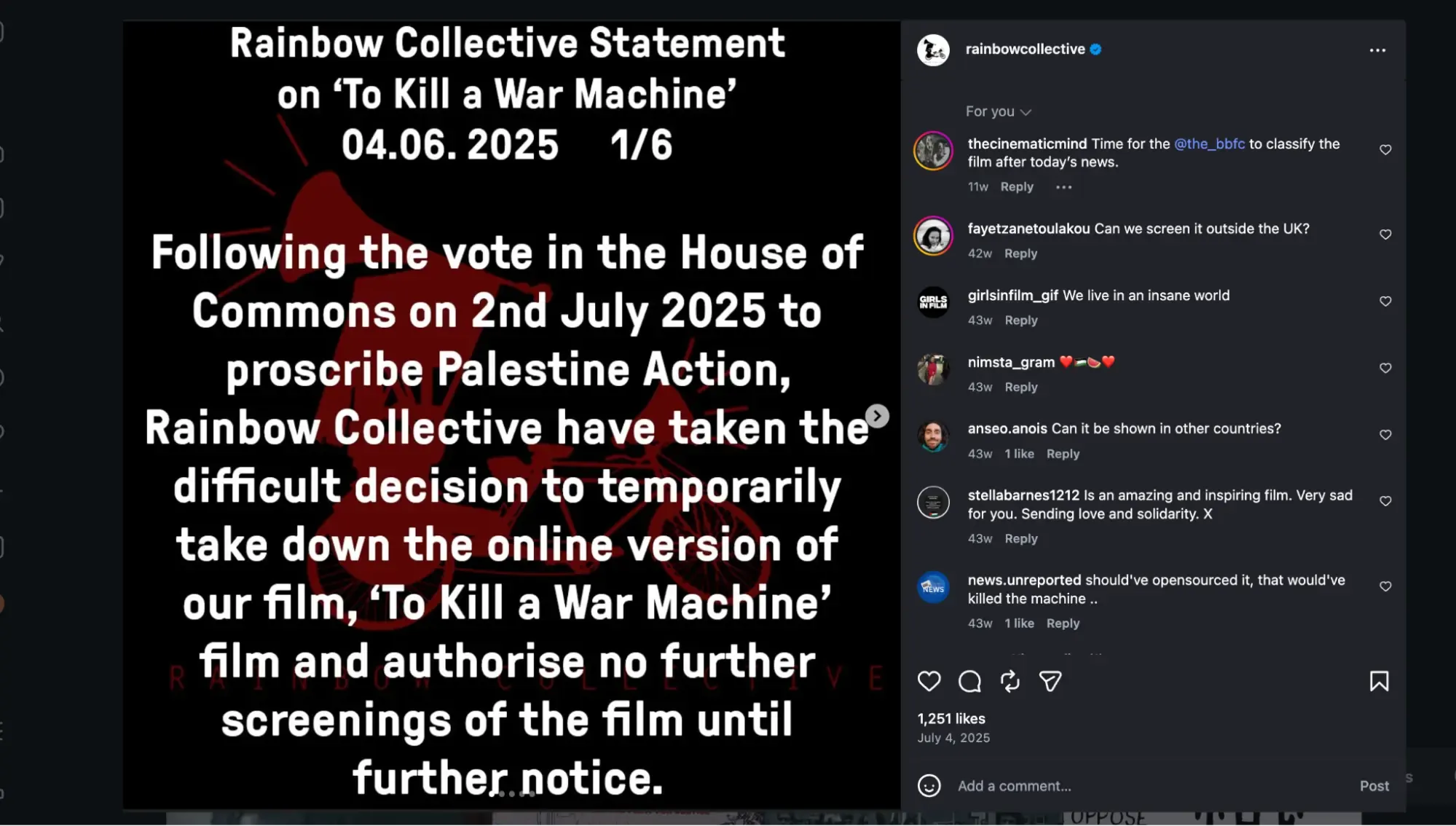
Honestly, it happened out of desperation. We had just finished our documentary To Kill a War Machine and planned a cinema tour across the UK. About 20 days before the premiere, the government announced it was banning the group featured in the film.
Our lawyers told us that even though the film had already been certified by the British Board of Film Classification, it would likely be banned as well. It's actually the first film in British history to have its British Board of Film Classification granted and then removed under political pressure. That obviously created massive challenges for distribution.
Suddenly, we had a completed film, paid cinema screenings, and no way to show it. So we decided to release it online immediately and screen it until the official removal date.
We looked for platforms where people could stream and download the film while still supporting the production financially. That's when we found Sellfy.
What happened when you released it?
At first, we set a fixed price. But midway through the release, we enabled the pay-what-you-want option.
What surprised us was that many supporters chose to pay more than the listed price. Even when we dropped the base price to make the film even more accessible as the removal date approached, people voluntarily paid higher amounts to support the project.
To our own amazement, in less than ten days, the film generated about $35,000 on Sellfy alone. For independent documentary filmmakers, that's extraordinary. A typical acquisition deal from a streaming platform might offer around $35,000 for the entire film.
So, we made the rest of our previous films available on our Sellfy store. Later on, we started offering pre-sales of upcoming films to the audience who had purchased previous documentaries. To our surprise, the pre-sales effectively acted like a crowdfunder.
That income helps us immediately start working on the next documentary. And when we launch a new film with pre-sales, the audience becomes part of the production journey from the beginning.
That way, we can stay independent. This ensures that no single funder controls the project. Instead, hundreds or thousands of supporters contribute small amounts, and they also help promote the film through their own networks.
Sellfy is the store builder behind 75K+ creators. One flat monthly fee, and no commissions on your sales.
Why Sellfy over streaming platforms?
Most major platforms take a significant percentage of sales, often 50% to 60%. That means even if the film performs well, a large portion of the revenue disappears.
With Sellfy, we simply pay a monthly fee. Everything else goes directly to us.
That makes a huge difference for independent filmmakers like us. When supporters choose to pay £50 for a film, they know the entire amount goes straight into funding the next production.
How do you reach such large audiences?
In the early days, promotion was more traditional. We'd have to get picked up by cinema distributors or get commissioned by broadcasters like Al Jazeera.
Today, the approach is very different. The movements we work with already have strong and growing online communities. These audiences are deeply engaged but often underserved by mainstream streaming platforms, especially when it comes to political or social justice documentaries. That creates a huge appetite for the kind of stories we tell.
So instead of relying on a marketing team, we collaborate directly with those movements and their networks. We'll post a short clip or trailer and invite partners connected to the story to collaborate on that post. Many of them have large followings, so within a day or two, the video can reach tens of thousands of viewers and start circulating widely within those communities.
A great example was our film To Kill a War Machine. When we released the first image from the film, it immediately received tens of thousands of likes. Then we coordinated the trailer release with several organizations we work with. Some of those groups had hundreds of thousands, even millions, of followers.
As soon as the trailer went live, they shared it at the same time, and it quickly passed a million views. At that point, our own Rainbow Collective account only had a few thousand followers, so the reach was really coming from the network around the film.
Because of that online buzz, we've had distributors reach out to us and cinemas sell out screenings. And the best part is that all of this happens without paid advertising. It's entirely driven by community collaboration and shared storytelling.
What role does Sellfy play in your marketing efforts?
Sellfy helps us build a direct relationship with our supporters. Everyone who buys a film joins our email subscriber list. We send newsletters with updates, trailers, and early access to new projects.
For example, when we launched the documentary Sign of the Times, we emailed everyone who had previously purchased To Kill a War Machine. Many of them pre-ordered immediately.
Our goal now is to grow our mailing list to 20,000 to 30,000 subscribers. Once we reach that scale, we can sustainably fund independent productions directly through our audience.
What advice would you give other filmmakers?
The first piece of advice is simple: don't try to do it alone. Documentary filmmaking can be emotionally demanding, especially when dealing with traumatic stories. Collaboration is essential, both creatively and personally.
You also need to build trust with the communities whose stories you're telling. And humility is very important, too. Documentary filmmaking isn't about turning the camera on yourself. It's about documenting reality honestly and humanely.
And take advantage of modern technology. Today, you can shoot high-quality films using everything from smartphones to small camera kits. The tools are more accessible than ever.
The same is true for distribution. Platforms like Sellfy democratize access to audiences in the same way affordable cameras democratized filmmaking. The traditional industry structures aren't the only way to reach people anymore.
Follow the principles of good storytelling, but don't feel bound by the old industry systems. We're living in a moment where independent creators can truly do things on their own terms.
Our example shows that if you stay true to your voice and build a genuine relationship with your audience, it's absolutely possible to be a self-funded independent filmmaker.

Success Stories
Tips for creators
Join thousands of creators receiving sales tips, marketing resources, and inspiring stories. No spam, pure value.