- success stories
- |By Zane Skuja, Last Updated:
How Erika Svanoe successfully self-publishes her sheet music that some publishers rejected
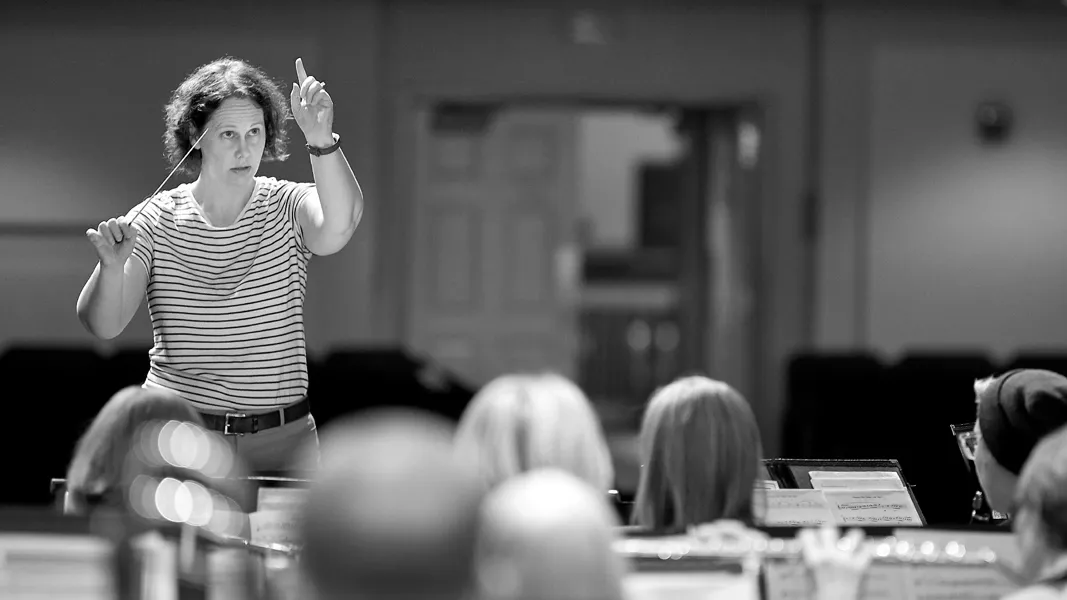
For composer Erika Svanoe, success didn’t happen overnight. Erika spent fifteen years conducting a band, baton in hand. Then she put it down. These days she composes full-time, and sells the sheet music herself on her Sellfy store.
Erika built four income streams. She takes composing commissions, guest conducts, teaches, and sells digital downloads. A key part of that ecosystem is her Sellfy store, her shop for digital sheet music.
By combining years of musical mastery, offline relationships, and a simple digital storefront, Erika has built an international audience and created a sustainable income stream while retaining full creative control over her work.
Here’s the story of how she does it.
Sellfy is the store builder behind 75K+ creators. One flat monthly fee, and no commissions on your sales.
What do you do, and what types of products do you create?
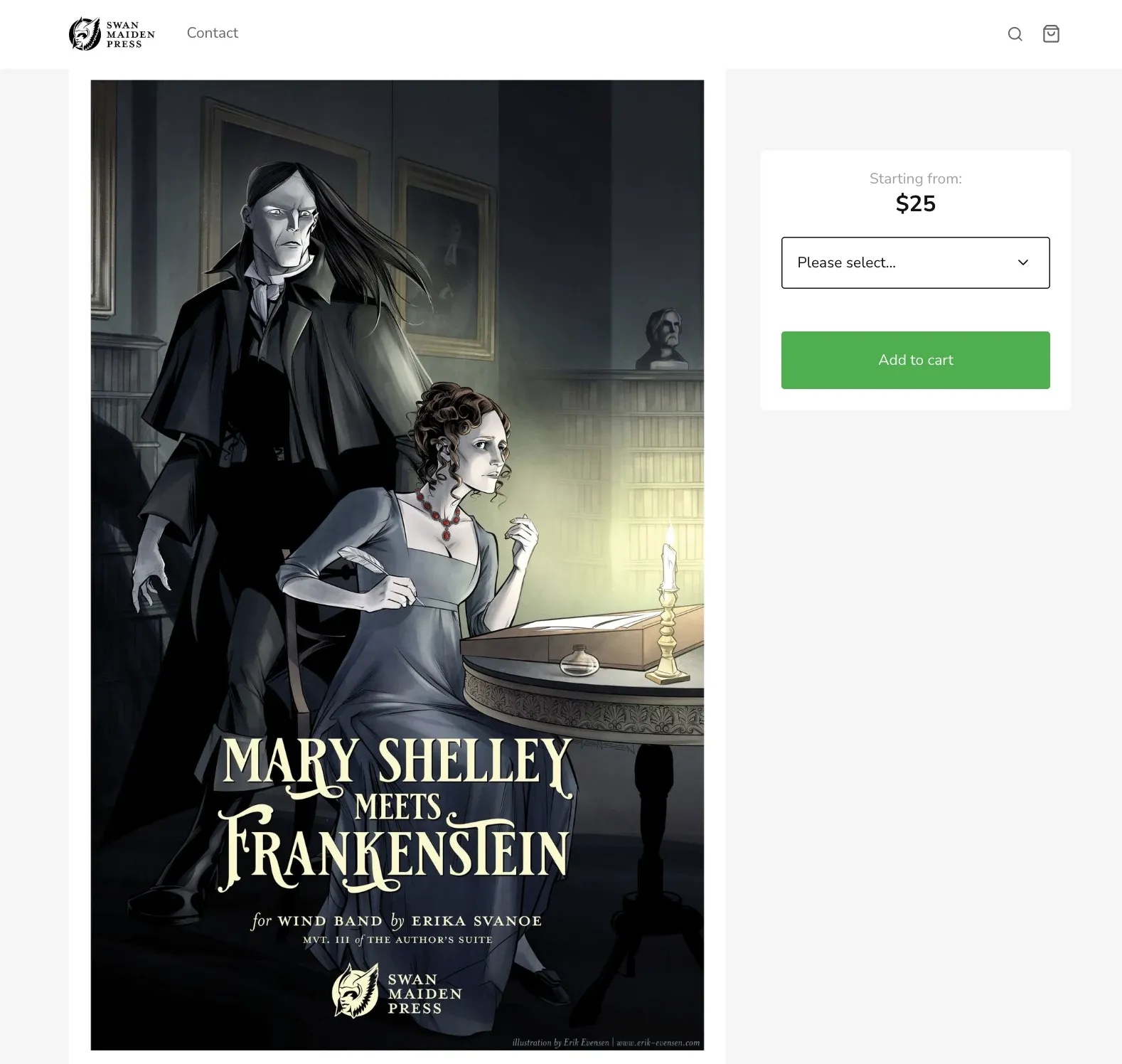
Most of my full-time work is composing music for wind band ensembles. My pieces are performed by middle school, high school, university, and community bands, mainly in the United States, but increasingly internationally as well.
Having a website and an online store really helps with that. It means someone across the world can discover my music and purchase it instantly, which wasn’t possible when the industry relied entirely on printed sheet music.
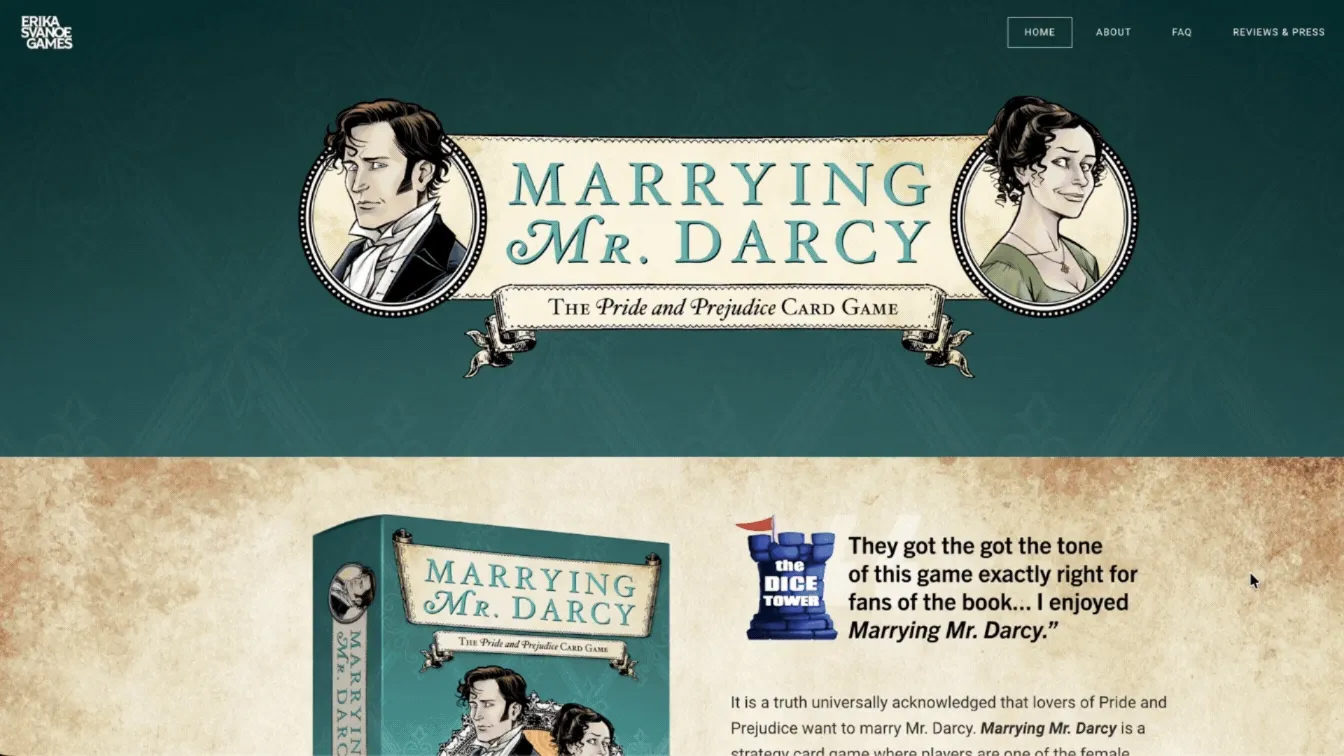
Alongside composing, years ago, I also designed a board game called Marrying Mr. Darcy, inspired by Jane Austen’s Pride and Prejudice. This was very much a side passion project for me because I'm a huge fan of Jane Austen's Pride and Prejudice. My husband did the artwork and production while I designed the mechanics and wrote the game. We launched it through Kickstarter over a decade ago and initially sold a digital version through our Sellfy store.
When did selling your sheet music online go from idea to decision?
The niche I work in is different from the mainstream music industry. My work isn’t about streaming or MP3s, it’s sheet music that real people perform live.
The industry has really changed since I entered it. When I got out of college, everything was printed and sold physically. But over time, musicians began preferring digital libraries and downloadable scores.
I've always been a maker of stuff. So, I had what I thought was a good idea for a piece for band that used an iPad as an electronic instrument. And I decided to follow through on that idea. So, I wrote a piece. And that piece ended up getting picked up by a publisher, and I kept writing.
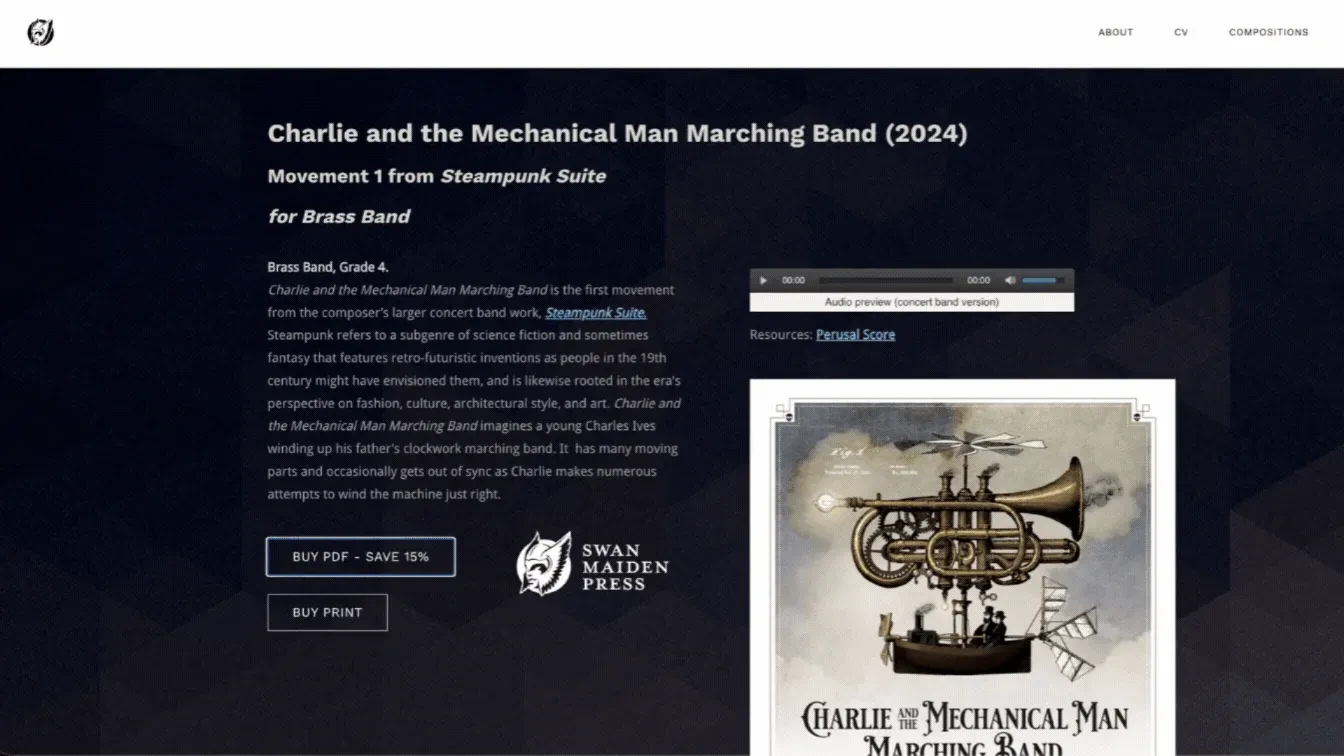
Still, many of my compositions were rejected by traditional publishers, so I decided to publish them myself. And since I already had a Sellfy store for my board game, it was very easy to start offering PDF sheet music directly through my online store.
Self-publishing lets me maintain control over my intellectual property, which is really important to me. I'm a big believer in controlling my intellectual property and not giving the rights to somebody else at this point.
Sellfy is the store builder behind 75K+ creators. One flat monthly fee, and no commissions on your sales.
What do you love about self-publishing, and what do you wish someone had warned you about?
The biggest advantage is that you keep the profits and the rights to your work.
The challenge is that you also have to handle the marketing and distribution yourself. The internet makes publishing accessible to anyone, which is great, but it also means you have to stand out in an extremely crowded, saturated marketplace.
To succeed, you have to develop your own voice, build a reputation, and find the audience that connects with your work. It’s a lot of work, but it’s also very fulfilling.
Talk us through it: how did you build a crowd for your music?
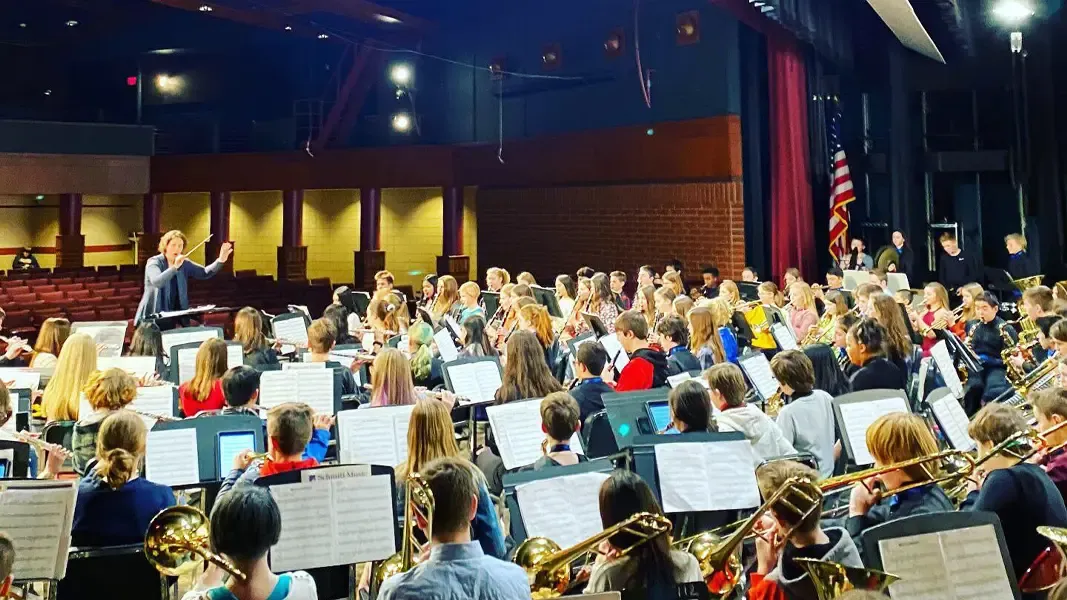
Before I became a full-time composer, I spent about 15 years working as a band conductor. So, I already had connections with other conductors and musicians.
When I started releasing my compositions, some of those colleagues programmed my music in their ensembles. Their students and audiences would hear it, like it, and ask where to find more.
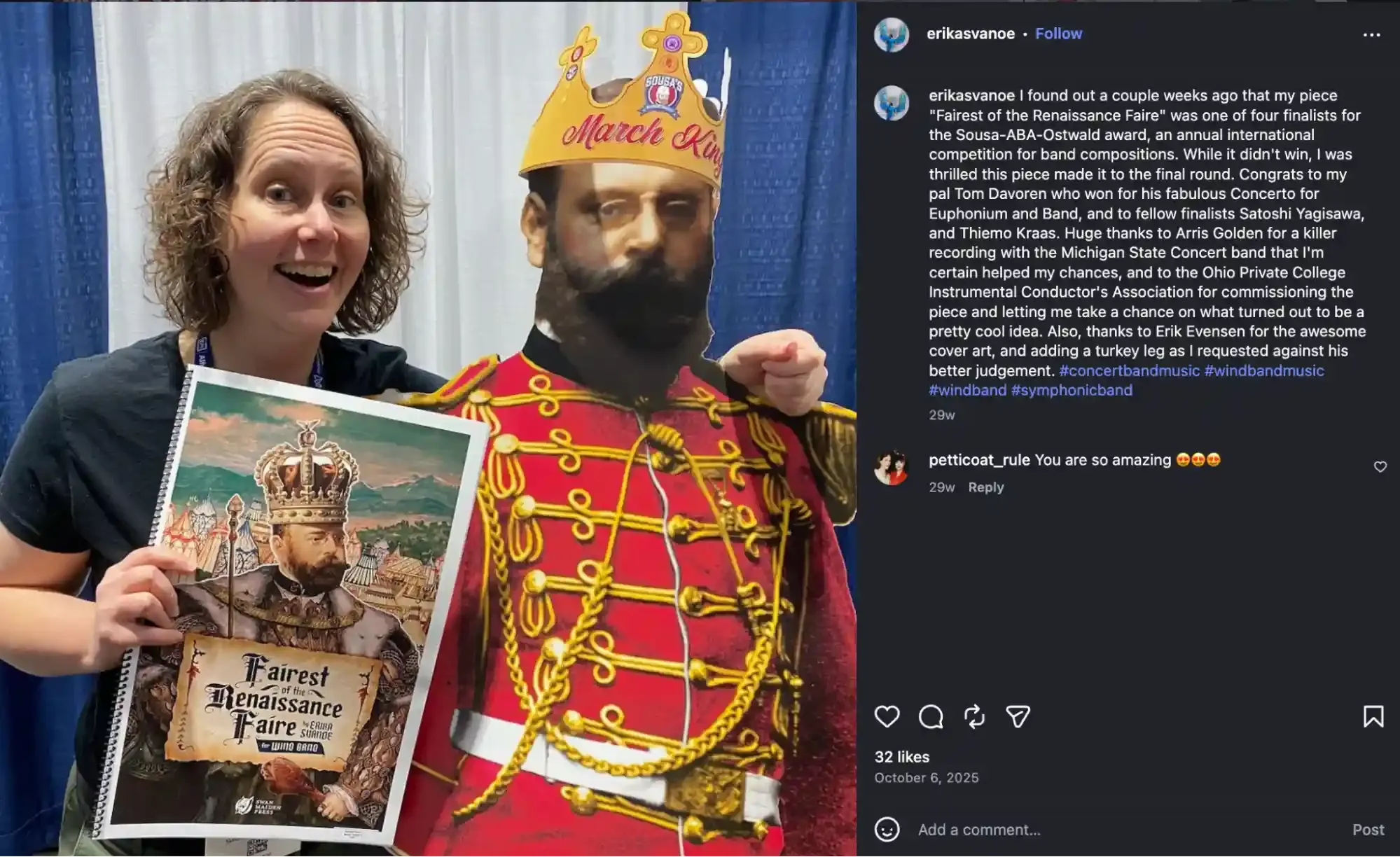
So a lot of my marketing has been relationship-driven. Social media helps for sure. I use Facebook, Instagram, and YouTube, but personal connections are incredibly important in my field. Because my music is meant to be performed by people, that human aspect is central to everything I do.
What's the bridge between an offline connection and an online store sale?
Often it happens after a performance or at a conference. Someone hears a piece I wrote and asks where they can find it.
I’ll direct them to my website, and if I know their ensemble type, I might recommend specific pieces that would work well for them.
For example, if I’m talking to a community band director, I might point them toward pieces I’ve written specifically for volunteer ensembles. That way, they don’t have to browse through my entire catalog, but they can start with something that’s already tailored to their needs.
Do commissions influence the music you publish?
Absolutely. Many of my pieces start as commissions.
When someone commissions a piece, we discuss their ensemble, like the skill level of the musicians, their instrumentation, and sometimes even thematic ideas. I want to make sure the music truly fits their group.
After the piece is premiered, I’ll usually revise it and prepare it for publication. That process can take from six months to a year before it appears in my Sellfy store.
What does your business look like today?
Three years ago, I made the leap from teaching full-time at a university to focusing on composition and publishing.
My work now includes several income streams:
- composing commissioned pieces,
- selling sheet music online: both on my Sellfy store and other distribution platforms,
- selling my board game,
- guest conducting and workshops,
- teaching occasional university classes.
I typically write six to eight compositions each year. At the same time, I manage the whole publishing side, which includes editing scores, preparing artwork, and releasing the new pieces.
What I love about having my digital products is that they help create more passive income, and that frees up time for me to create new work.
Why did you choose Sellfy over other e-commerce platforms?
I started using Sellfy around 2014 when I wanted to publish a digital version of my Marrying Mr. Darcy board game.
The biggest requirement for me was automation. I knew that if it required a lot of manual work, I wouldn’t be able to maintain it. Sellfy’s high level of automation is a huge deal for me. Digital downloads, payments, and delivery all happen automatically.
Sellfy was also one of the most affordable options, super easy to use and user-friendly, and it integrated well with my website, so it became the obvious choice.
As my business grew, I started using it for my music as well.
Which Sellfy features are especially helpful for your store?
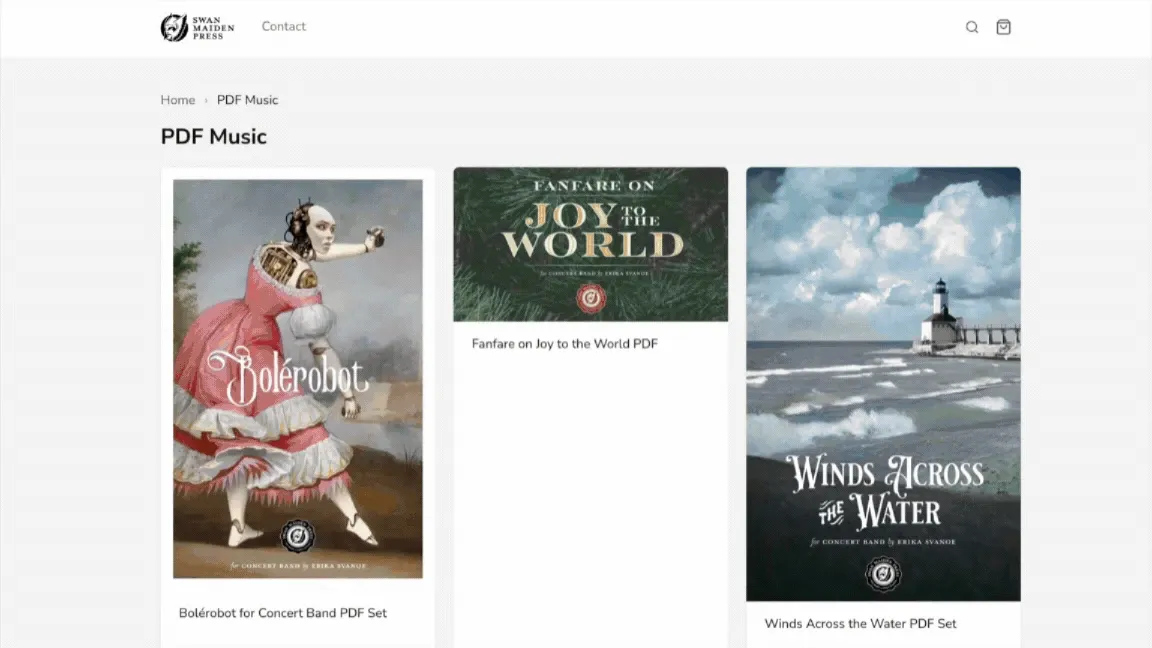
I really appreciate the PDF stamping feature, which protects my intellectual property by marking my downloadable sheet music.
Another useful feature is product categorization. My store contains both board game products and a variety of sheet music. I have both physical and digital products, and so the ability to organize everything into clear categories makes it easier for customers to find exactly what they’re looking for.
Sellfy also supports email opt-ins and email marketing, and that helps me grow my newsletter list - both when someone downloads a free product or makes a purchase.
How do you stay connected with your audience?
Email is probably my most important marketing channel. I send a newsletter every couple of months to update people about my new musical pieces, performances, and projects.
I also like to highlight other artists, podcasts, and colleagues, which keeps the newsletter from feeling overly self-promotional. I come from a culture of modesty, so I find it challenging to talk about myself and tell people “hey, check out the thing I made, I think it’s awesome!” Having other people and projects to talk about and recommend helps a lot.
Right now, I have around 800 subscribers, and roughly half of them open each newsletter, which is a great way to remind people that new music is available.
What was the biggest challenge in your business?
The biggest decision was leaving my full-time teaching job three years ago.
For more than a decade, composing and publishing had been a side hustle. Eventually, the business grew enough that I had to decide whether to stay in academia or pursue my creative work full-time.
Freelance work is definitely less stable than a university job, but with the support of my spouse and multiple income streams in place, I felt ready to take that leap.
So far, I feel like it’s been the right decision.
Sellfy is the store builder behind 75K+ creators. One flat monthly fee, and no commissions on your sales.
What advice would you give someone entering the music publishing world?
This might seem too simple, but I think these are true. In my mind, three things matter most - you need to be good, you need to be reliable, and you need to be a good human being. Here’s what I mean:
1. Be good at your craft.
Put in the time to create high-quality work. You have to make your work stand out, so do more editing passes and invest in the quality of your work.
2. Be reliable.
Show up for things, meet deadlines, answer emails, and honor your commitments - all those things make you a person who can be counted on.
3. Be a decent human being.
I think this is underrated, but it goes a long way. Creative industries run on relationships. If people enjoy working with you, they’ll be much more willing to collaborate again. And also, if you falter in the other two, but you’re a good human being, it’s likely that the other person will be more understanding and will cut you some slack for any shortcomings.
When you combine strong work, reliability, and good relationships, you’ll build a foundation that can support a long-term creative career.

Success Stories



Tips for creators
Join thousands of creators receiving sales tips, marketing resources, and inspiring stories. No spam, pure value.