- success stories
- |By Zane Skuja, Last Updated:
How Jay Eskar Built an Independent Music Business After Losing His YouTube Channel
When Jay Eskar uploaded his first products to Sellfy back in 2016, he wasn't trying to build a side hustle. He was trying to build a life around the only thing he knew he wanted to do forever: make music.
Today, the Mexico-based music producer and DJ makes his living from several income streams at once. Alongside releasing his own music, Jay sells sample packs and online courses through Sellfy, creates content for his YouTube channel, partners with music brands, earns royalties, and has built a thriving community of producers around his work.
His philosophy is simple: stay independent, diversify your income, and never stop creating.
We spoke with Jay about building a sustainable music business, recovering after losing his YouTube channel, and why community and being yourself matters more than chasing algorithms.
Who are you and what do you use Sellfy for?
I'm Jesus Escarcega, or Jay Eskar, a music producer and DJ. I was born in Mexico, grew up in California, and now I live in Mexico.
On Sellfy, I sell sample packs, which are basically the tools other producers use to make music. They're like raw materials — people can buy them and create something that sounds like me, or something completely different and original. In EDM especially, having your own signature sound is really important, and that's one of the reasons I've been able to sell directly through my own store: I'm essentially selling my unique sound as a product.
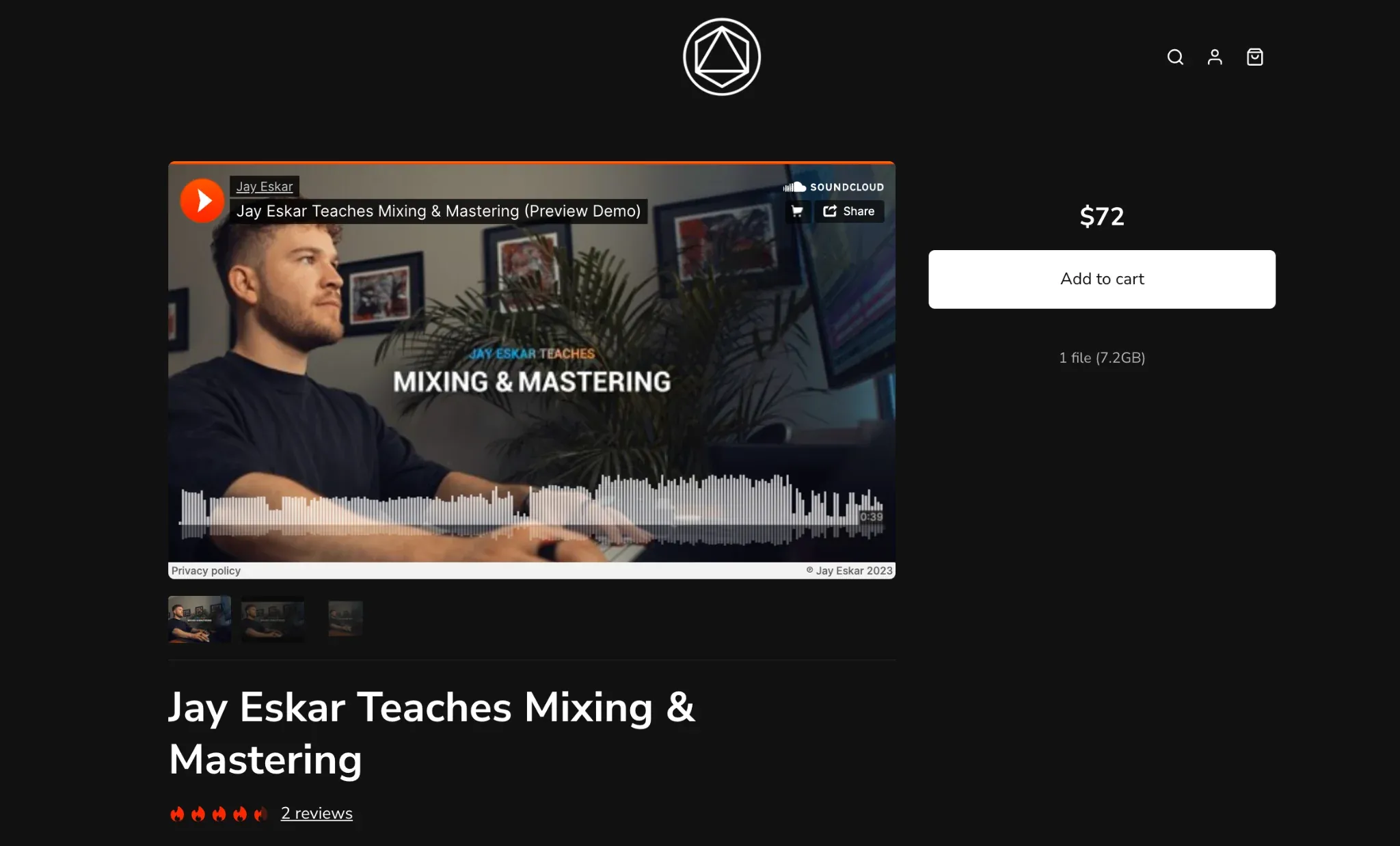
I also sell online courses on my Sellfy store. My first course honestly didn't look great, but I've kept improving them over time — I want my courses to have really high production quality.
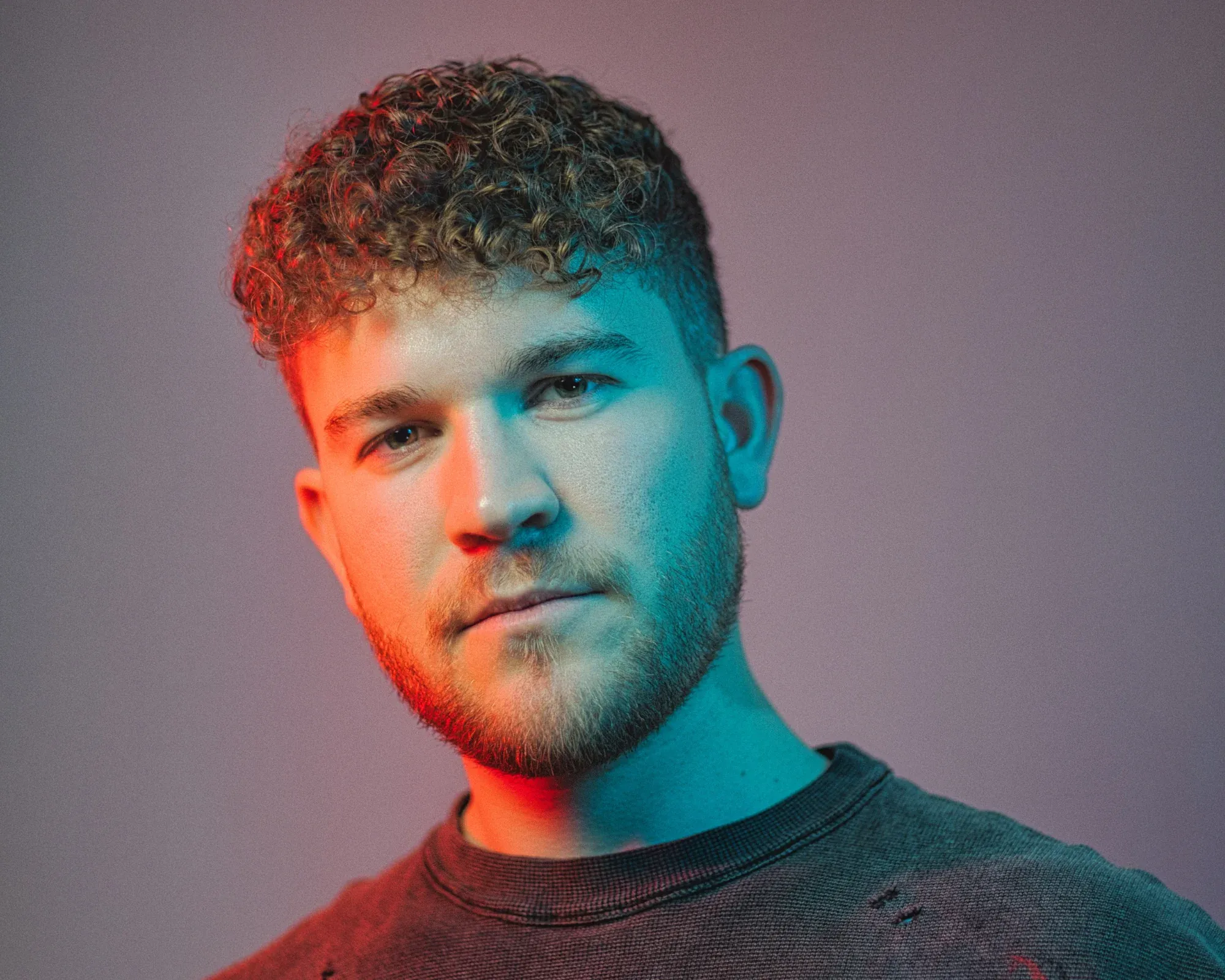
You started making music at 10. What kicked off that journey?
It happened naturally through my cousin, who was producing in FL Studio, the same software I still use today. He was the "cool older cousin" to me, and whenever we met, he was always making music. I looked up to him a lot, so I asked him to teach me, and that's how I got started.
Once I learned the basics, I got really obsessed with it. I spent almost all my time learning and practicing, and pretty quickly I got to a point where I was even better than him. I was around 11 when he started reacting to my projects with real surprise.
The real shift happened when I was about 12 or 13. I entered a remix competition with a prize of around $150, and I won it. That was the first moment I realized I could actually make money from music, and it completely changed how I saw it. Before that, I wanted to be like an astronaut or a firefighter, but after that, I started thinking music could be a real career path.
Not long after, I discovered ghost production, making tracks for other people who release them under their own name. I didn't overthink it at the time, I just saw it as a way to work and improve fast. At one point, I was producing around 12 tracks a week under an old alias, Infectious, during the peak of EDM ghost production around 2014.
At the same time, I was part of a Facebook group called "The Future of House," where a lot of now-famous DJs like Oliver Heldens, Martin Garrix, and Tiësto were active before they fully blew up. That space really showed me what was possible, and from there I started thinking more seriously about building something of my own, which eventually led me to Sellfy and creating my own music business instead of just producing for others.
How are you able to make a living from music?
I've always believed you should never put all your eggs in one basket, so a big part of my income strategy is diversification.
Besides Sellfy and royalties, I also earn from YouTube, brand partnerships, affiliate deals, and occasionally DJing. I also work with companies that pay me to create sounds or presets for plugins and tools. My main income comes from royalties: streaming royalties from Spotify, Apple Music, YouTube, and other royalty income generated by my music. There are many income streams in music that most people never see.
Sellfy is the store builder behind 75K+ creators. One flat monthly fee, and no commissions on your sales.
One of the most important things about my business is that I'm mostly independent. I register my own music, I collect my own royalties, and I don't depend on a label controlling when I release things. I still release music with labels sometimes, especially because collaborations are crucial for growth, but having my own direct channels and products gives me a level of independence I really value.
That need for independence and control over my creativity is also part of why I use Sellfy. If I make a sample pack today, I can upload it today. There are other platforms where you have to wait weeks for curation. I'm on those too, but I prefer being able to move instantly.
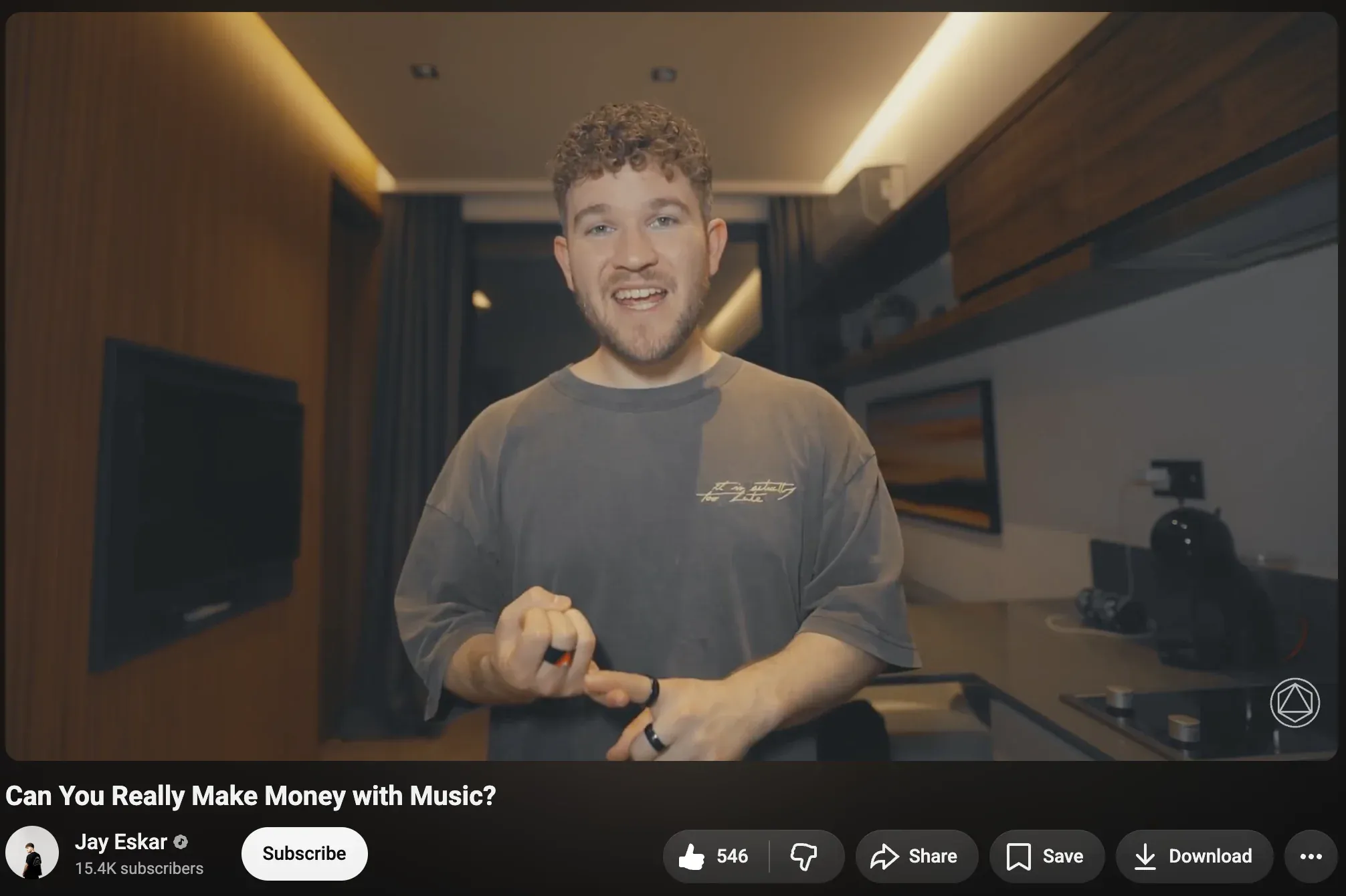
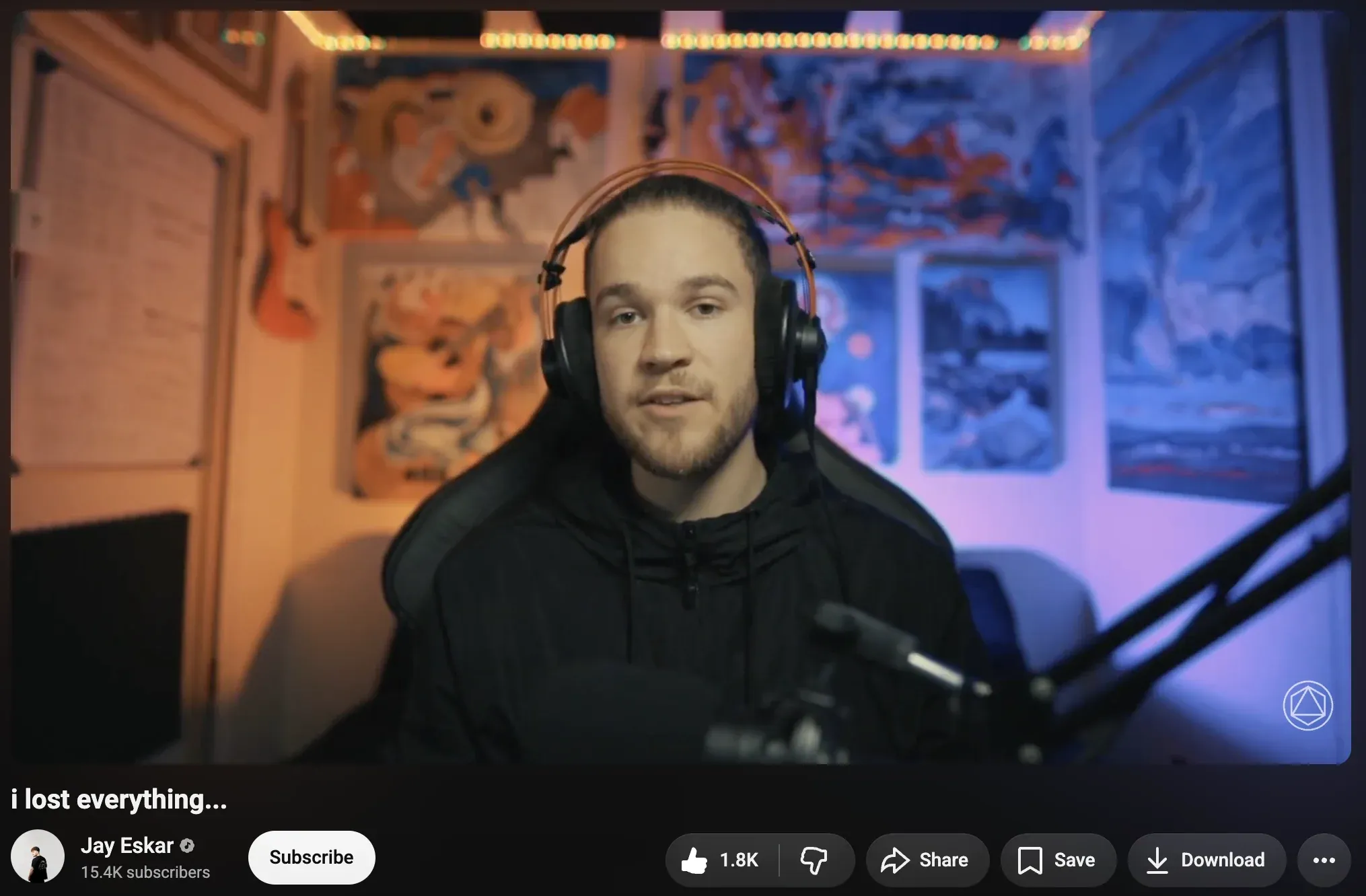
Tell me about losing your YouTube channel, and how you recovered from it.
In August of 2020, my YouTube channel had around 50,000 subscribers and was getting millions of views. I was also earning solid AdSense income, especially from videos about music production and making money as a musician.
Then my YouTube channel got hacked. And I didn't just lose the channel, it also broke my AdSense setup, which meant I lost my main source of income completely. I tried everything to recover it, but nothing worked. It was a really difficult time, because I had basically lost my job.
Eventually, I found a workaround through a music distributor, which let me set up AdSense monetization again under a new structure, but I also had to rebuild my YouTube channel from scratch. I'm now back up to 15,000 subscribers, so I lost about two-thirds of my original subscriber count.
Luckily, while I was desperately trying to get my YouTube back, I started getting opportunities from companies that needed sound design work. That helped me survive financially, but it also changed the way I worked. I got to observe their corporate operations and workflows and learn from them: they have systems, calendars, and processes, and I built all of that into my own.
At the same time, I kept creating content. I had just bought a camera a week before getting hacked, and that motivated me to keep making videos. I also started posting on TikTok, back when almost nobody in my space was using it. Nothing really went viral, but it helped me stay visible and eventually led to brand partnerships outside of YouTube.
That entire experience taught me something important: you can't rely on one platform. You need multiple channels to reach your audience, and multiple sources of income.
What's the role of Discord in your business?
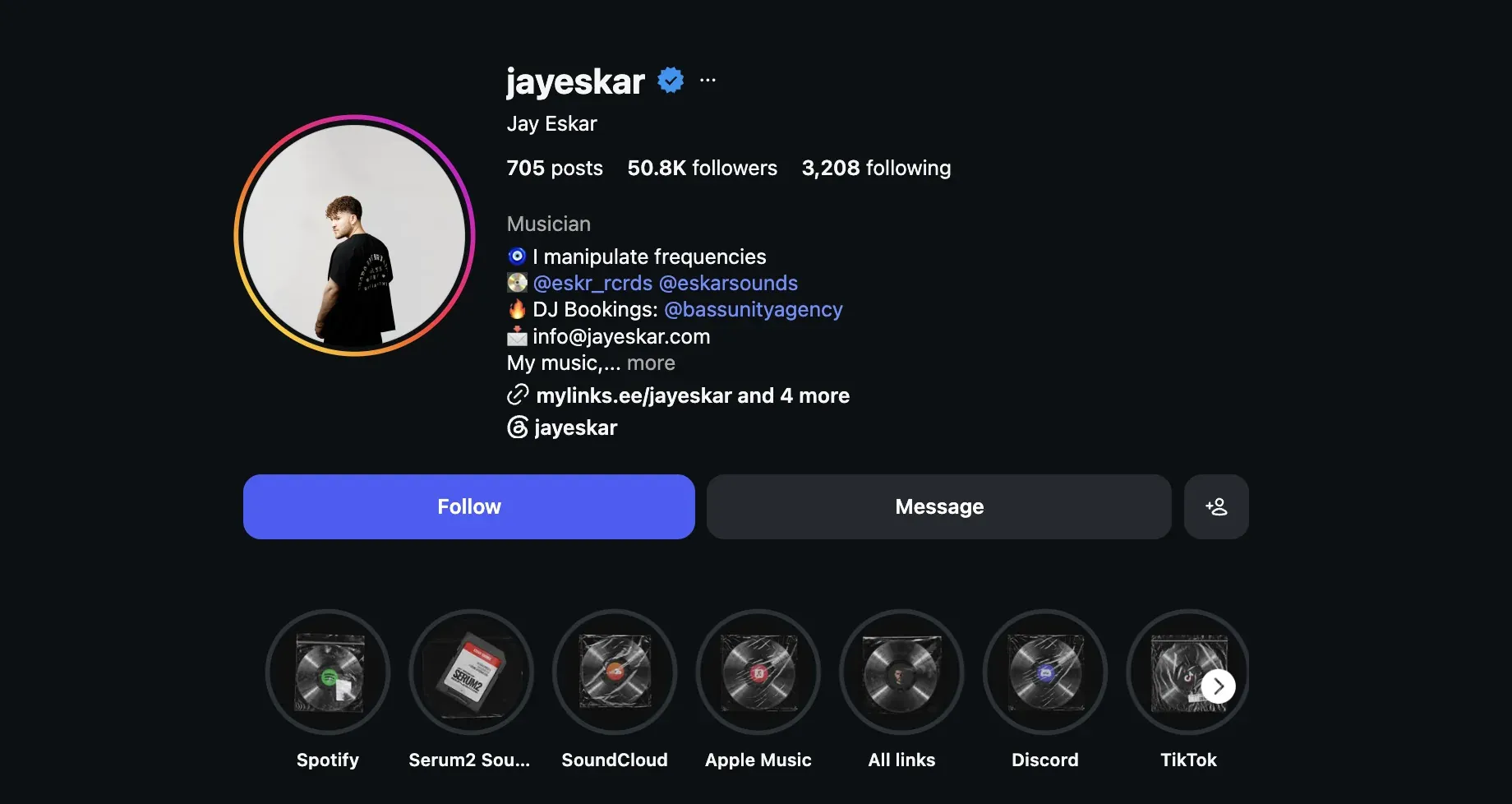
One of the most important parts of my business is my Discord community. I have over 1,000 members there, mostly music producers or people learning production. It's a space where people share their music, give feedback, and help each other improve.
There's a general chat channel, a feedback channel, and even a resources section where we share tools and educational content. Most importantly, I also use my Discord to announce new product releases and YouTube videos. For me, Discord works like email marketing, or a real-time bulletin board. I can post something and immediately reach my whole audience without worrying about algorithms or whether people will see it.
More than that, it builds community. I don't want to feel distant from my audience, I want them to feel like friends. I don't want to be seen as someone above them, which is very common among music producers and DJs: they often want to be seen as idols, and they stay very private. For me, we're all just people making music and having fun with it. That sense of connection is what keeps people around long-term, not the content or the products I post, but the fact that they know each other.
What's your approach to content creation and marketing?
I don't think you can separate music and content anymore. A lot of producers complain about it, but I truly enjoy creating content. It's part of my creative process.
I'm not trying to hack algorithms. I focus more on structure: the right hook, the right lighting, script, and clarity, and I think a lot about how people consume content and create around that. Because I've been making music and videos since I was very young, creating content feels natural. I don't have a problem being in front of the camera, and I can sit down, draft an idea, and execute quickly. I know that's a big issue for many people.
Editing is usually the most time-consuming part, but I've optimized my workflow a lot. I use shortcuts both for music production and video editing, which lets me put out content at a high volume. At this point, I believe you have to be visible everywhere: TikTok, YouTube Shorts, Instagram, even Facebook Reels. A lot of people underestimate Facebook Reels, but they still convert well.
One of my main content formats is showing how I make my songs. When I release a track, I also show the production process behind it. That type of content does two things at once: it educates and it sells. I don't spend much time trying to convince people to buy, I just show the result. I'll play a sound or a track, and that's it. No heavy call to action. People know where to find things if they're interested — everyone knows there's a link in my bio, so you don't have to mention it in every single video.
Over time, I've realized something important: people don't want to feel like they're being sold to all the time. If it feels natural, it performs better.
Why did you choose Sellfy, and what has made you stay for over a decade?
I originally chose Sellfy because it had the lowest transaction fees compared to other platforms. At the time, it was the most practical option for me, but over the years I stayed because it kept improving.
When I first started selling courses, I was literally uploading .zip files with videos inside. I remember you guys sent an email asking for feedback on what to improve on Sellfy. I wrote that I'd like to be able to offer video streaming, and you guys added it. That kind of responsiveness matters to me, and it's just one of many things that have been added over time, which is something I appreciate about Sellfy: you guys are constantly updating.
Sellfy is the store builder behind 75K+ creators. One flat monthly fee, and no commissions on your sales.
I also use Sellfy's upselling tools a lot. I'll offer discounts on second purchases, bundle deals, and sometimes offer additional free products when someone buys a course. My birthday is usually one of my biggest sales days because I run a large discount campaign, and it consistently performs really well.
Sellfy is a significant part of my total income, and it varies month by month, depending on what I choose to focus on.
What advice would you give to aspiring digital product business owners?
I've noticed that a lot of people who want to start a business, whether digital or physical, complain that other people are already selling what they want to sell. I don't think that's a problem. You don't need to be the only one doing something, you don't need to be original. You just need to do it as yourself, because you're already one of a kind.
Even if a thousand people are selling sample packs, nobody else is selling your version of them. My sounds are the only place people can get something that sounds like me.
My second piece of advice is to make sure what you're selling is something you'd use yourself. That's what I do — this year I created a couple of sample packs for my own tool arsenal, and I'm already selling them. I don't separate my products from my creative process. I make tools for my own music, and then I share them. If the person selling me the product isn't going to use the product, then why are they selling it to me?
People also worry that sharing their tools makes them less unique, but I don't think that's true at all. Just because someone has the same pen as you doesn't mean they're going to write the same poem.
At the end of the day, your biggest selling point is just being yourself.

Success Stories
Tips for creators
Join thousands of creators receiving sales tips, marketing resources, and inspiring stories. No spam, pure value.