- success stories
- |By Zane Skuja, Last Updated:
Expertise Still Sells in the AI Era: How Trevor J. Wilson Made $11,000 in His Ebook’s First Week
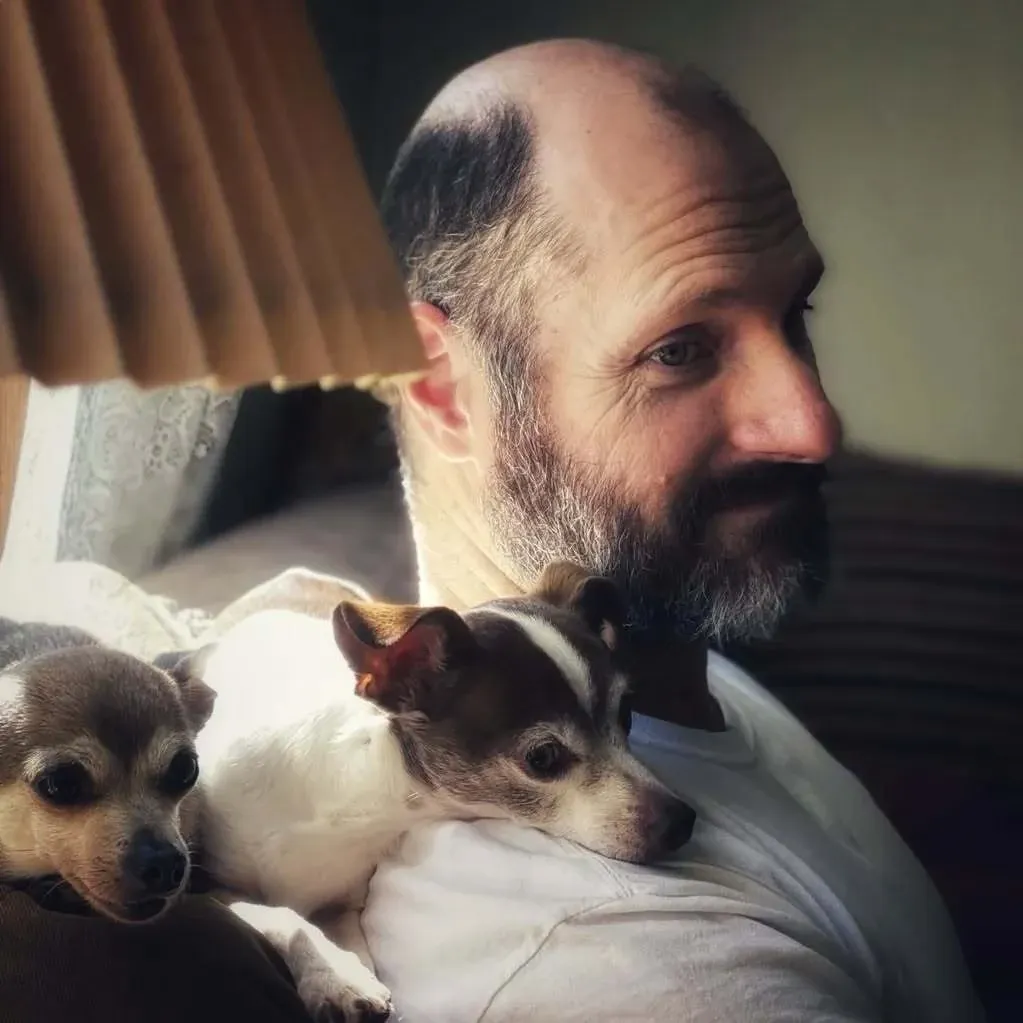
Trevor J. Wilson is a professional bread baker and a self-proclaimed technophobe. And yet, he has built an audience of over 100k Instagram followers and nearly 35k YouTube subscribers, and a successful digital product business around his baking expertise.
He barely shows himself and puts all the focus on his craft and his beautifully baked goods. He doesn't chase algorithms or particularly enjoy making content. Instead, he sticks to sharing his bread-baking expertise in ways that feel authentic to him and honour his introverted nature.
Trevor's first ebook about sourdough open crumb mastery made over $11,000 in its opening week and even sold its first copy before he had officially announced it. Today, he sells his self-published expert bread-baking ebooks through his Sellfy store, while keeping his approach to online business simple.
In this interview, we spoke with Trevor about building an audience through expertise rather than influencer status, why he chose self-publishing, selling without being pushy, and his refreshingly frank and unconventional approach to running an online business in the age of AI.
Tell us a little bit about yourself
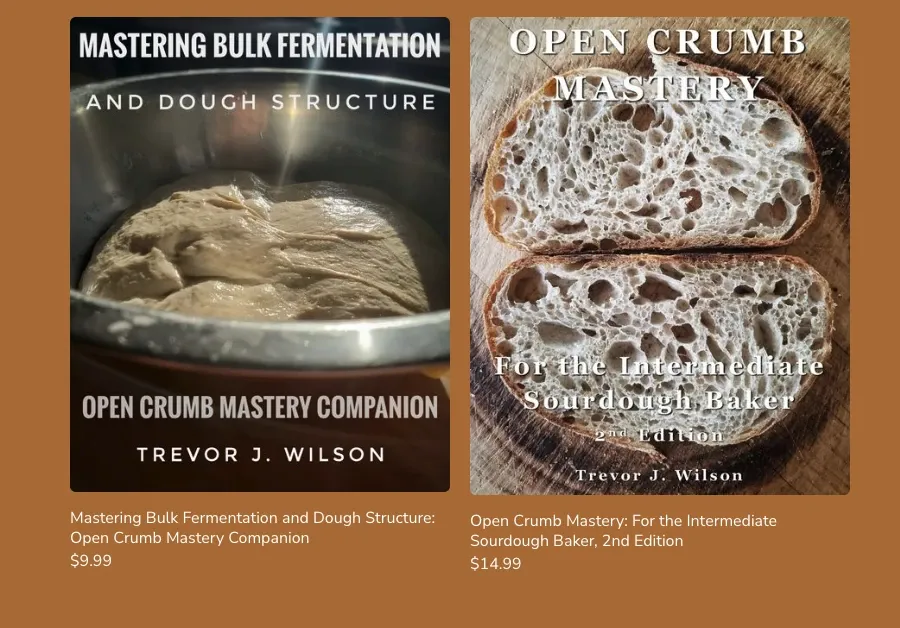
I'm a long-time professional bread baker, and I've worked in multiple bakeries over the years. The online business part is mainly ebook sales at the moment. On my Sellfy store, I sell two intermediate level ebooks on how to ferment and bake sourdough like a professional baker. I may also create some tutorials in the future since I get so many requests for those.
When and why did you start teaching bread-baking online?
I started in 2015 when I first published my original bread baking blog, "Breadwerx" (now defunct). I decided to start blogging because I saw a need for more professional insight in the online baking community, which at the time consisted mostly of home bakers.
The quality of advice you'd see online could be hit or miss, and ignorance and misunderstanding were common. I figured I could bring a useful perspective to the community, given my professional baking background.
At what point did you decide to create your baking ebooks?
Pretty much right when I started blogging. However, I originally thought I'd take the more conventional approach through traditional publishing. But when I started writing my first book, I quickly realized that it would probably be too niche, and that I likely didn't have sufficient name recognition for any publisher to be willing to take such a risk.
And honestly, the thought of submitting my work to multiple publishers, going through the editing and design process, dealing with the required marketing and book signings, and all that, didn't appeal to me in the slightest.
Plus, I knew my writing style was too informal and folksy for most publishers, and they'd probably want to change a lot. After all that hassle, and compromising my vision, I'd only get a small cut of the sales in the end. I realised that wouldn't work for me.
"I decided to go the ebook route and self-publish. The potential audience would be smaller, but at least I could write the book my way, make it affordable, and keep most of the proceeds."
What keeps you motivated to keep baking and creating content?
I love baking bread, so it doesn't require any motivation to bake. I'm baking all the time. Content creation - that's another story. It's not something I enjoy, at least for social media.
Sellfy is the store builder behind 75K+ creators. One flat monthly fee, and no commissions on your sales.
I enjoy writing, but I don't like recording and editing videos. I don't like putting together Instagram or Facebook posts. I do enjoy helping folks, but answering all the questions and responding to all the comments can be very time-consuming.
To be honest, content creation wears me out, so I frequently take time off from social media to give myself a little break. I've learned the hard way that if I don't step away every now and then, I'll burn out and just go entirely "off grid" for a year or so.
What's your reasoning for creating content without showing yourself?
It wasn't a deliberate choice. It's kind of natural, given the type of content I make. No need to show my face when it's my hands on the bench that are doing all the work. That said, I have no interest in being a personality-driven influencer. It's just not my thing.
I'm a rather quiet, introverted guy. I don't like being the center of attention. If the content I make required being more face-forward, I'd do that. But it doesn't, and that suits me.
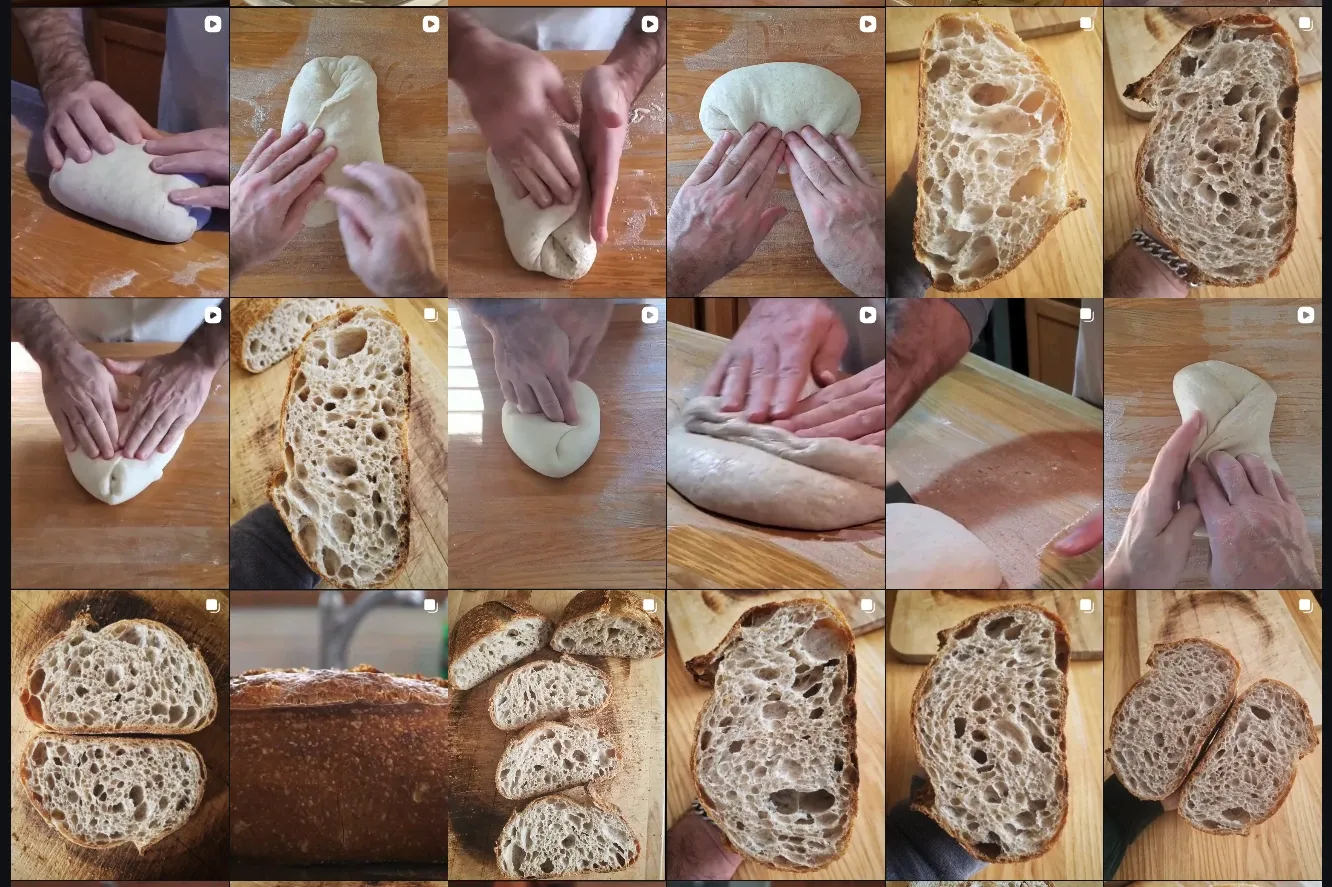
How long did it take to grow your audience on Instagram to 105k followers and YouTube to 34.3k followers?
I started YouTube and Instagram back in 2016. So it's been 10 years. But most of my growth happened early on. Growth is much slower for me these days, partly because the algorithms are constantly being refined to focus more on "viral content".
I haven't bothered to adjust my content style to keep up with trends, and I'm also rather inconsistent in producing content. If I don't feel like posting anything, then I won't post. That's good for peace of mind, but bad for business. Social media rewards consistency, but I don't play along, so my growth is sporadic.
For example, I only posted a few YouTube videos during my first couple of years, then went 8 years without making any YouTube videos at all. I started making videos again (infrequently) last year.
Almost all my YouTube growth came during those first two years. In fact, as you might imagine, I actually lost many thousands of followers during those 8 years of inactivity.
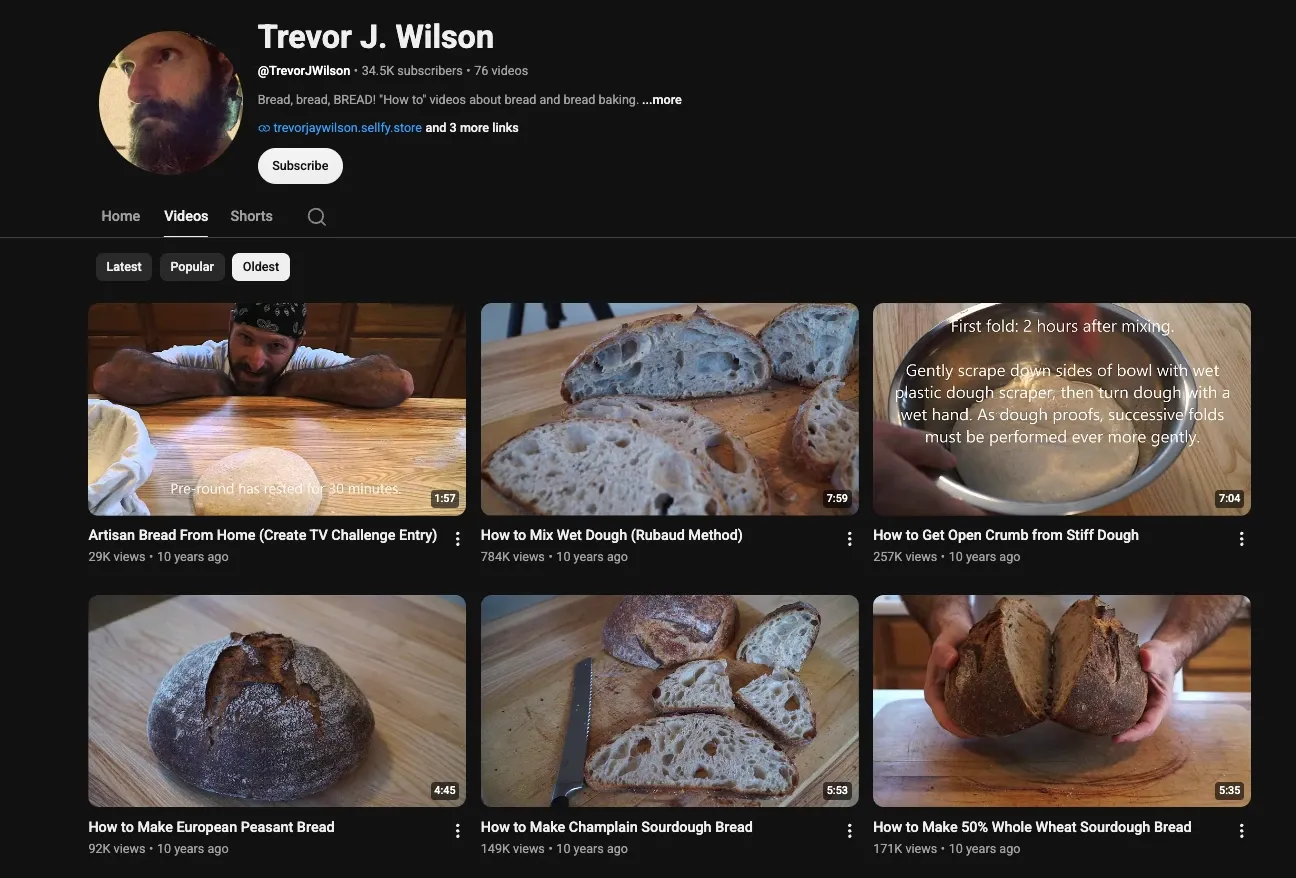
I was almost at 40,000 followers when I stopped posting videos, and by the time I returned to making videos last year, I was down to under 30,000.
I had a similar experience with my Instagram account the first time I went a year without posting. I lost over 10,000 followers that year. The second time I went such a long period without posting, I lost over 30,000 followers!
Sellfy is the store builder behind 75K+ creators. One flat monthly fee, and no commissions on your sales.
I'm not a good example when it comes to content marketing or building a social media brand. It's a small miracle I have the following that I do. I'm not a skilled content creator, and I have no desire to become one. It's really the depth of expertise that I share that has allowed me to grow to where I am, despite my faults.
"In this age of AI slop, misinformation, grifters, and shallow bullet-point summaries, there's an increasing demand for real insight gained from real experience, and a market for those who can provide it. And I lean more toward that type of content creation."
Which marketing channels and strategies work best for you, and which ones don't?
My 3 main channels are my Instagram, YouTube, and my blog.
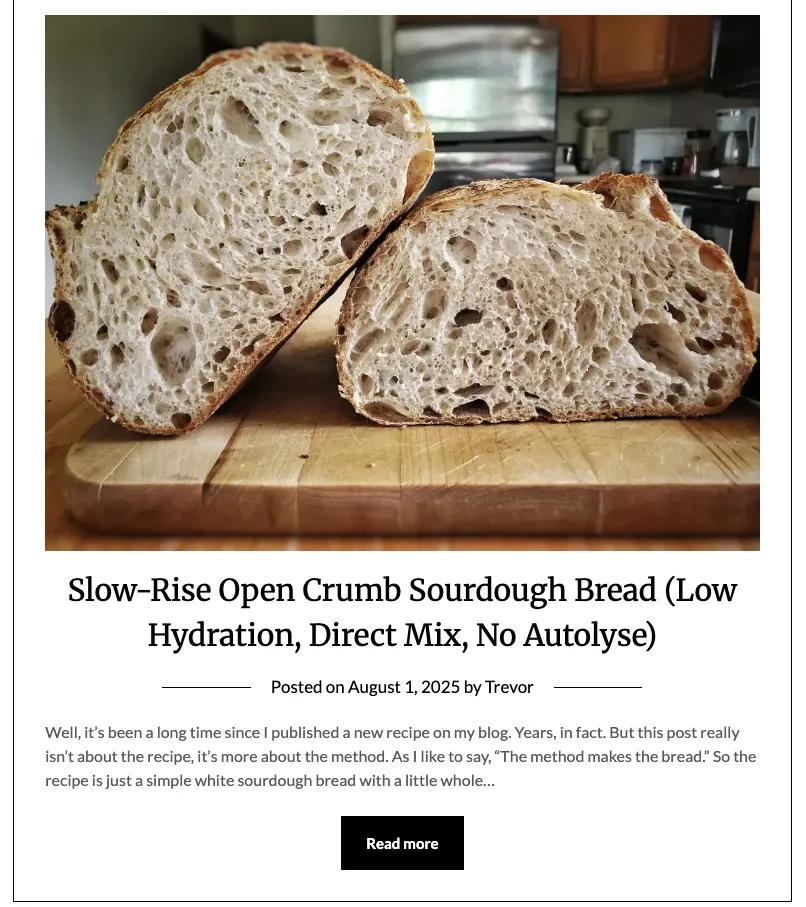
Sadly, blogging is not an effective marketing strategy anymore, at least not in my case. I still blog, but it's mainly to make a record of my thoughts and ideas, and recipes.
Back in the day, blogging used to be my bread and butter, but attention spans have plummeted, so a good chunk of my audience no longer has the necessary focus to read an entire blog post (though I'll admit, I can be a bit wordy). And AI search summaries and chatbots have been a death knell to bloggers.
The traffic my blog generates is only a fraction of what I used to get, and comments have dropped off a cliff. Again, I'm partly to blame due to my inconsistency, but there's definitely more to the drop in traffic than that.
Overall, marketing is not my strong suit. I don't do paid advertising, publish newsletters, or strategize sales funnels. I don't pay attention to analytics or A/B testing. I don't engage in affiliate marketing, sponsorships, or paid promotions.
"I don't seek to please the algorithm. Instead, I post what I want, when I want, and let the results be whatever they'll be. I know it's not a great strategy. But if I had to get specific, I'd say most of my Instagram growth these days comes from Reels, and most of my YouTube growth comes from Shorts."
That's a pity, as far as I'm concerned. There's far deeper value to be found in long-form content, which I prefer.
Content creation is a bit of a Catch-22. If I don't post reels or shorts, then I don't grow, but the growth I gain from reels and shorts is fairly low quality. I much prefer the higher quality posts, which actually give people more value.
In my experience, most of the followers you gain from short-form content tend to keep scrolling; whereas with my posts, it's important to read the caption if you actually want to learn.
How long did it take to get your first ebook sale? And how did it feel to see things picking up?
My first ebook sale came before I had even announced my book to the world! This was back in November of 2017. I had been working through the night to get everything set up and ready to go for the next day, when I was going to publicly announce my book.
I hadn't mentioned it to anyone. I finished up around 3am, set the alarm for 6am, then went to bed. When the alarm went off, I got up, checked my email, and was shocked to see that someone had already placed an order!
I had set up a link on my website to the product page right before going to bed, and they apparently found it, clicked it, saw my book, and bought it! I took that as a good sign of things to come.
"For me, when I first release a book, my sales are sky high for the first few days, up to a week or so. My first book earned over $11,000 in sales during the opening week."
Then they gradually fade down to "maintenance" level, which is the baseline sales number that fluctuates within a fairly consistent volume if I'm not actively promoting my book.
This day-to-day baseline sales volume is how I track my progress. When I'm posting consistently, the baseline rises, when I'm inconsistent, the baseline falls. But over time, I see the average baseline rising.
There are definitely seasonal fluctuations in my bread-baking niche. No one cares to bake bread during the Summer, so sales tend to drop, but they rebound during Fall and Winter.
Which activities drive the most sales for you?
When I want to drive more sales, I do some promotional posts. I have two types of promotional posts that I do: hard sell and soft sell.
Hard sell posts are specifically about my books. I discuss what they are, why they're different than typical bread books, how they can help you, and why I'm someone you should listen to. I try to be as persuasive as I can be, without sounding pushy.
Soft sell posts are more subtle. In those, I'm not specifically posting about my book, but rather discussing a certain topic or technique, which I link back to my books for more information.
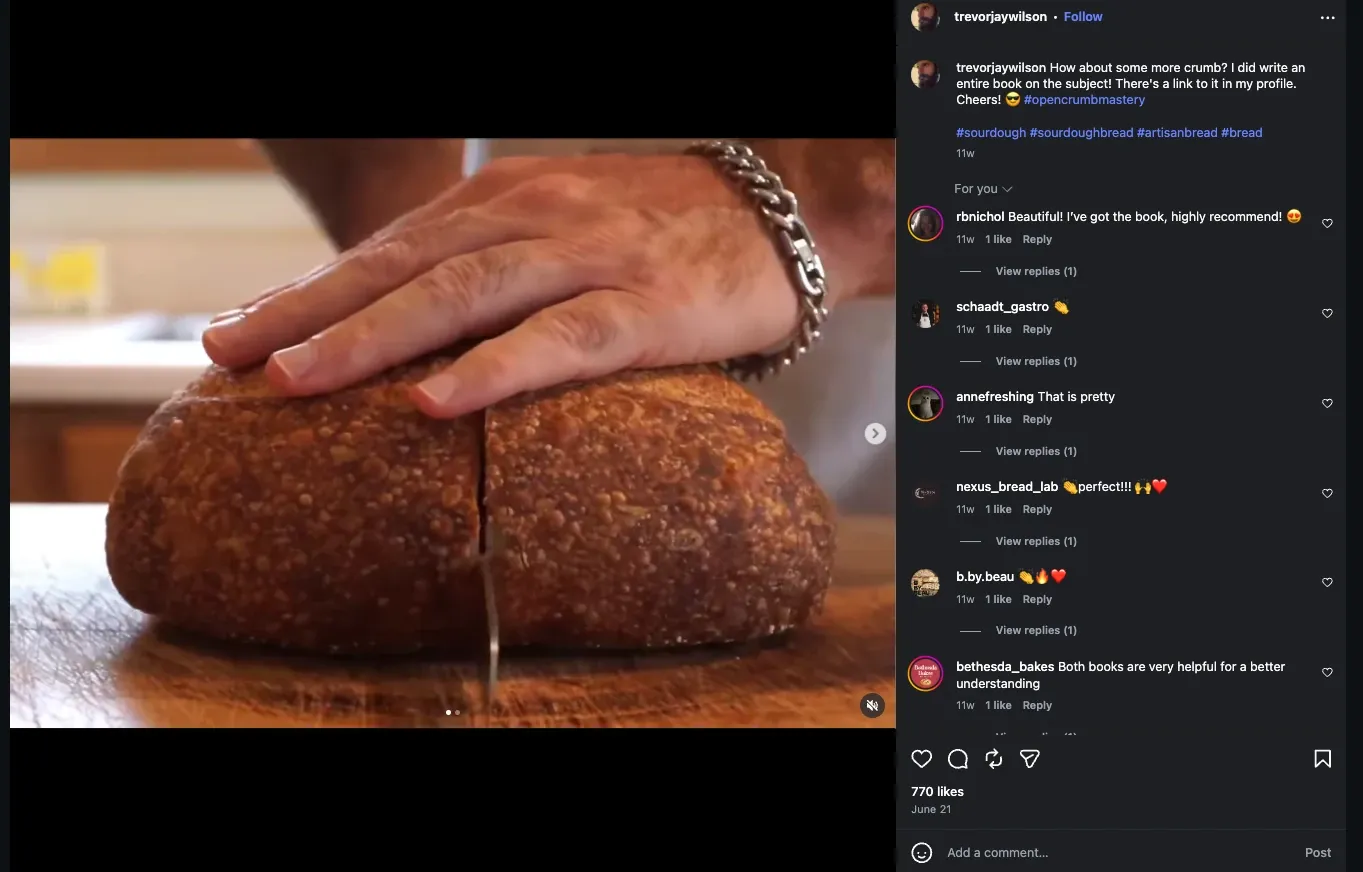
Hard sell posts tend to drive the most sales, but I try not to post them too much. Otherwise, it becomes spammy. Soft sell posts usually provide a smaller bump in sales, but I can get away with posting them more frequently.
Once in a while, if a soft sell post happens to gain a lot of traction, that can generate quite a large volume of sales. But I'm not a viral content creator, so that's not too common in my case. However, I suspect the soft sell could be a powerful marketing strategy for more skilled content creators.
How much revenue have you been able to generate by selling your ebooks on Sellfy?
I earn what I would consider to be decent "side hustle" money. It's not enough to live on, but it's still a nice chunk of money. However, I don't really go to all the lengths necessary to maximize my earnings.
"With a little extra effort, my Sellfy store sales could easily pay a full-time income. And who knows, maybe one of these days I'll actually put in that effort. But considering that it's all 'passive' income, I'm fairly pleased with it. The potential for much more is certainly within reach."
Why did you choose Sellfy for your online business? Did you try other e-commerce platforms?
When I published my first book in 2017, I used a platform called "Selz." I was with them until they were bought out by Amazon and then shut down. That was in 2022.
I chose Sellfy as my new e-commerce platform because it provided all the features that I required at a very reasonable price. Sellfy was superior for digital products compared to other platforms I researched, and the prices were better than most.
And very importantly, Sellfy was simple enough that even a technophobe such as myself could easily figure out how to set up an account, upload my book, and get selling right away.
"The low barrier to entry on Sellfy was the biggest selling point for me. I don't like dealing with technical stuff, but Sellfy made it quick, easy, and painless. I had my shop all set up in just a couple of hours. Easy peasy."
The reason I've stayed with Sellfy all these years is because it just works. Everything runs so smoothly that I don't even have to think about it. Sellfy just allows me to "set it and forget it".
I don't have to fuss around with complex settings or deal with the hassle of constantly requesting help from sales reps or tech service to fix things for me or explain stuff.
Sellfy is the store builder behind 75K+ creators. One flat monthly fee, and no commissions on your sales.
There was very little that I needed to "personalize". The default settings work great. I don't have to babysit my Sellfy store. I just upload my products, and Sellfy takes care of the rest.
Sales are handled automatically, and the money is deposited into my bank in a very timely fashion. It's all very hands-off for me. What more could I ask for?
Any tips for writing posts and editing videos, keeping things organised?
I'm absolutely the wrong guy to be giving advice on any of that stuff. I'm definitely not organized. I run my business "on the fly", which is not something I would recommend, by the way. But that's just how I am.
I don't plan my social media posts or schedule them in advance. Half the time, I don't even know what I'm going to post until I sit down and open the app. I just write whatever comes to mind at the moment.
That's not to say I don't take care in what I write - I certainly choose my words carefully, but it's always spontaneous.
As for making videos, I don't enjoy the process, so I put minimal effort into them. I don't aim for high production quality, snappy writing, or creative editing. I don't even use special video equipment. It's all done on my cell phone.
All that matters to me is that the video clearly demonstrates the technique or recipe that I'm trying to showcase. I try to keep my videos short and to the point.
If something needs explaining, then I prefer to explain it in writing, either in the description or I link back to my website. I expect that if someone really wants to learn what I have to teach, they'll read what I have to say.
What have been the most challenging situations in running your online business, and how did you resolve them?
The most challenging situation for me is the constant change in the social media algorithms. Every time they make a change, my reach drops. And now that AI is getting involved, it's getting worse.
When I first started on Instagram, my posts would reach almost every single follower. Nowadays, I only reach 2% or 3% of my followers. Back when I had less than 10,000 followers on Instagram, it wasn't uncommon for me to get more than a thousand likes on a post. Now, with over 100,000 followers, I typically just get a few hundred likes.
Part of that is my own fault because I haven't changed my content to please the algorithms, but I've seen the same issue for even bigger accounts, who actually know how to make more viral content.
The algorithms are squeezing all of us. Facebook and Instagram can't sell ads if it's easy for us to reach our audience, so they throttle organic reach to bully us into buying ads, or into paying for upgraded "preferred" accounts for improved reach. It's all pay-to-play these days. I don't pay, so I don't get much play.
3 pieces of advice would you give to someone who wants to build a niche digital product business without focusing on showing themselves?
- Know your niche. I can't stress this enough. You need to know not only the craft/art/skill of your niche, but you also need to know the people of that niche. You need to know how they think, what their challenges are, who the influencers are, what's good advice and what's bad advice, what common or popular knowledge resources are available, etc. If you truly know your niche, not only will you have a certain degree of mastery in your niche, you'll know what the best opportunities are to build your products around.
- Build an audience. It does no good to be the best in your niche and create the ultimate product if you have no one to sell it to. You don't need a huge audience, but you do need some sort of reach. When I released my first book, I only had around 25,000 followers on Instagram (and I wasn't on Facebook yet), but that was enough. I sold over a thousand copies in just the first week alone! So put some effort into building up your audience. If you truly know your niche, then your contribution to your community should stand out, and it shouldn't be that hard to gain a following. When I first decided to start an online business, I told myself that my business was to build my name, and in time, my name would build my business. And that's exactly how it played out.
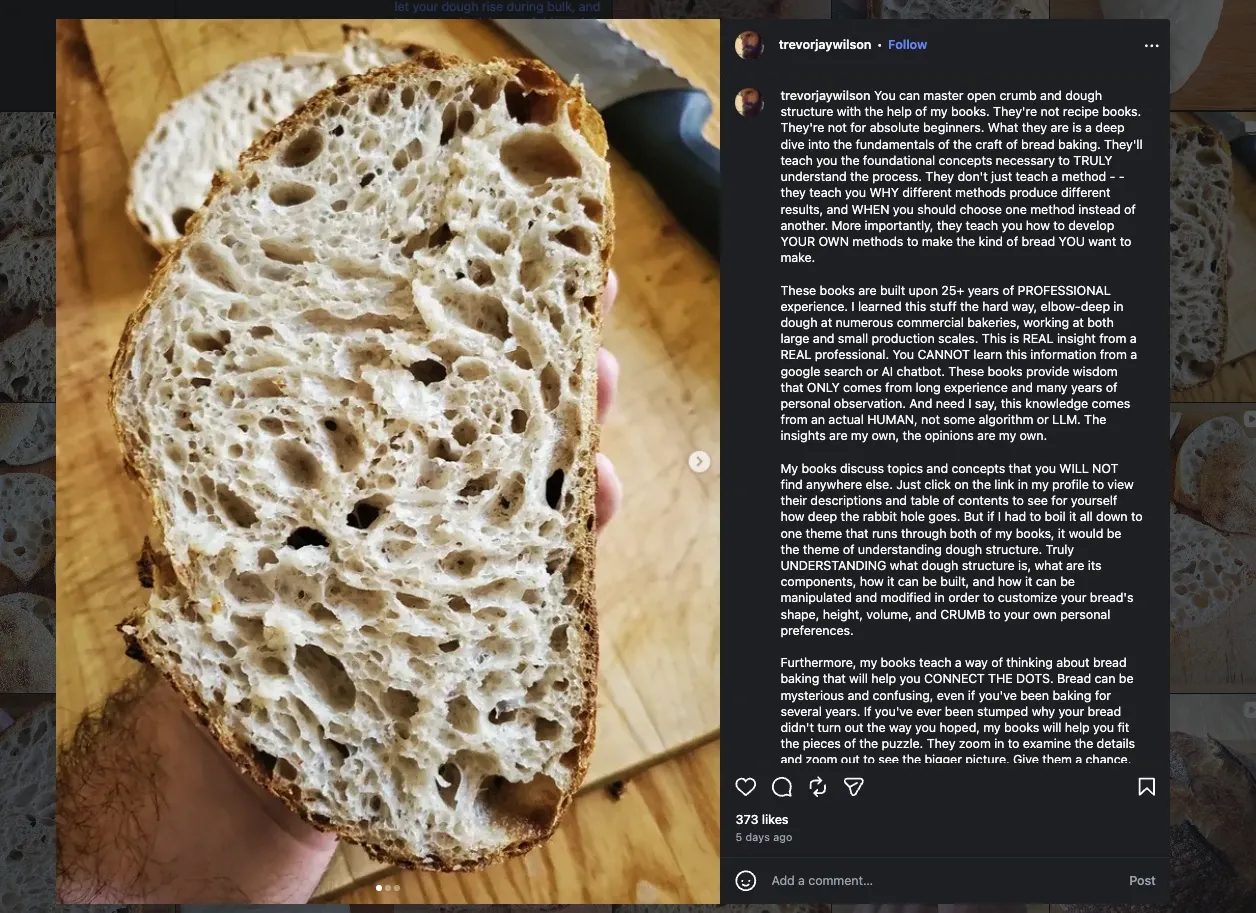
- Offer something unique. When I released my first bread book, "Open Crumb Mastery," it was something that the bread-baking community had never seen before. Because it was so unique, word of mouth spread like wildfire, and the book's influence has been huge.
Prior to my book, most bread books were just recipe books following the exact same formula. Bakers would buy these books, knowing full well that they'd be skimming through much of the information that was common to all these books in the hopes of finding some small nugget of new insight. I know because I did the same.
What I offered was something entirely different. A bread book that wasn't a recipe book. A book full of knowledge, insight, wisdom, technique, and theory from a professional baker who'd spent a career working in the trenches of real bakeries in the real world.
I provided unique insight into all the things that matter but which never get discussed, and I wrote it all in an unfiltered, entertaining, easy-to-read, and conversational manner that would never survive professional editing, but which I could get away with because I self-published.
It offered a complete, in-depth, and detailed answer to the most common question in bread baking at the time, "How do I get an open crumb?"

Success Stories
Tips for creators
Join thousands of creators receiving sales tips, marketing resources, and inspiring stories. No spam, pure value.