- success stories
- |By Zane Skuja, Last Updated:
From Knitting in Her Dorm Room to Building a Global Crafts Brand
When Davina Choy learned how to knit as a teenager, she never imagined it would become her full-time career.
After graduating with a degree in English literature in Canada and taking a job at an advertising agency, Davina found herself craving a more creative outlet.
She started her knitting blog Sheep & Stitch as a way to share her passion. And as her audience grew, so did the opportunities. Yarn companies began reaching out, her readers wanted more tutorials, and eventually, her side project became a full-time business.
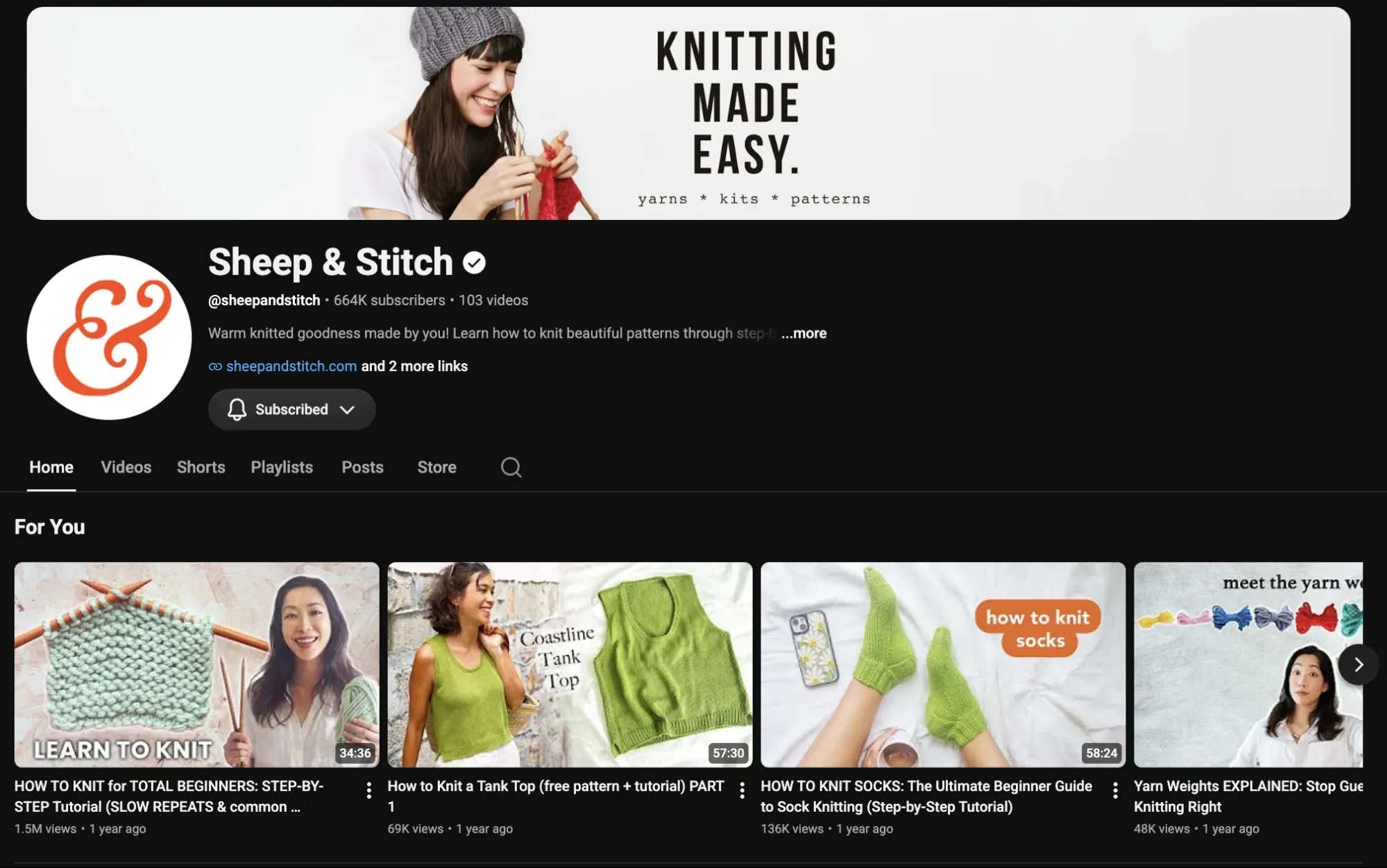
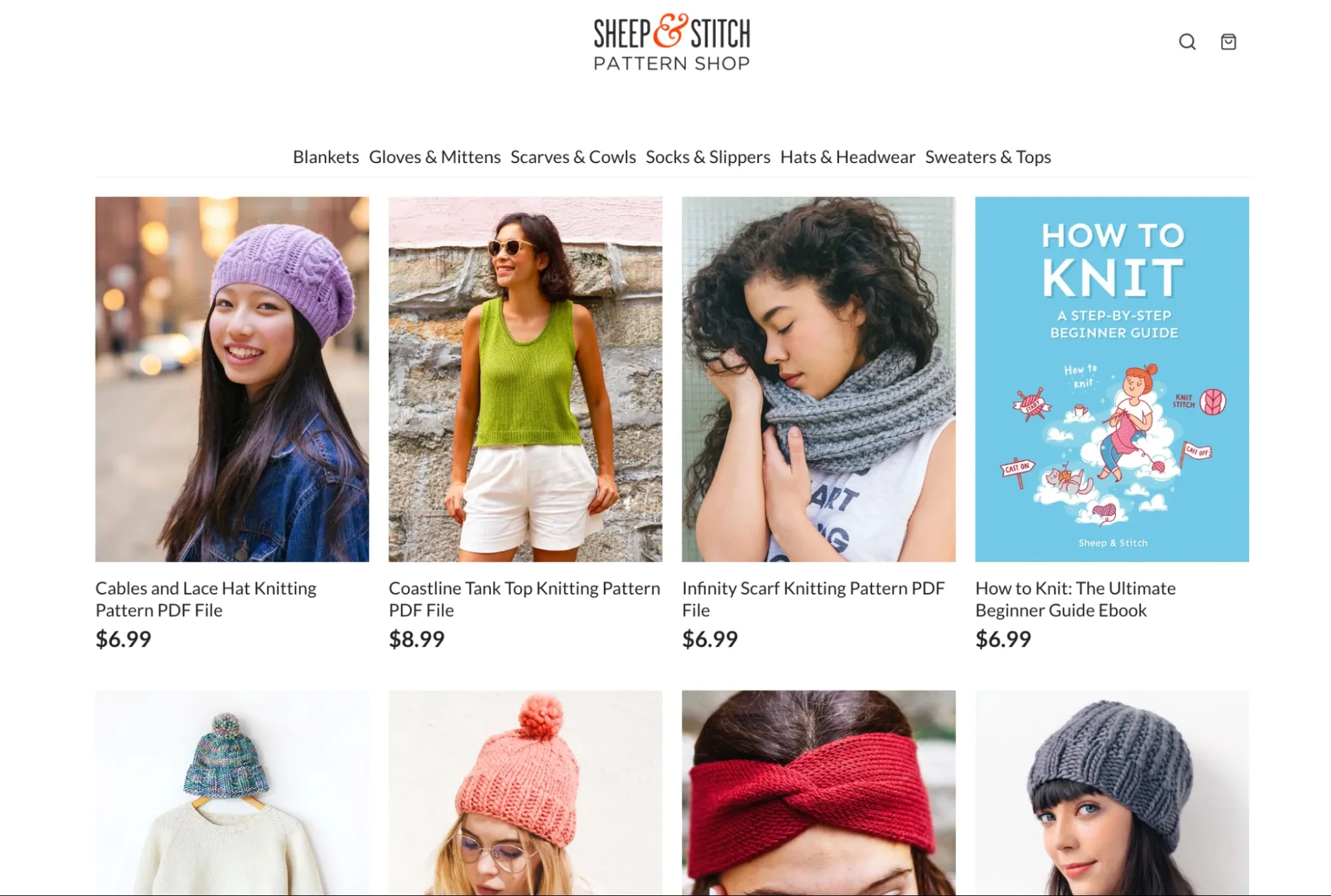
Today, Davina teaches millions of knitters through her YouTube channel with over 660K subscribers and her blog. And, she sells digital knitting patterns with her Sellfy store.
Davina has built a sustainable online business by focusing on what she loves most: knitting and teaching others how to knit. In this interview, we talked about how she built Sheep & Stitch from scratch, why she chooses the independence of her own store over crowded online marketplaces, her "lazy" approach to marketing, and what advice she'd give to aspiring online business owners.
Take me through how you started Sheep & Stitch.
I learned how to knit when I was 14. A senior family friend came over one day and told me that every young lady should learn how to knit. I was already into crafts, so I was happy to learn.
From that moment on, I was hooked. Even though my early projects didn't fit very well or look very good, I found knitting incredibly relaxing and meditative.
When I went to university, I would knit in my dorm room with the door open. People walking by would stop to ask what I was doing, and I'd invite them in. Before long, I was teaching other students how to knit just for fun.
After graduating with a degree in English literature, I started working long hours at an advertising agency. I felt creatively unfulfilled, so I launched a knitting blog on the side. At the time, I had no intention of turning it into a business.
This was 10 or 15 years ago, when blogging was still relatively new. As my blog grew, I moved it to WordPress, improved the design, and kept publishing new content.
Eventually, yarn companies started reaching out asking me to create patterns using their yarn in exchange for promoting me. I took on those projects alongside my full-time job for about a year and a half, until I simply couldn't keep up with the demand.
That's when I made what felt like a bold and slightly reckless decision, I quit my job to focus on Sheep & Stitch full-time. I was in my twenties, and the economy was strong, so I figured that if things didn't work out, I could always find another job.
That was more than 10 years ago, and I've been building Sheep & Stitch ever since.
At what point did you start your YouTube channel?
I started my YouTube channel about a year after launching the blog because readers kept asking me how to do certain stitches.
Knitting patterns are written instructions, but knitting is such a visual craft that it's difficult to explain techniques with photos or descriptions alone. So, answering their questions with videos made much more sense.
In the beginning, my filming setup was as simple as it gets. I filmed in my parents' bathroom because it had the best lighting, using an old tripod and a tiny camera. I didn't even know if the videos were in focus. It was completely DIY.
At the time, I wasn't thinking about making money. I was simply looking for a better way to teach. I also felt that the knitting videos on YouTube weren't doing the craft justice. I knew I could create tutorials that were clearer, more approachable, and more enjoyable to watch, and that challenge motivated me to keep making videos.
What income streams have kept the business running full-time?
In the beginning, most of my income came from designing knitting patterns for yarn companies. They would send me their new yarn, and I'd create patterns for their collection.
Sellfy is the store builder behind 75K+ creators. One flat monthly fee, and no commissions on your sales.
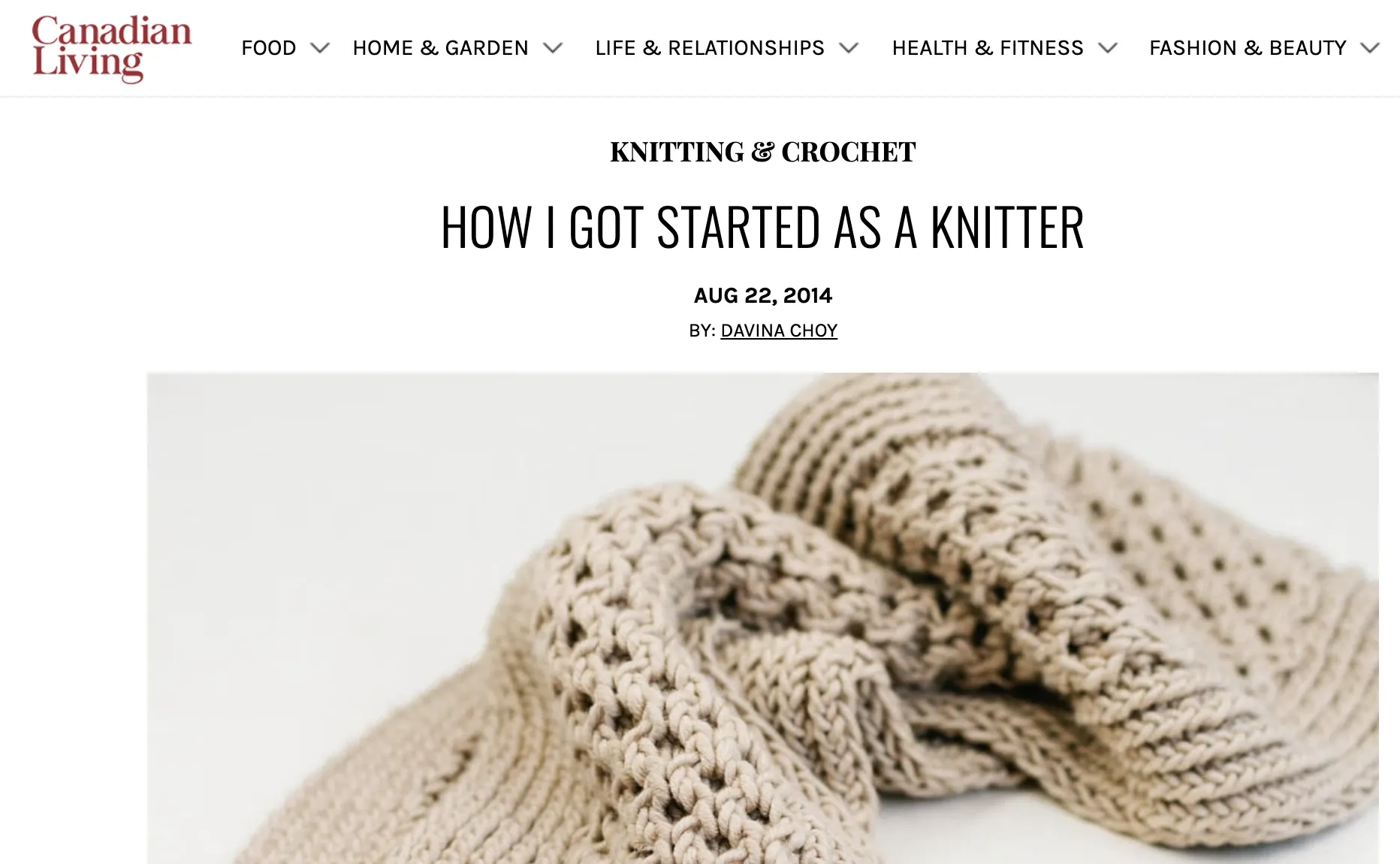
Another important income stream came from magazines. I designed projects for publications like Canadian Living, where my patterns were published in print and accompanied by video tutorials on their website.
YouTube wasn't a source of income at first. For the first couple of years, I earned almost nothing from it.
For the blog, an ad network approached me and explained that I could earn much more by running their ads instead of relying solely on Google AdSense.
To be honest, I wasn't particularly business-minded. In the early days of websites and SEO, I wasn't actively looking for ways to monetize. Most of the opportunities came to me organically.
As I added new income streams, like digital pattern downloads, my earnings gradually grew until they matched the salary from my full-time job.
What milestones showed you this could be a full-time business?
Reaching 100,000 YouTube subscribers and receiving my YouTube Silver Creator Award was pretty exciting. However, subscriber numbers don't actually matter as much as views.
The real turning point came when one of my beginner knitting videos reached one million views. That was the moment I realized my YouTube channel could become something bigger than just a creative outlet.
That changed how I approached content. Before that, I simply made videos I thought would be useful for my viewers. After that, I started researching keywords, paying closer attention to SEO, and thinking more strategically about the topics I covered.
That said, I never wanted to chase quantity over quality. I spend a long time making each video because I want every tutorial to be genuinely useful and thoughtfully made. I know I could upload more often, but I'd rather put my heart into fewer videos than publish content just for the sake of the algorithm.
Another major milestone came when my blog started earning over $1,000 a month. At the time, that felt incredible. It was the first time I realized Sheep & Stitch was becoming more than a hobby.
What's your approach to marketing?
Honestly, I'm lazy about marketing, because once the YouTube algorithm favors you, it'll keep promoting your content and you won't need to do that much. I have three to five beginner stitch videos I made over five years ago that have done very well over time. I probably could promote them more, but the views are consistent throughout the year.
One thing that works in my favor is that knitting is an evergreen topic. Unlike fast-moving trends, the fundamentals of knitting don't change. A knitting tutorial from 10 or even 20 years ago can still be just as useful today. That means older videos continue helping new knitters discover my channel, even during periods when I'm publishing less frequently.
However, I'm currently putting more effort into Pinterest because I get a lot of traffic from there. Pinterest's algorithm is nuts, and it comes with its own ups and downs. Accounts get banned for no reason. And staying on top of the changing trends is challenging.
Another important part of my marketing is my newsletter. I don't spend a lot of time creating newsletters, but I have an automated email funnel. When someone signs up, they receive a sequence that introduces them to my most popular blog posts and guides them toward my products.
The one thing I don't focus on is Instagram because it's too time-consuming. My main focus is Pinterest, YouTube, and my blog, because those channels bring the most value to my business.
Tell me more about how you use Pinterest for marketing.
Pinterest looks beautiful from the outside, but from a creator's perspective, it's very repetitive and technical. The process is ultimately keyword-driven.
I use targeted keywords to create boards, then create pins with optimized titles and descriptions and place them into relevant boards. I'll create multiple versions of the same pin and tweak them slightly so Pinterest doesn't flag them as spam.
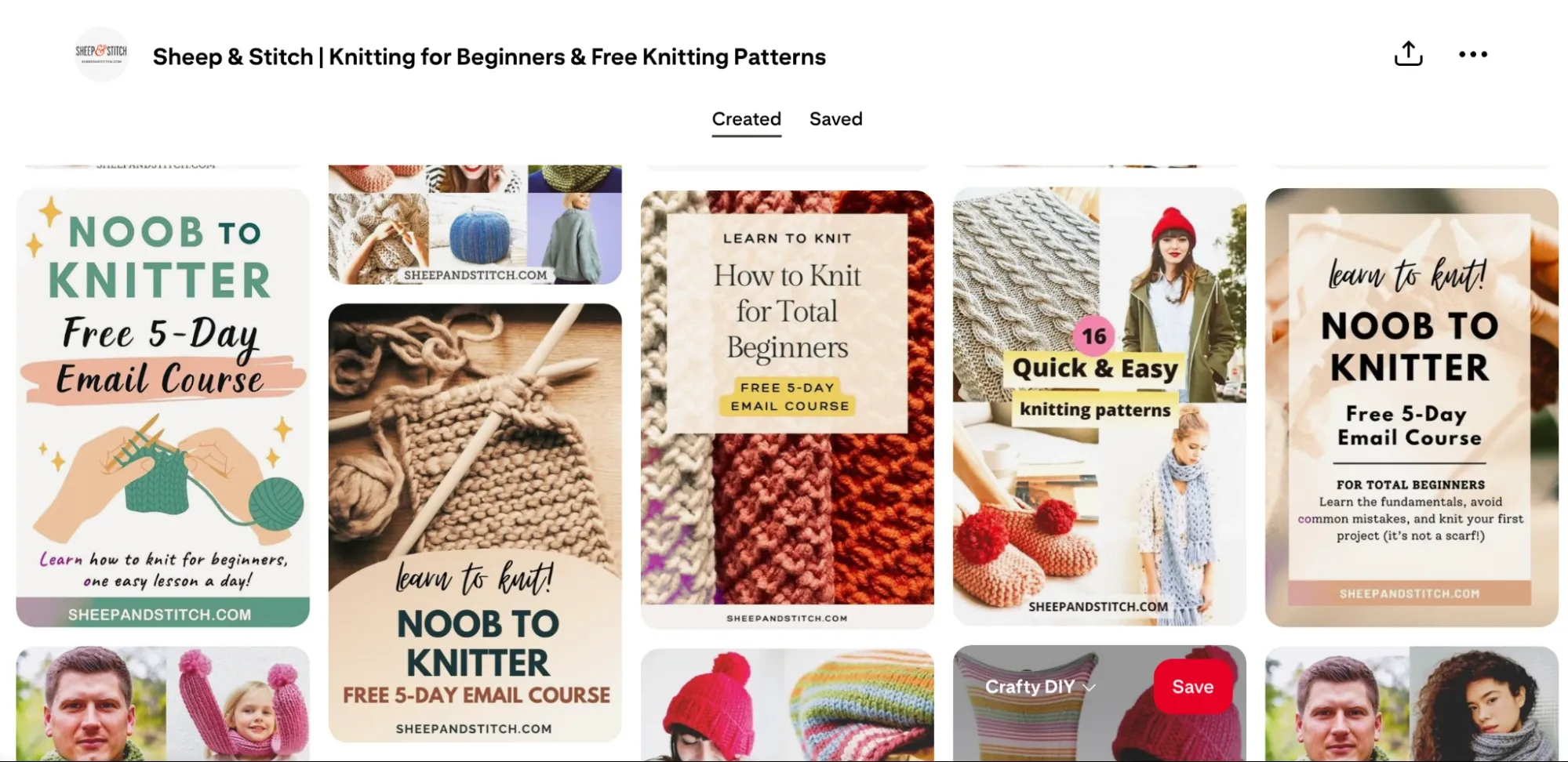
For me, Pinterest is mainly a traffic source that leads people back to my website. Sometimes I direct people to my YouTube or Sellfy, but my website is the main destination.
Not every pin gets clicks, but the traffic is consistent, which is why I keep investing in it.
Why did you pick Sellfy as your online store?
Before Sellfy, I had a WooCommerce store, but it became too much work to maintain. There were so many plugins involved that every update came with the risk of something crashing.
The biggest issue was when customers bought something and couldn't access their downloads. That was extremely stressful because I didn't want people to have a bad experience with my products. I realized I needed a storefront that just worked without me constantly worrying about technical issues.
Sellfy is the store builder behind 75K+ creators. One flat monthly fee, and no commissions on your sales.
After that, I moved to SendOwl for my digital downloads, but at the time, it didn't have a storefront. I just had a buy button on my website with a SendOwl checkout.
A few years later, when I was ready to redesign my website, I started looking at alternatives like Shopify and Gumroad. And that's when I found Sellfy.
I tried the free trial, and the simplicity immediately stood out to me, and I could trust that it wouldn't break. I'm glad I found Sellfy.
I don't have hundreds of products that change constantly. I just needed a simple, reliable storefront where my digital downloads worked smoothly. Sellfy gave me exactly that, and the customization options were enough for what I needed.
What role do Ravelry and Etsy play, and why do you still need Sellfy?
Ravelry and Etsy are marketplaces, whereas a Sellfy store is 100% yours.
Because Etsy and Ravelry are open marketplaces, I'm competing with hundreds of other sellers. Whereas on my Sellfy store, nothing else is competing for their attention.
Ravelry is part of my sales funnel, but I don't sell my patterns there. Instead, I offer my patterns for free, and if people want to buy them, they go to my website. From there, they click buy and are directed to my Sellfy checkout.
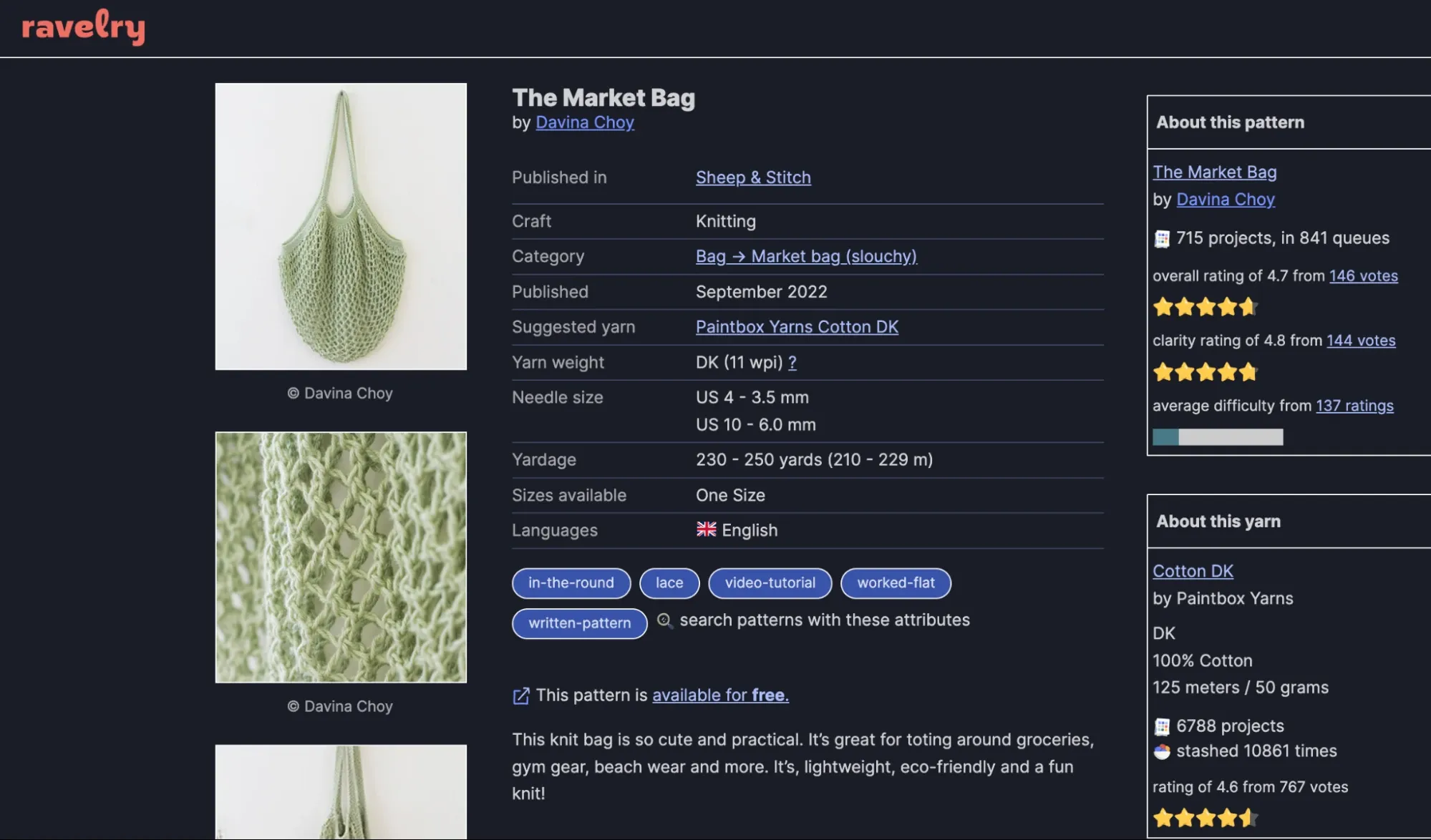
Almost all of my patterns are available for free. There's a free version you can get on my website, but it comes with ads. So if you want to get the PDF pattern for printing and ease of use, you can buy it on my Sellfy store.
Sheep & Stitch is also on Etsy. I don't make a lot of sales there and I don't advertise on Etsy, but it's extra exposure. Other sellers' patterns can be as cheap as 99 cents, whereas mine average $6.99, so I'm at a higher price point.
Which aspects of Sellfy have been the most helpful for you?
The thing I like the most about Sellfy is that the user experience is very intuitive and simple. I don't create many patterns, so I don't upload products often. When I do log in to add one, I may have forgotten what I needed to click.
If I'm logging back into other more complex platforms after a longer while, I always forget the workflow. But when I'm on Sellfy, it doesn't happen. It's very clear and simple.
What challenges have you faced in your business and how did you overcome them?
A few years ago, I started wondering whether I should shift from being a tutorial creator into more of a knitting personality or influencer.
Most of my content has always been teaching-focused. I don't show my face much. My videos are usually just my hands demonstrating knitting projects. People learn from me, but they don't necessarily get to know me.
Sellfy is the store builder behind 75K+ creators. One flat monthly fee, and no commissions on your sales.
So, as an experiment, I made a video where I tried to recreate a knitted Longchamp bag, and it was almost entirely focused on me being on camera. It was challenging because I had to design the entire project from scratch, and I also had to get comfortable filming myself and being more personal on camera.
I was really self-conscious, but I still finished the project, edited the video, and published it. I put a lot of effort into it, but the response wasn't what I hoped for.
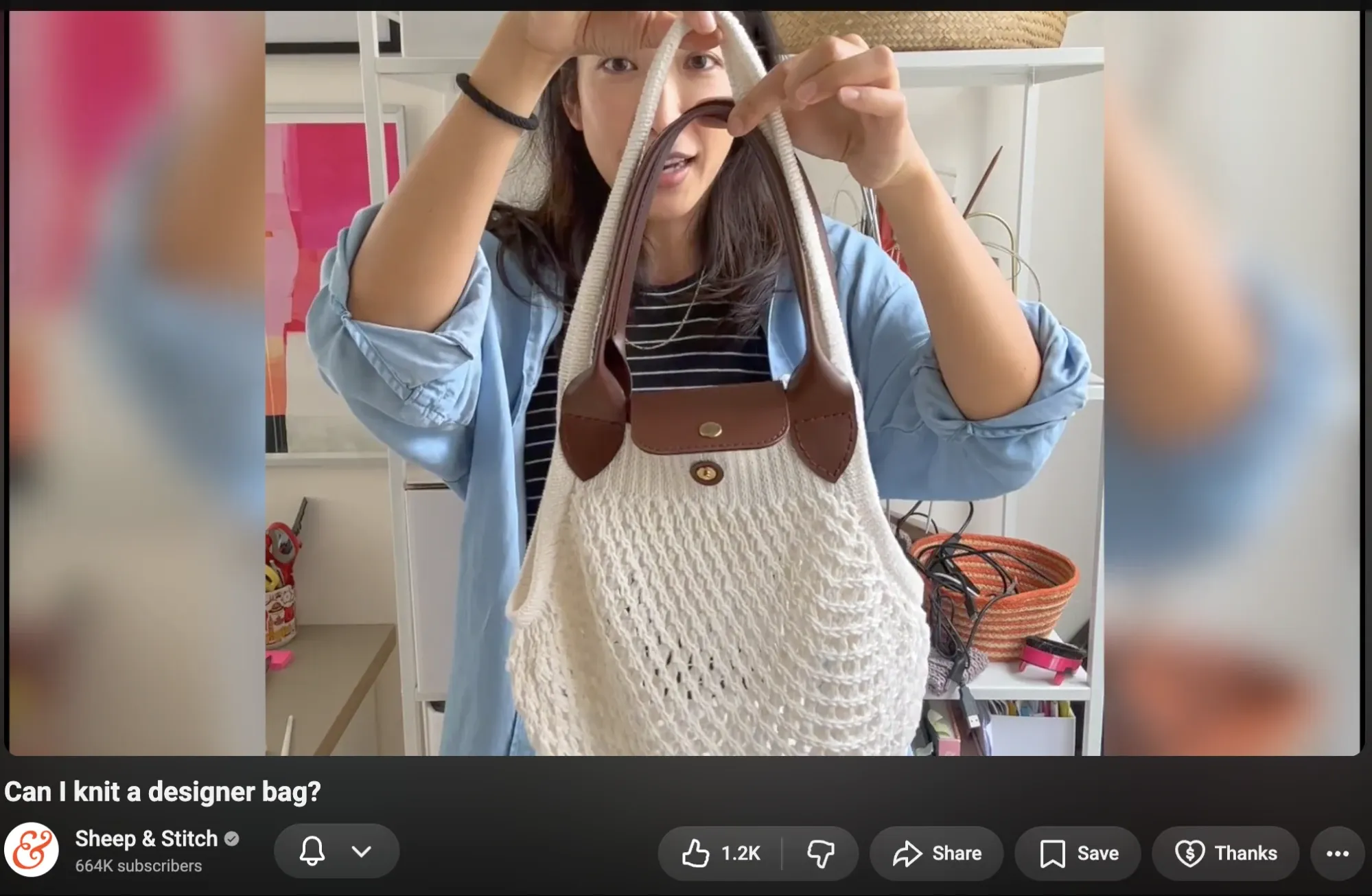
That experience made me realize that becoming a personality-driven creator wasn't the right direction for me.
So, I'm sticking with what I enjoy most: teaching. That's where I feel the most comfortable and where I think I provide the most value. I still experiment with different formats, but the "day in the life of" style of content just isn't me, and I'm okay with that.
What 3 pieces of advice would you give to aspiring online business owners?
- Be genuinely passionate about your product or service. It's not enough to choose something just because there's a good market for it. You're probably not going to make money right away. You'll have to spend a lot of time on it. There will be moments where you fail, or things don't go as expected, so you need to have that genuine enthusiasm pushing you forward to keep going.
- Be prepared to fail and for things to be harder than expected. Don't assume you'll get customers right away or that everything will work perfectly from the beginning. Online markets are highly saturated and competitive, even niche ones. Expect challenges, learn from them, and be willing to pivot.
- Stay flexible and pay attention to customer feedback. A lot of people become attached to one idea and want it to be the thing, but experimentation is your best friend. Maybe your first product doesn't work, but customers might show interest in something related. Pay attention to feedback, and don't be afraid to change your product, pricing, or direction.
That said, starting a business is also incredibly exciting and rewarding. If you want to do it, you should just try. Don't risk everything, but give yourself the chance to see what happens. It could turn into something amazing.

Success Stories
Tips for creators
Join thousands of creators receiving sales tips, marketing resources, and inspiring stories. No spam, pure value.