- success stories
- |By Zane Skuja, Last Updated:
How Adilson Farias turned digital brushes into a full-time income
 ChatGPT
  Perplexity
  Claude
  Gemini
  Grok
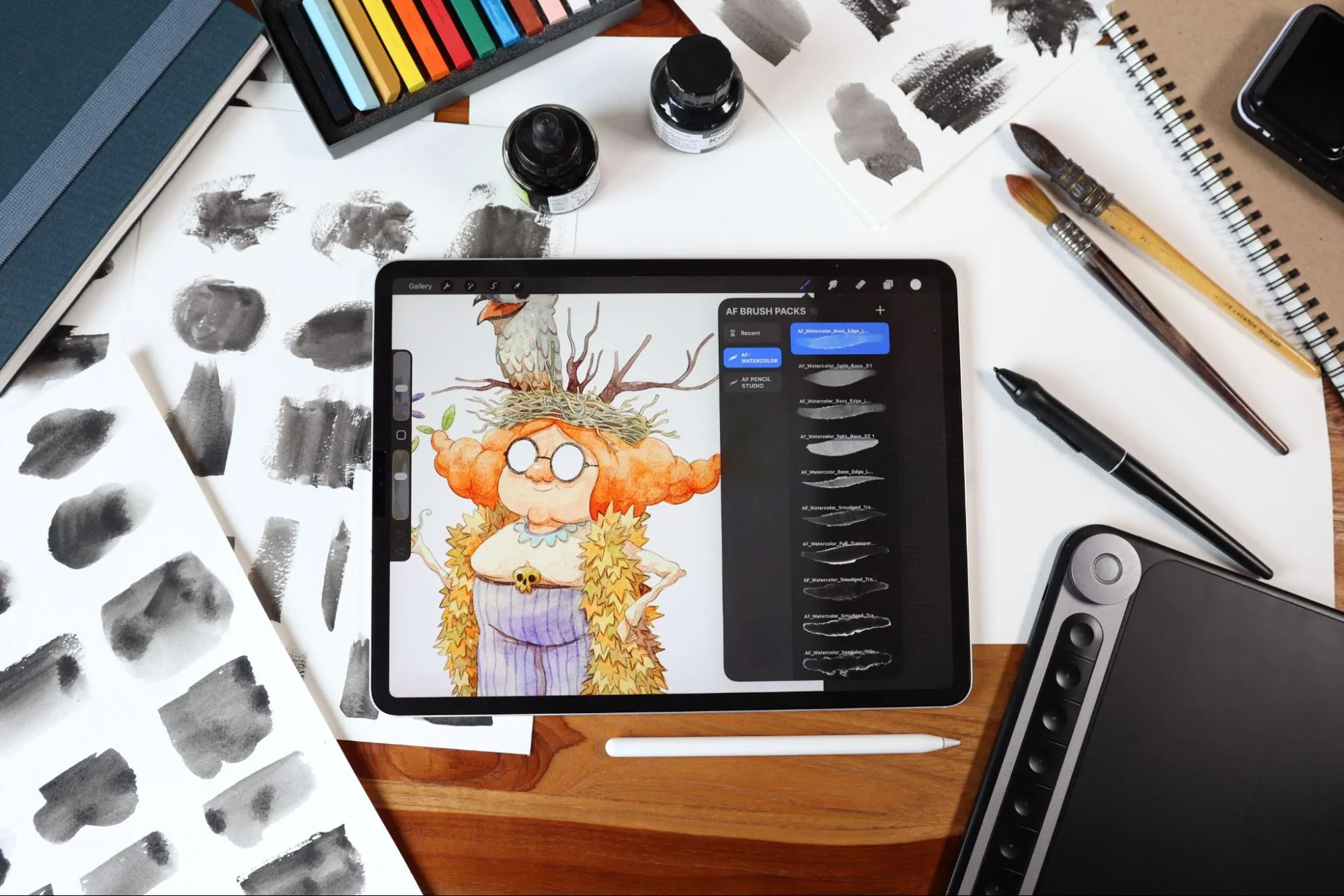
Grok Brazilian illustrator Adilson Farias takes that raw, paint-on-paper feel and turns it into digital brush packs for apps like Procreate, Photoshop, and Infinite Painter.
What began as a personal experiment to speed up his own illustration workflow soon caught the attention of thousands of artists online. Followers kept asking how he achieved such realistic digital watercolor effects, so Adilson turned his tools into products and launched his own online storefront.
Since then, what started as a side project turned into a full-time business generating steady five figures a year. By combining his expertise and style with practical digital tools, Adilson now helps illustrators around the world bring the warmth and character of traditional art into their digital creations.
How would you describe your business to someone who has never heard about this industry?
Sometimes it’s difficult to explain my business to people outside the digital illustration world, because many still associate art with only physical materials.
I transform my experience with watercolor, pencils, and other traditional art techniques into digital tools for artists. I create digital brushes, files that work in apps such as Procreate, Infinite Painter, and Photoshop, allowing artists to digitally simulate the organic feel, textures, and beautiful imperfections of traditional techniques.
Sellfy is the store builder behind 75K+ creators. One flat monthly fee, and no commissions on your sales.
My work is similar to carefully preparing an art supply box, choosing the paper type, textures, and pigments. The key difference is that instead of selling physical paints or pencils, I offer this experience in a digital environment.
When someone uses my brushes, they’re not just downloading a file. I put many years of study, testing, and my unique artistic vision into every product, and that’s what my customers are really buying.
When and how did you start creating brush packs? What motivated you to create your online store?
I come from a career as a children’s book illustrator and have always worked combining traditional and digital techniques. Much of the market I worked in was the Brazilian editorial industry, where watercolour style is highly requested.
While I was working there, I began experimenting with ways to simulate traditional watercolor in Photoshop to work faster. At first, I used only the default brushes and, after many tests and experiments, I achieved a very convincing, organic-looking result.
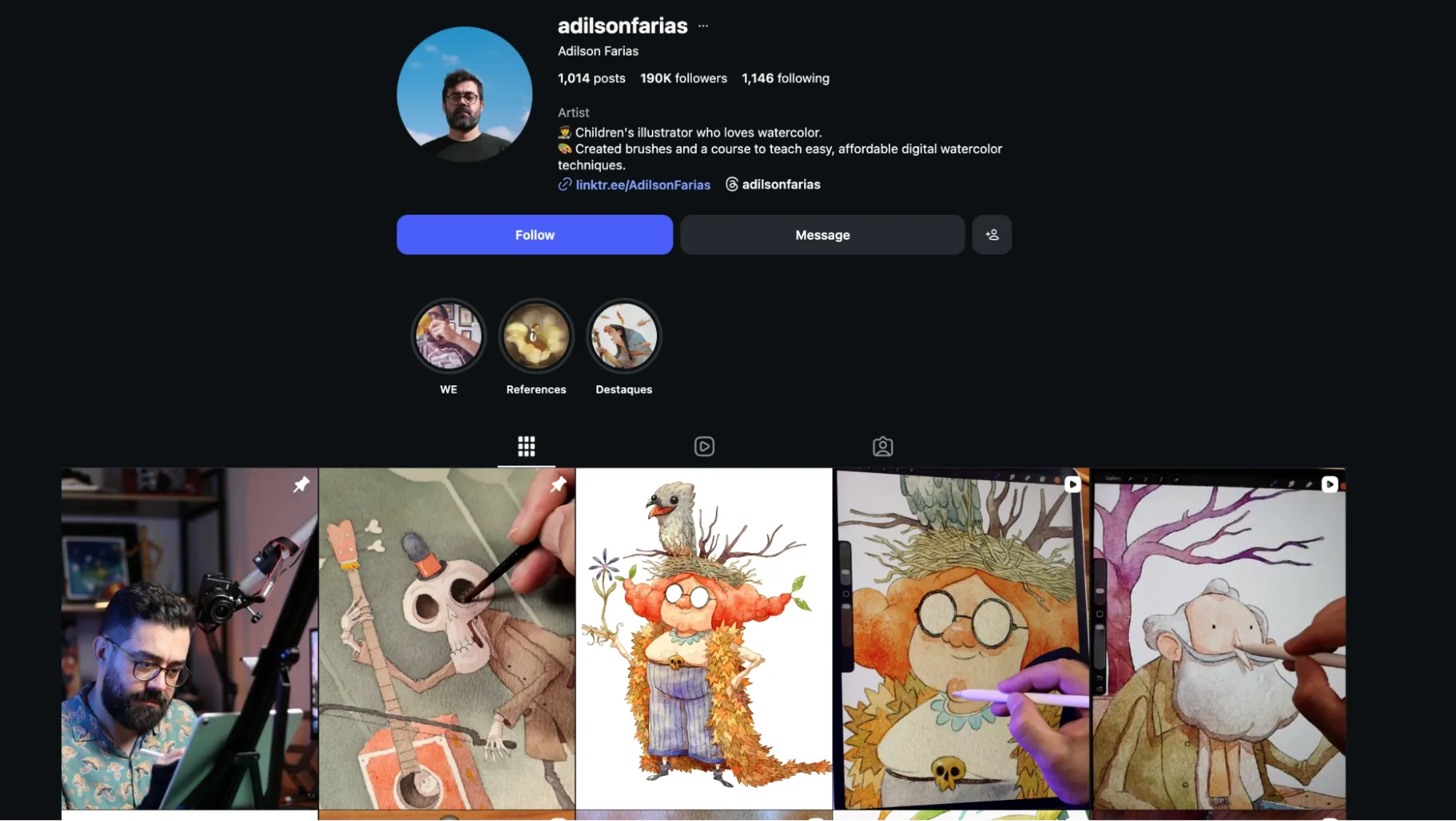
When I started posting my artworks on Instagram, many people asked what materials I had used, such as paper or paint brands, without realizing that the work was entirely digital. That’s when it clicked.
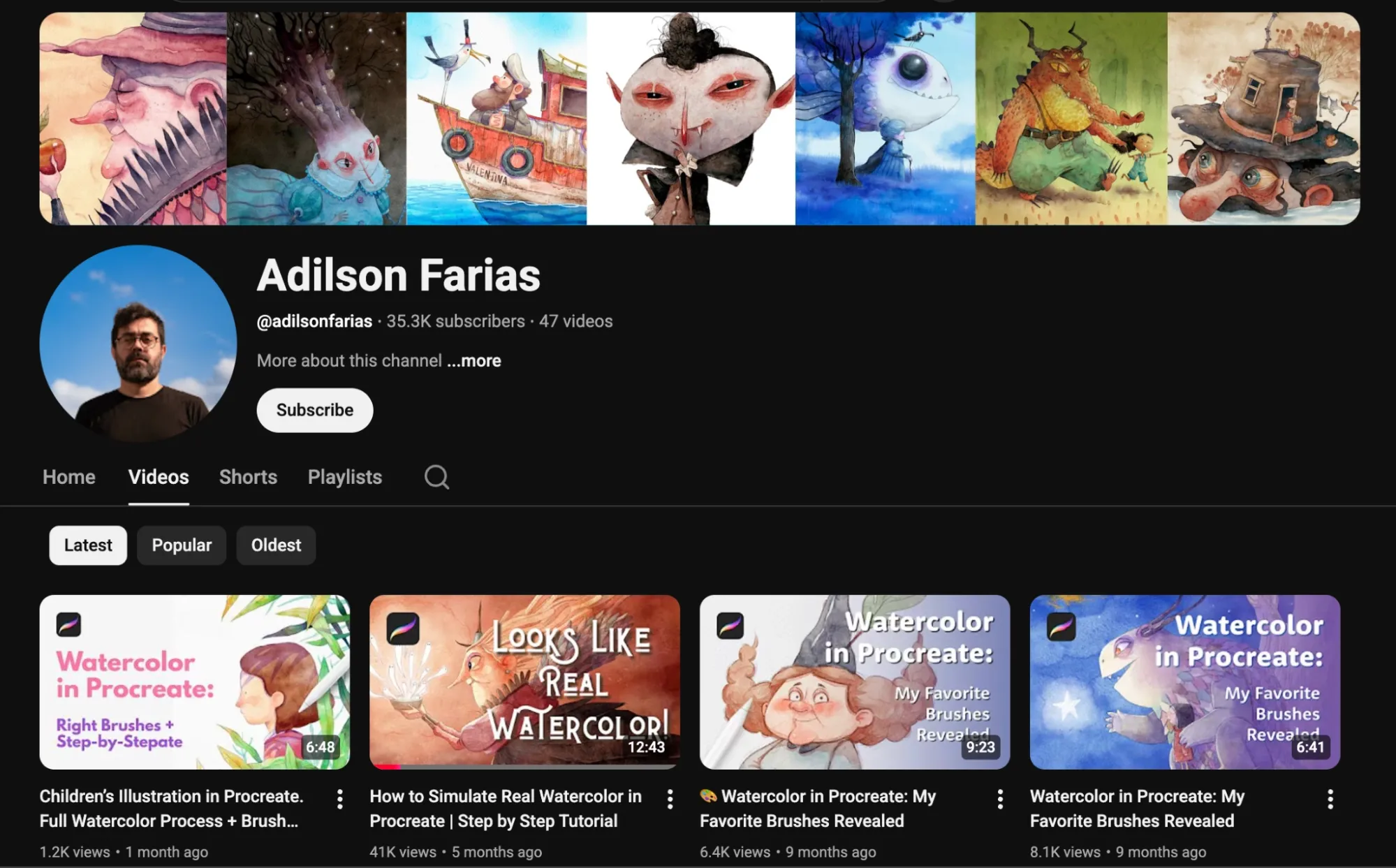
Over time, followers began asking me to teach this technique, which led me to create an online digital watercolor course. During this process, I realized I needed to develop my own brushes to achieve the results I was teaching.
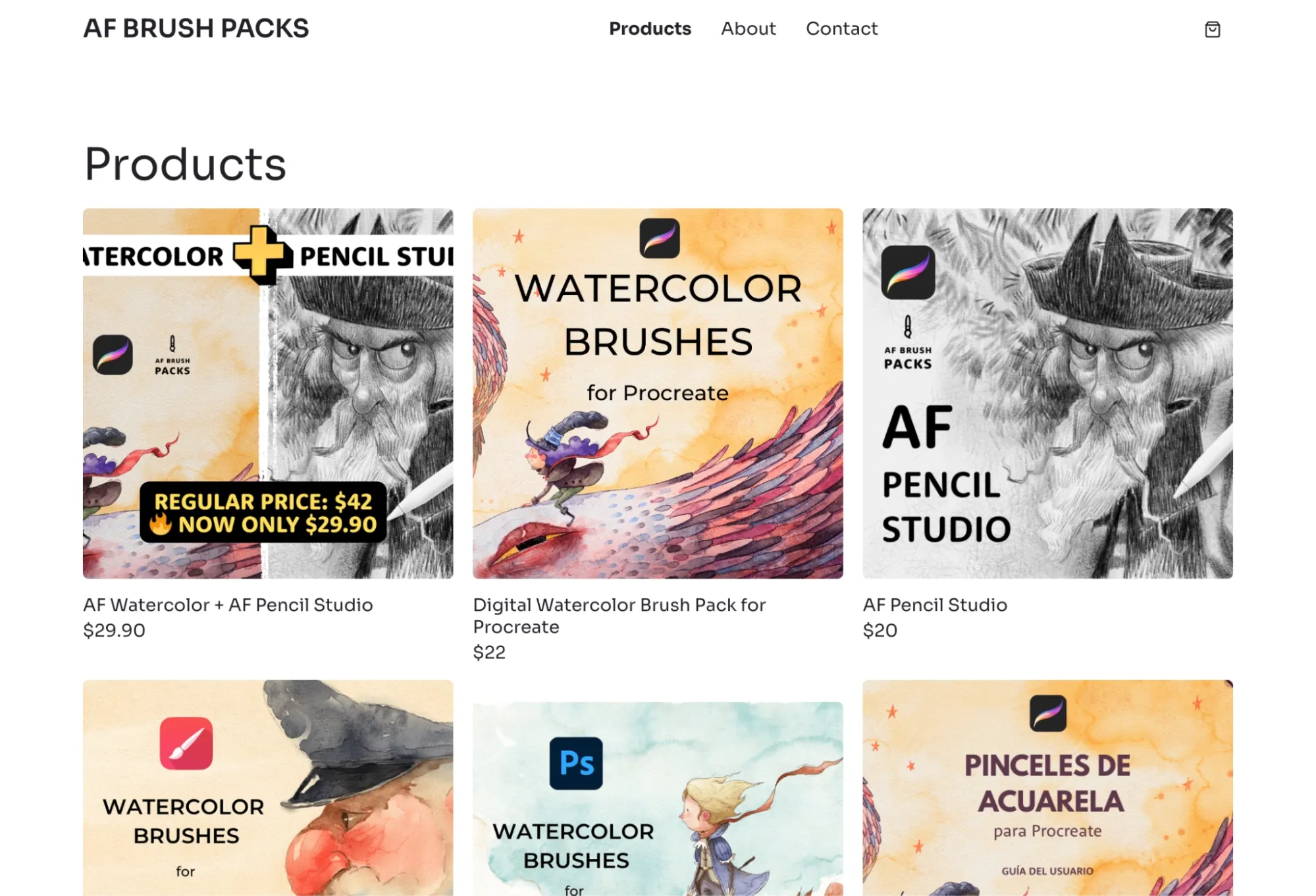
My online course performed very well, but I soon noticed that many people were especially interested in the brushes themselves. So, I decided to sell them separately and was surprised by the demand. From that point on, I focused on developing digital brush packs, initially for Photoshop and today mainly for Procreate, which is where the majority of demand comes from.
What were the most important factors that contributed to the success of your online business?
I think it really came down to consistently building products that actually make a difference for the customer.
There are many similar products available today, but my focus has always been on developing tools that are easy to use and deliver the results artists expect. It’s not about offering just another option, but about solving a real problem and simplifying the creative process.
Another key factor was learning to deeply understand my audience. Understanding their challenges and expectations helped both in product development and in how I communicate and market my work.
For me, it was the mix of solid product quality, a smooth user experience, and messaging that actually resonated with the right audience.
Do you have a team or do you manage everything yourself?
Currently, I manage all aspects of the business myself. I have experimented with collaborating with others in the past, but since this business model does not require a large operational structure, I prefer to keep the process under my direct control.
This allows me to oversee every stage, from brush creation to customer support, marketing, and product development, ensuring consistency in quality and identity.
I don’t rule out expanding the team in the future, but for now, a lean structure gives me more freedom and speed in decision-making and execution.
How do you approach marketing? Which channels and tactics work best for you?
My marketing approach is mainly based on showing the product in use. I mostly rely on paid traffic on social media, especially short videos demonstrating the painting process, using the brushes in practice.
I’ve realized over time that my audience engages and responds much better when they can see what’s possible with my brushes, rather than traditional sales-focused campaigns. Because of that, I’d say my marketing tends to be more demonstration-based and educational than promotional.
Plus, I am quite diligent with my content. I constantly analyze audience behavior and adjust my campaigns based on engagement and conversion data. I’d say the more aggressive or overly commercial strategies haven’t worked well for me, while authentic artistic content does build trust and delivers better results.
How much revenue have you been able to generate with your Sellfy storefront?
Today, my digital product business has become my primary source of income, and it’s something I work on full-time.
Selling my digital brushes through Sellfy evolved from a side experiment into a consistent business that currently generates annual revenue in the five-figure USD range. This allowed me to reduce dependence on commissioned work and build a more scalable and predictable income stream, which I'm very grateful for.
Thanks to this shift from freelance work to running my own business, I have so much more creative freedom to develop new products and personal projects.
Why did you choose Sellfy for your online business?
Before Sellfy, I used another e-commerce platform. However, as my business grew, their fees became too high, and the level of support they offered couldn’t keep up with my business growth.
And since I run the whole business alone, I needed a platform that doesn’t require complex management, and Sellfy offers that.
So, I decided to migrate to Sellfy because it offers a simple, more balanced solution with predictable costs, greater storefront customization, and very practical tools for product management.
Another important factor was the responsiveness of the support team whenever I needed assistance. They have 24/7 support across time zones, and getting in touch is very simple and quick.
Sellfy is the store builder behind 75K+ creators. One flat monthly fee, and no commissions on your sales.
Who would you recommend Sellfy to?
I would recommend Sellfy mainly to independent creators, artists, and anyone selling digital products who want a straightforward and efficient e-commerce solution.
It’s great for self-reliant creators like me who prefer to focus on developing their products and building an audience instead of dealing with complex technical setups.
What were the most challenging situations in managing your business, and how did you overcome them?
The biggest challenge was definitely transitioning from being a freelance artist providing services to becoming an entrepreneur.
For many years, my focus was on simply creating illustrations for clients. Building my own digital business required lots of learning about many areas outside the traditional artistic field, such as strategy, marketing, sales, and financial decision-making.
This transition wasn’t easy because I had to navigate a lot of uncertainty, but it also brought an important shift in my mindset. Over time, I realized entrepreneurship didn’t mean leaving art behind, but rather gaining control over my career and creating more sustainable ways to make a living from my creative work.
What advice would you give to someone who wants to build a digital product business in the digital brushes or visual arts niches?
My main advice would be to avoid creating just another generic product. Focus on developing products with personality and a clear purpose.
For example, there is already a large supply of technically similar brushes in the market, so you’re unlikely to create something completely new. The real difference lies in creating tools that express a specific artistic vision and solve real creative needs. When a product has a unique identity, it becomes part of the artist’s visual language and brand rather than being just another tool.
Also, it’s important to think beyond the file itself. A strong digital product has to offer a good usability experience, clarity of purpose, and long-term consistency. Creators who treat their brushes as authorial products tend to build stronger and longer-lasting relationships with their audience.
Finally, I want you to remember that sustainable growth takes time. Success comes from continuously evolving your product, listening to the community, and maintaining a long-term vision for who you want to be and what type of products you want to build.

Success Stories
Tips for creators
Join thousands of creators receiving sales tips, marketing resources, and inspiring stories. No spam, pure value.